Creamy Marry Me Chicken Pasta with Spinach and Sun-Dried Tomatoes

Introduction
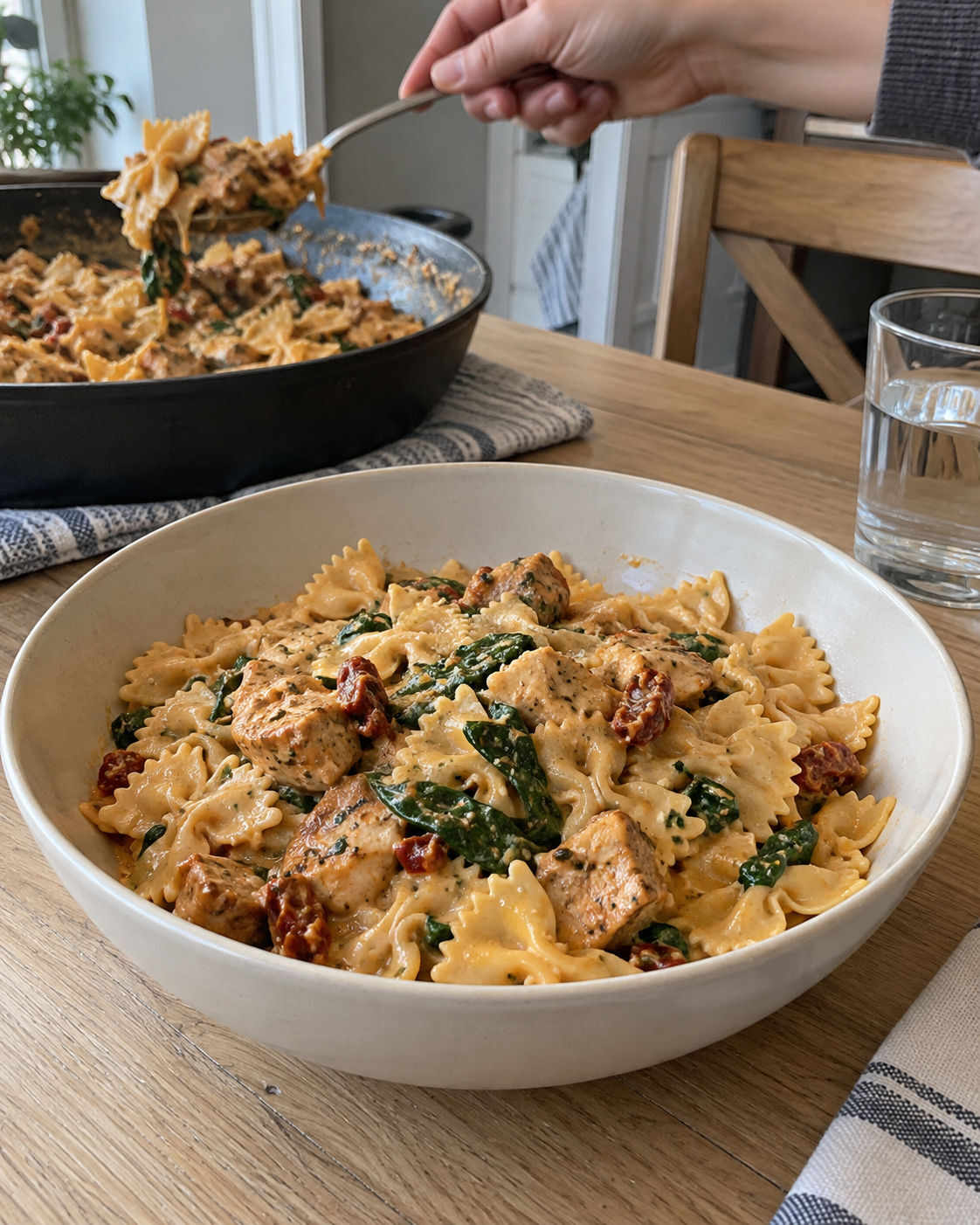
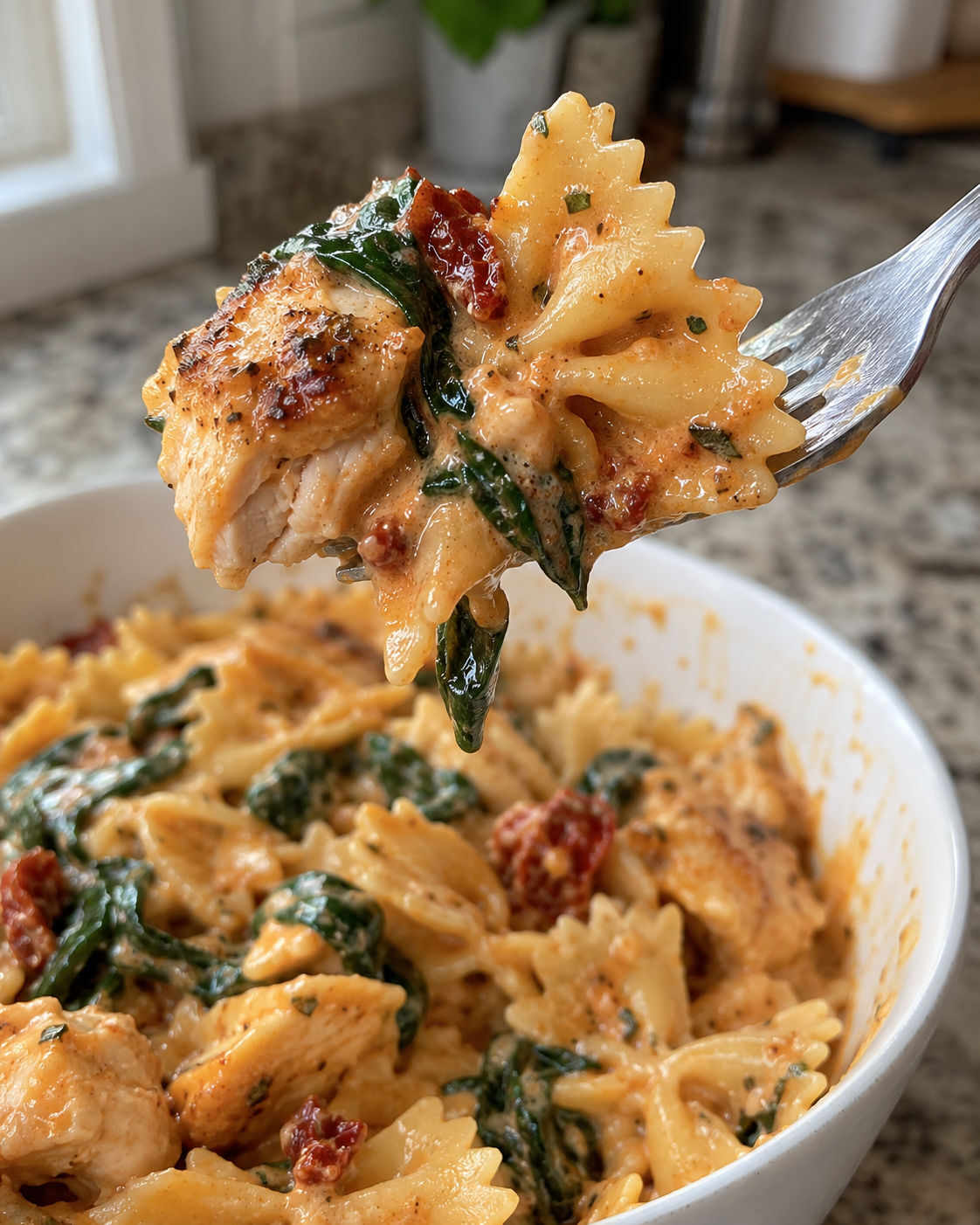
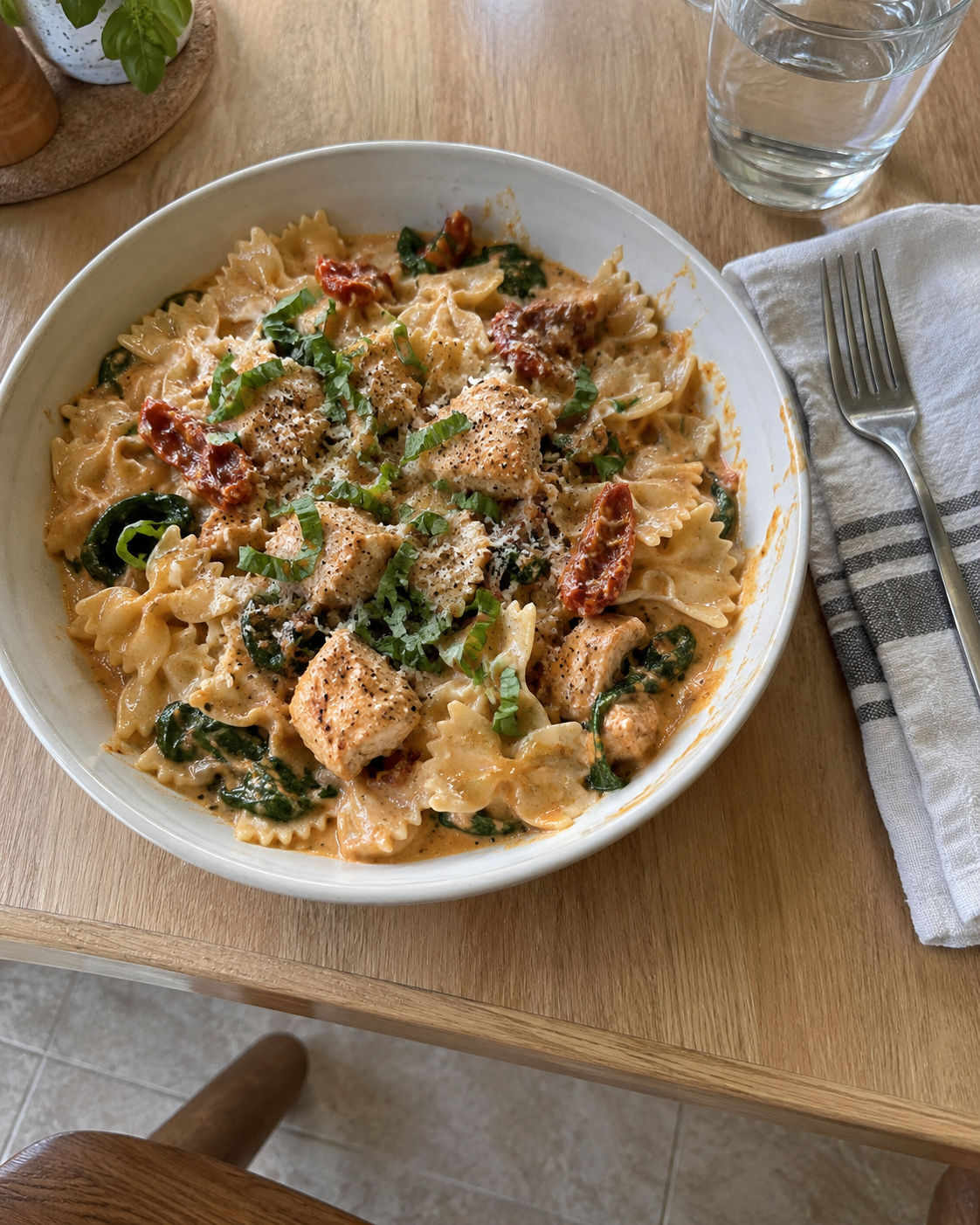
Marry Me Chicken Pasta brings tender chicken thighs, gluten-free farfalle, spinach, Parmesan, and sun-dried tomatoes together in one creamy skillet dinner. The sauce is savory, garlicky, and slightly tangy, with Parmesan adding a rich finish and sun-dried tomatoes supplying concentrated tomato flavor.
Chicken thighs are especially well suited to this dish because they remain juicy and tender while they finish in the sauce. The pasta adds substance, while spinach brings color to the creamy mixture. The method is approachable: season and sear the chicken, cook the pasta, build the sauce in the same skillet, and toss everything together.
The dish serves four bowls and works as a filling family dinner or a comforting meal for a special occasion. The gluten-free pasta and flour keep the listed preparation gluten-free, while regular pasta and all-purpose flour can be used by those who do not need gluten-free ingredients.
Ingredients
-
1 lb boneless, skinless chicken thighs, about 3 to 4 thighs
-
¾ tbsp paprika for the chicken
-
1 tbsp Italian seasoning for the chicken
-
¾ tsp salt for the chicken
-
¼ tsp black pepper
-
1 tbsp oil from the jar of sun-dried tomatoes
-
12 oz gluten-free farfalle pasta
-
½ cup reserved pasta cooking water, as needed
-
2 tbsp salted butter
-
2 tbsp dried shallots
-
2 tbsp jarred minced garlic
-
1 tbsp minced onion
-
3 tbsp gluten-free flour
-
2 cups chicken broth
-
1 cup heavy cream
-
1 cup shredded Parmesan cheese
-
¼ cup diced sun-dried tomatoes
-
2 tbsp tomato paste
-
1 cup diced spinach
-
1 tbsp Italian seasoning for the sauce
-
½ tsp paprika for the sauce
-
½ tsp salt for the sauce
-
Chopped fresh basil for garnish
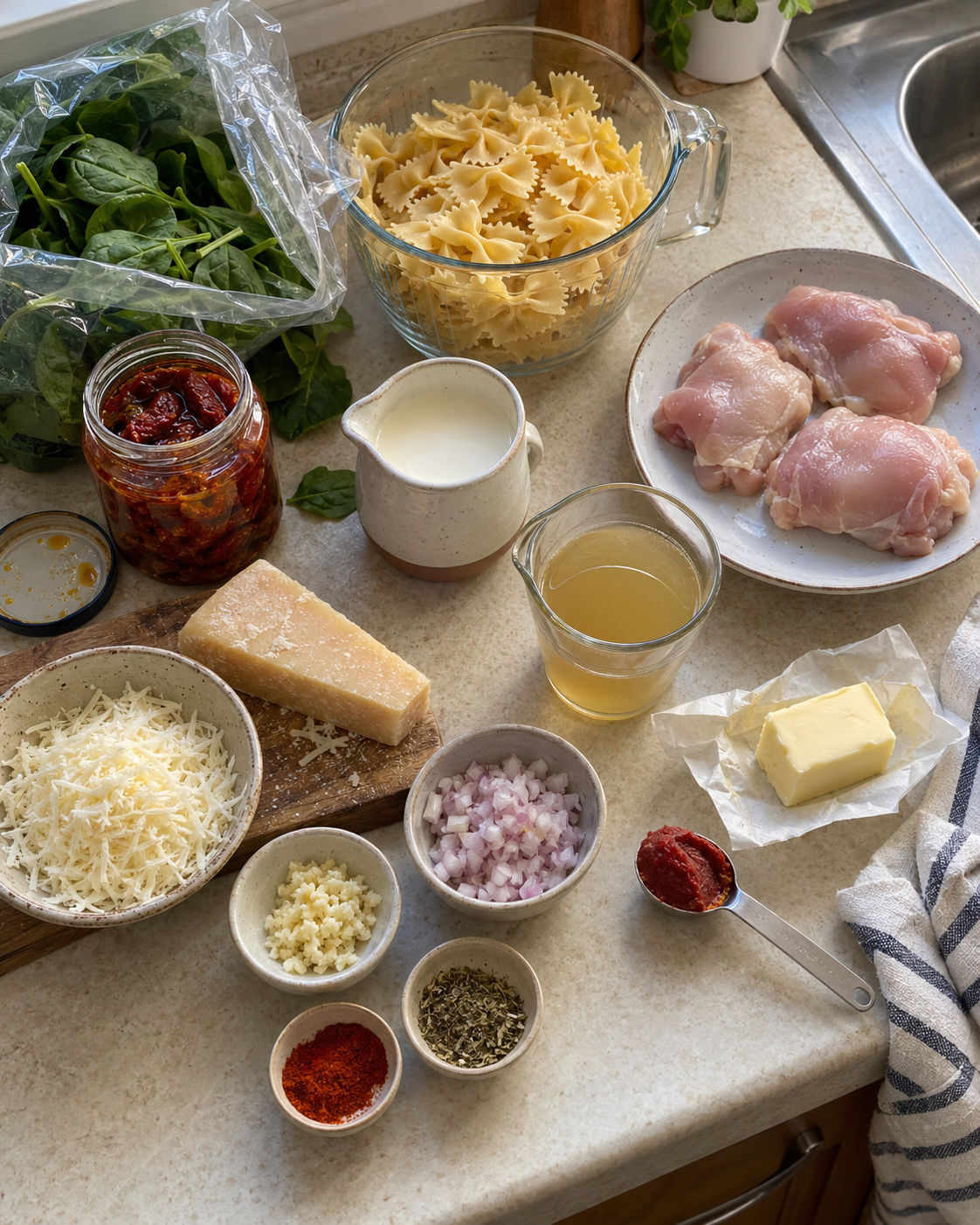
The chicken seasoning combines paprika, Italian seasoning, salt, and pepper. The sauce uses the remaining seasonings with butter, aromatics, tomato paste, broth, cream, and cheese. Oil from the tomato jar helps carry the sun-dried tomato flavor into the chicken as it sears.
Farfalle is a natural fit because its folds hold the creamy sauce. Penne, rotini, rigatoni, and fettuccine are also listed as possible pasta choices, although the ingredient list for this preparation uses farfalle. Keep the reserved cooking water available because a small splash can adjust the finished sauce without removing its flavor.
How to Make It
-
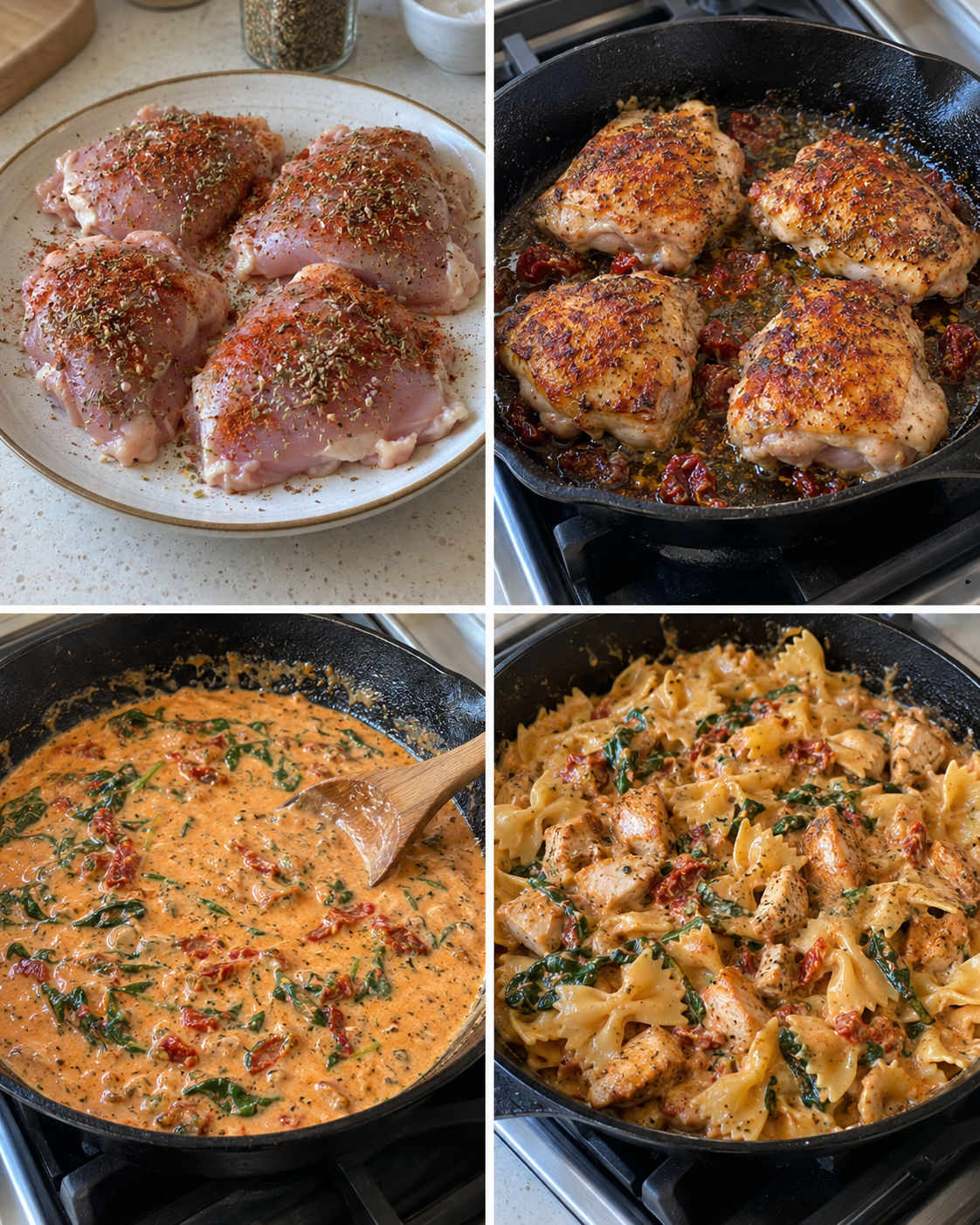
Remove the chicken thighs from their package and pat them dry with paper towels. Do not rinse raw chicken. Place the chicken in a medium bowl and coat it with ¾ tablespoon paprika, 1 tablespoon Italian seasoning, ¾ teaspoon salt, and ¼ teaspoon black pepper.
-
Warm a large skillet over medium-high heat. Add the sun-dried tomato oil, then place in the seasoned chicken. Sear the thighs for 3 minutes on each side so the outside develops color.
-
Lower the heat to medium-low and cover the skillet. Continue cooking the chicken for 6 to 10 minutes, checking that it reaches an internal temperature of 165°F (74°C). Move the cooked thighs to a plate and leave the skillet ready for the sauce.
-
While the chicken cooks, bring a large pot of salted water to a boil. Cook the farfalle according to the package directions until al dente. Before draining, reserve ½ cup of the pasta water. Drain the pasta and set it aside.
-
Melt the butter in the chicken skillet over medium-low heat. Add the dried shallots, minced onion, jarred garlic, diced sun-dried tomatoes, tomato paste, 1 tablespoon Italian seasoning, ¾ teaspoon salt, and ½ teaspoon paprika. Stir and sauté for 2 minutes, until the mixture becomes fragrant.
-
Add the gluten-free flour and stir until it is incorporated into the seasoned butter and tomato mixture. This creates the base that helps the sauce become creamy once the broth and cream are added.
-
Pour in the chicken broth and heavy cream. Add the diced spinach, then stir while scraping up the browned pieces from the bottom of the skillet. Let the mixture simmer until it starts to thicken and the spinach has wilted.
-
Stir the shredded Parmesan into the sauce until it melts and the mixture becomes smooth. Keep the heat gentle rather than allowing the sauce to boil, since the sauce is intended to remain creamy.
-
While the sauce simmers, cut the cooked chicken thighs into bite-sized pieces. Add the chicken and drained pasta to the skillet. Toss carefully until the farfalle is coated and the chicken is distributed throughout the sauce.
-
If the sauce is thicker than desired, stir in a splash of the reserved pasta water. Finish with chopped fresh basil and serve immediately.
The order matters because the skillet carries the browned flavor from the chicken into the sauce. Cooking the pasta only until al dente also helps it retain its shape when it is folded into the creamy mixture. Stir gently once the pasta joins the sauce so the farfalle stays intact and the chicken remains evenly spread through the dish.
Toppings and Serving
Chopped fresh basil is the listed finishing garnish. Add it after the chicken and pasta have been coated in sauce so its bright flavor remains noticeable. Parmesan is already part of the sauce, giving the finished pasta a savory, cheesy character without requiring a separate topping.
Serve the pasta as four bowls. The creamy sauce should cling to the farfalle, while the chicken pieces, spinach, and diced sun-dried tomatoes remain visible throughout. If the mixture tightens before serving, a splash of reserved pasta water can loosen it.
The dish is substantial enough to serve on its own. For a different presentation, the pasta can be omitted in favor of rice or mashed potatoes, creating a chicken-and-sauce version rather than a pasta bowl. That option keeps the chicken, sauce, and basil finish at the center of the meal.
Variations
Chicken breasts can replace the thighs when a leaner cut and milder flavor are preferred. The evidence indicates that breasts cook faster and can dry out more easily, so their cooking needs attention. Rotisserie chicken is another shortcut: shred or dice the cooked chicken and stir it into the sauce near the end, just until heated through.
For heat, add red pepper flakes. The base preparation is mild, so the flakes provide the spicy variation without changing the creamy structure of the sauce. Mushrooms can add an earthy element and another texture. Broccoli, asparagus, zucchini, and roasted red peppers are also listed vegetable choices; sauté or roast them before adding them to the pasta.
For a cheesier version, add shredded mozzarella or extra Parmesan. Half-and-half can replace heavy cream for a lighter sauce, although the result will be less rich and thick. A longer simmer can help thicken that version, or a tablespoon of grated Parmesan can be stirred in before serving.
To make a dairy-free version, replace the heavy cream with full-fat coconut milk or a dairy-free cooking cream, and use a plant-based Parmesan alternative. The pasta can also be changed to another short, textured shape such as penne, rotini, or rigatoni.
The sauce can be used without pasta for Marry Me chicken thighs served over rice or mashed potatoes. Other suggested directions include Marry Me shrimp pasta, chicken soup, chicken orzo, salmon, and chicken meatballs, though each would be a separate variation rather than this exact preparation.
Storage and Make-Ahead
The prepared pasta can be made up to 2 days ahead and kept in an airtight container in the refrigerator. The sauce becomes thicker as it chills. When reheating, add a splash of chicken broth, milk, or cream and warm the pasta gently over low heat until the sauce becomes creamy again.
Freezing is also possible. Let the pasta cool completely, then transfer it to an airtight freezer-safe container for up to 3 months. Thaw it overnight in the refrigerator. Reheat gently and stir in a little cream or milk if the sauce needs help returning to a smoother texture.
Because the dish contains a creamy sauce, gentle reheating is important. Stir as it warms so the pasta, chicken, spinach, and sauce come together evenly. The sauce may separate slightly after freezing, but the suggested addition of cream or milk can help restore its smooth consistency.
FAQ
Can chicken breasts replace chicken thighs?
Yes. Chicken breasts can be used instead of thighs. They provide a leaner option and a milder flavor, but they cook faster and can become dry more easily. Monitor them closely while they cook.
Is this pasta spicy?
The base dish is mild. Red pepper flakes can be added when a hotter flavor is wanted.
Can the pasta shape be changed?
Yes. Penne, rotini, rigatoni, and fettuccine are listed alternatives. Short pasta shapes with texture hold the creamy sauce well.
Can heavy cream be replaced?
Yes. Half-and-half can be used for a lighter sauce, though it will not be as rich or thick. Full-fat coconut milk or dairy-free cooking cream can be used for a dairy-free version.
Can rotisserie chicken be used?
Yes. Shred or dice the cooked rotisserie chicken and stir it into the sauce near the end, just until it is heated through.
Can this dish be frozen?
Yes. Cool it completely, place it in an airtight freezer-safe container, and freeze it for up to 3 months. Thaw it overnight in the refrigerator and reheat gently with a splash of cream or milk if needed.
What vegetables work well in this pasta?
Spinach is part of the dish, and mushrooms, broccoli, asparagus, zucchini, and roasted red peppers are listed additions. Prepare the added vegetables before combining them with the pasta.
Is the dish Italian?
It is Italian-inspired. The flavor profile combines ingredients associated with Italian-style cooking with heavy cream and Parmesan for a rich sauce.
More in Uncategorized
Crock Pot Roast with Potatoes, Carrots, and Gravy
Easy Crockpot Chicken and Stuffing
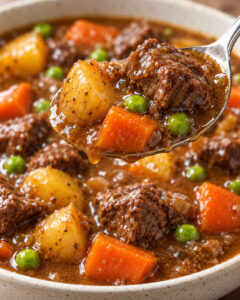
Slow Cooker Beef Stew with Potatoes, Carrots, and Peas