Easy Roasted Turkey Breast with Herb Butter

Introduction
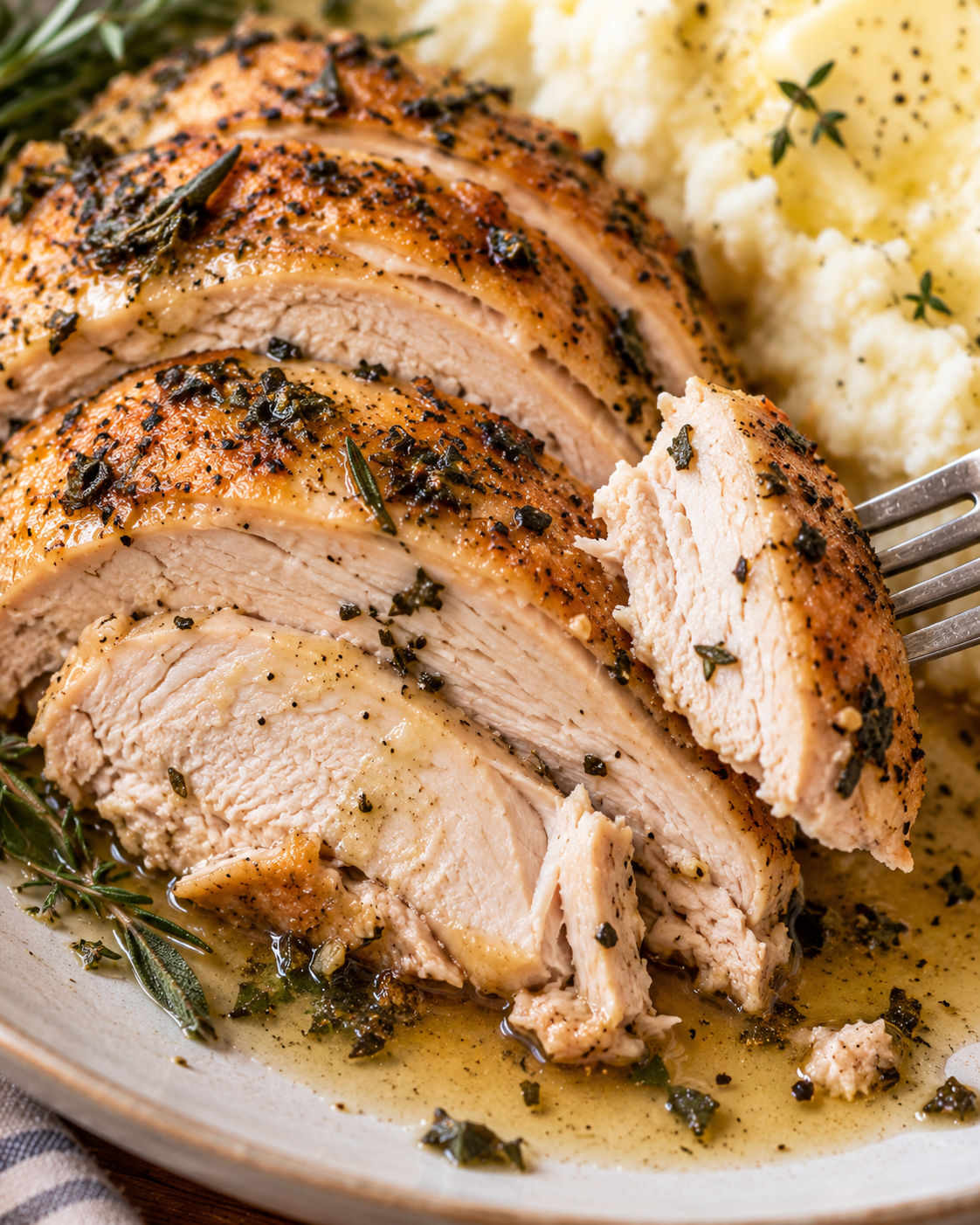
Roasted turkey breast offers a focused centerpiece for a smaller holiday meal or an easy dinner that does not require a whole turkey. This preparation uses a boneless, skin-on turkey breast, softened unsalted butter, fresh rosemary, sage, thyme, kosher salt, and coarse ground black pepper. The seasoned butter is placed beneath the skin, while the skin remains exposed during roasting. The finished breast has tender meat, crisp skin, and a savory herb-butter finish.
A 4- to 6-pound turkey breast fits a modest gathering and can leave useful turkey for sandwiches or casserole without making a whole bird necessary. This recipe makes six servings, and a 4-pound breast may serve approximately 6 to 8 people. Portion needs depend on whether the turkey is the only substantial item on the table and whether leftovers are wanted.
The central preparation detail is gentle skin separation. The back of a spoon creates space between the skin and the breast, allowing the seasoned butter to sit close to the meat. The skin is then smoothed back into place before the turkey goes into the roasting pan. Careful handling matters because a tear can let the butter escape while the breast cooks.
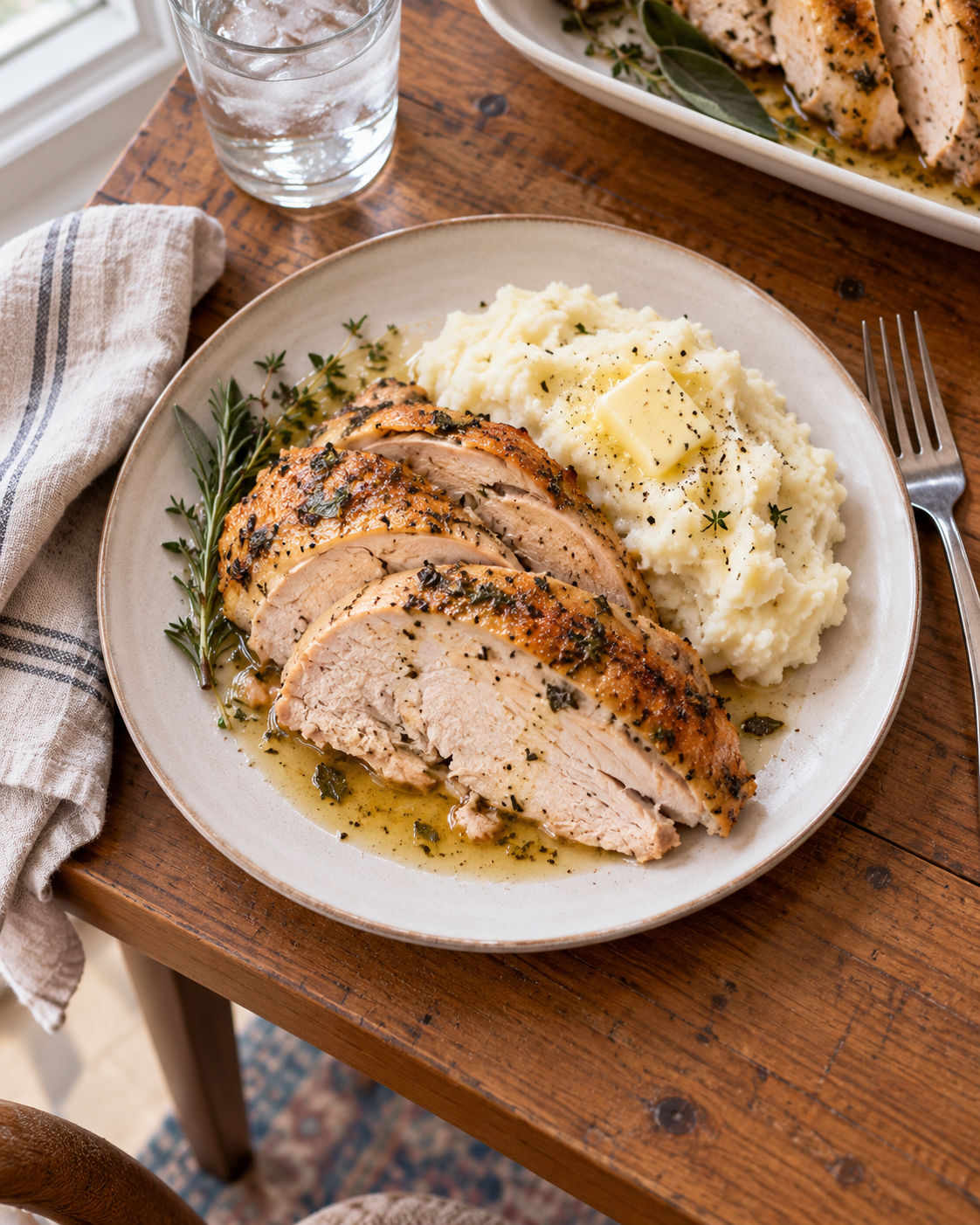
The process stays straightforward: dry the turkey, combine the butter with the herbs and seasonings, reserve a small portion, spread the larger portion beneath the skin, and roast the breast skin-side-up. The reserved butter is spread over the cooked turkey before the resting period. After resting, the breast can be sliced for the main meal, with any remaining pieces saved for later uses.
Ingredients
-
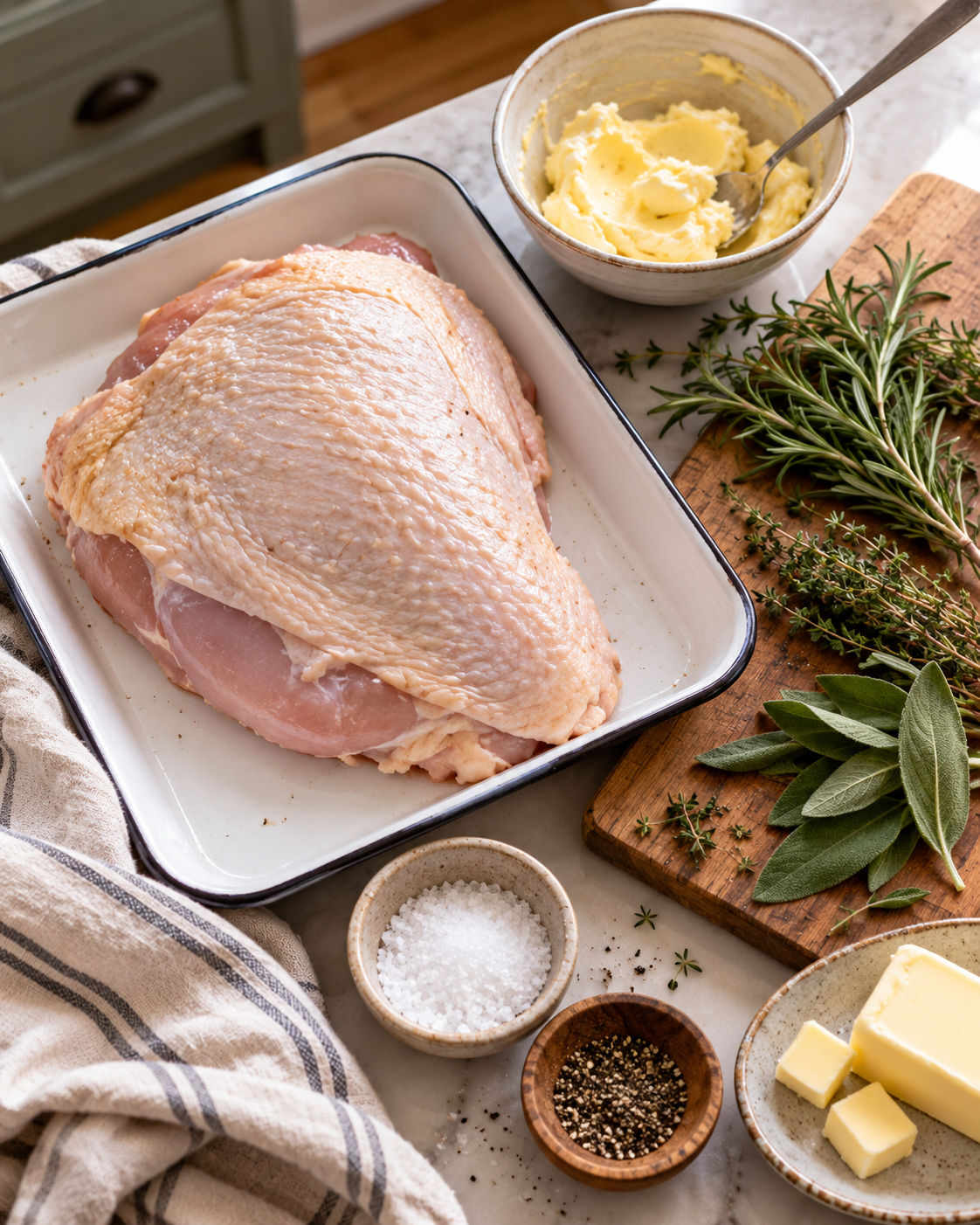
1 cup unsalted butter, softened
-
3 sprigs fresh rosemary
-
10 fresh sage leaves
-
1 tablespoon fresh thyme
-
2 teaspoons kosher salt
-
1 teaspoon coarse ground black pepper
-
1 turkey breast weighing 4 to 6 pounds, patted dry
Use unsalted butter so the listed kosher salt remains the salt included in the seasoned mixture. Fresh rosemary, sage, and thyme provide the herb combination named for this turkey. The butter should be soft enough to mash with those herbs and the seasonings, but it still needs to be handled as a spreadable mixture rather than poured over the breast.
The butter can be softened by removing it from the refrigerator about 1 hour before preparation. If it is not yet pliable, work it in the small bowl with the back of a spoon until the herbs and seasonings can be distributed through it. The turkey itself should be patted dry inside and outside with paper towels before the butter is added.
When selecting the turkey, a boneless, skin-on breast is suggested. The skin provides the surface that becomes crisp during the uncovered roast and creates the space for the herb butter. Keep the listed ingredients together before beginning so the seasoned butter can be mixed and divided in one preparation.
How to Make It
-
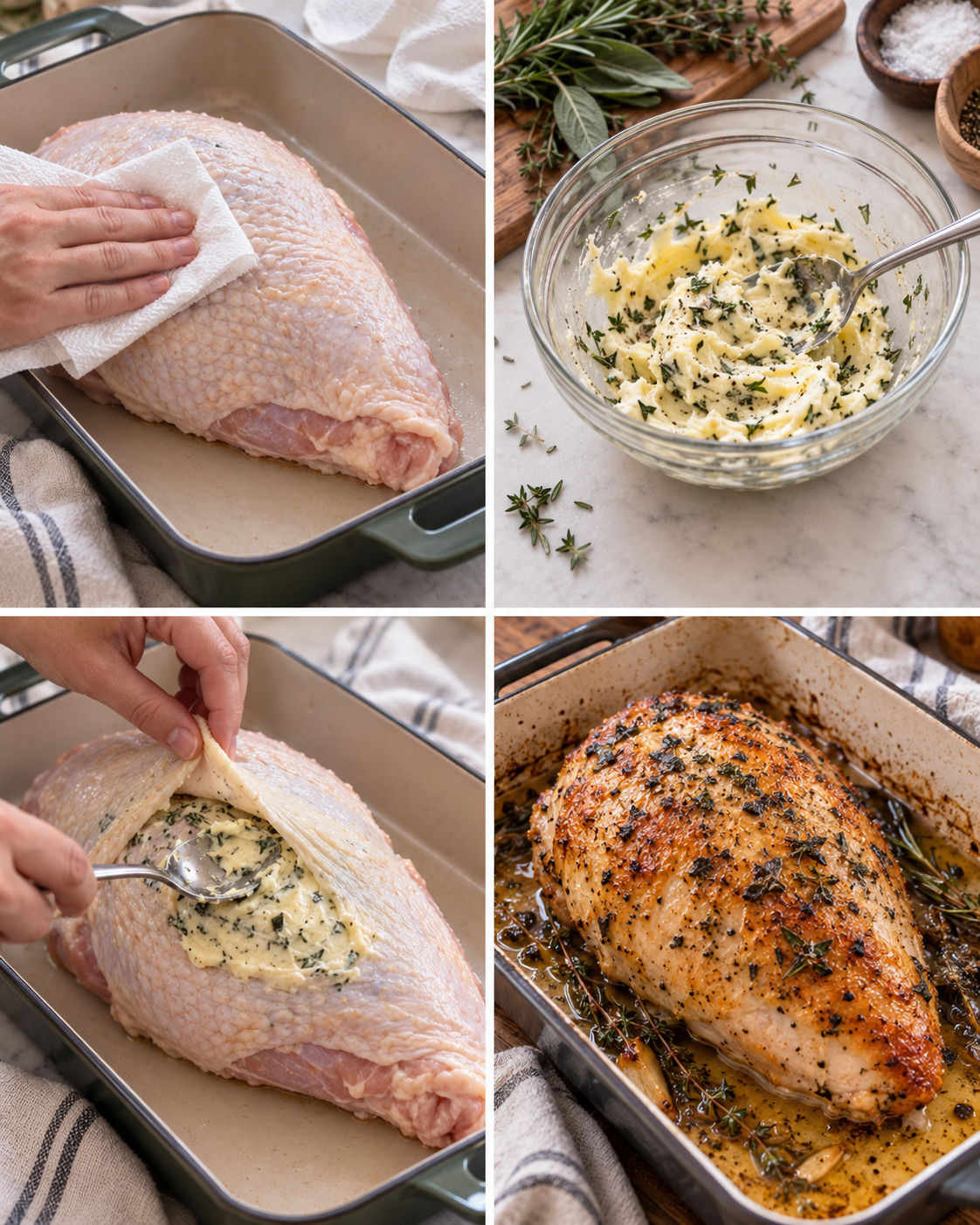
Heat the oven to 325 degrees. Arrange the oven with only the bottom rack in place. This leaves the turkey in the intended roasting position.
-
Put the turkey breast in a large roasting pan. Use paper towels to dry the inside and outside thoroughly. Keep the breast skin-side-up so the skin remains the exposed surface during roasting.
-
Add the softened butter to a small bowl. Add the rosemary, sage, thyme, kosher salt, and coarse ground black pepper. Mash the mixture until the herbs and seasonings are distributed throughout the butter.
-
Reserve 2 to 3 tablespoons of the seasoned butter in the bowl or in a separate small portion. This reserved amount is for the surface of the turkey after roasting. Keep the larger portion ready for placement beneath the skin.
-
Gently separate the skin from the breast with the back of a spoon. Begin carefully and use slow pressure. Create enough room for the butter to cover the breast without pulling the skin away or making a tear.
-
Spread the larger portion of seasoned butter beneath the skin. Work it over the breast as evenly as possible, then smooth the skin back into place. Avoid leaving the skin folded or damaged because the butter can escape through a tear during cooking.
-
Place the roasting pan in the oven. Roast for 90 minutes, or continue until the deepest part of the breast reaches 165 degrees. The thermometer check is the final doneness check for the oven preparation.
-
Remove the turkey from the oven and spread the reserved butter over the top. Allow the breast to rest for 20 minutes before slicing and serving. Cut the rested breast into portions while keeping the crisp skin visible.
The turkey does not need to be covered during roasting. Keeping the breast skin-side-up and uncovered supports the crisp-skin result described for this dish. The rack arrangement, roasting pan, and dry surface all belong to the preparation before the breast begins cooking.
The skin-lifting step deserves deliberate handling. A spoon is used rather than a quick pull, and the movement should stay close to the breast. The butter needs to sit beneath the skin, not simply on top of it, so the skin must be loosened enough for the seasoned mixture to spread. At the same time, the skin must remain intact so it can stay over the breast during the roast.
Use the reserved portion only after the turkey comes from the oven. Spreading it over the hot surface connects the finishing butter with the rosemary, sage, thyme, salt, and pepper already placed beneath the skin. The resting pause comes before carving, so the breast reaches the table after the butter has been applied and the slices can be served with the skin.
Toppings and Serving
The finishing butter is the primary topping for this turkey. Spread the reserved seasoned butter over the cooked breast, then let the turkey rest before carving. The surface can be sliced with the skin left visible, giving each portion a combination of tender breast and crisp skin.
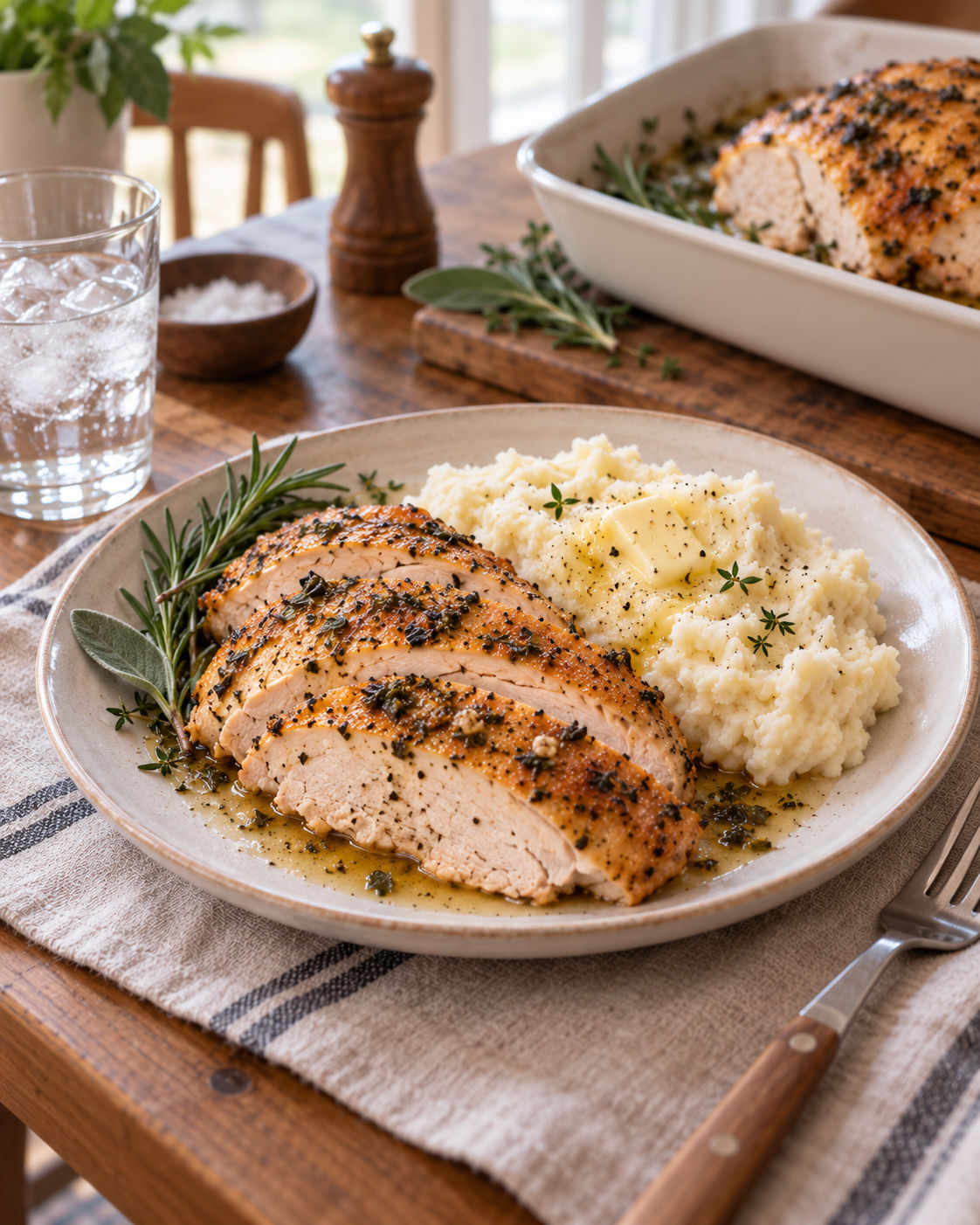
The turkey pairs with baked macaroni and cheese, mashed potatoes, green bean casserole, or candied sweet potatoes. These serving choices make the breast suitable for a holiday table while keeping the turkey itself as the central dish. The same preparation also works as a dinner alternative when a whole turkey would provide more food than needed.
Pan drippings can be used to make gravy. Melt 4 tablespoons of butter in a saucepan and whisk in 1/4 cup flour. Cook that mixture for about 2 minutes, then slowly whisk in strained pan drippings together with 2 cups turkey or chicken broth. Continue whisking until the gravy becomes smooth and thickened, which takes 6 to 8 minutes.
A 4- to 6-pound breast is the intended size range, and this recipe makes six servings. A 4-pound breast may serve approximately 6 to 8 people. For a larger table, use a larger breast or make more than one batch. Decide how much to carve at the meal and keep the remaining cooked turkey for later uses.
Turkey leftovers can be placed in a turkey casserole or used in sandwiches. Sliced pieces carry the herb-butter flavor into either use, while the crisp skin and tender interior remain features of the freshly served roast. The reserved butter can be spread over the breast before slicing rather than mixed into a separate topping.
Variations
Parsley and lemon may be mixed with the butter as alternate flavors. They can be used with the butter in place of, or alongside, the listed herb combination. The preparation still centers on softening the butter, mixing in the selected flavor ingredients, reserving a portion, and placing the larger portion beneath the turkey skin.
A bold seasoning blend may be used instead of the rosemary, sage, and thyme combination. The butter remains the carrier for that seasoning choice. Keep the turkey skin intact and use the same careful spoon technique when making room for the seasoned butter.
For a garlic variation, finely grate 2 to 3 fresh garlic cloves into the butter. Stir the garlic with the herbs and seasonings before placing the mixture beneath the skin. The garlic is mixed into the butter rather than added as a separate layer on the turkey.
The turkey may also be prepared in a slow cooker with seasoned butter and no added liquid. Place the buttered breast skin-side-up in the slow cooker and cook on low for 5 to 6 hours until the internal temperature reaches 165 degrees. If the skin needs more browning, place the turkey under a broiler 6 inches from the heat for 1 to 2 minutes. The slow-cooker lid may be left slightly open during the final hour to allow steam to escape.
The slow-cooker option changes the equipment and includes no added liquid, while the oven method uses a roasting pan and an uncovered skin-side-up breast. Either option keeps seasoned butter close to the turkey. For the oven preparation, the skin remains uncovered during the roast; for the slow-cooker preparation, the broiler option supplies additional browning when needed.
Storage and Make-Ahead
Do not leave leftover turkey at room temperature for more than 2 hours. Once the meal is finished, cut the remaining turkey into pieces that fit in an airtight container. Refrigerated turkey keeps for 3 to 4 days. The pieces can then be portioned for sandwiches or turkey casserole.
Cooked turkey can be frozen for up to 3 months. Allow the turkey to cool to room temperature before sealing it for freezing. Use an airtight container and cut the leftovers into manageable pieces rather than trying to fit a large remainder into a container that does not close securely.
For make-ahead planning, the breast can remain whole until serving when possible. Slice the amount needed for the meal and place the rest into the airtight container. This approach keeps the remaining turkey together until it is needed, then makes the stored pieces ready for later sandwiches or casserole.
Storage does not change the listed uses for the leftovers. The same cooked turkey can be reserved for a casserole or sandwiches, while the original serving can be accompanied by the listed sides and gravy made from strained pan drippings. Keep the storage step separate from the cooking step: first finish the roast and resting period, then portion any remaining turkey for the container.
FAQ
What size turkey breast works for this preparation?
Use one turkey breast weighing 4 to 6 pounds. A boneless, skin-on breast is suggested because the skin is used in the preparation and remains visible for the crisp-skin finish. This recipe makes six servings, and a 4-pound breast may serve approximately 6 to 8 people.
How much turkey should be planned per person?
The suggested portion is about 1/2 to 3/4 pound per person. The amount can be considered alongside the serving yield and the plan for leftovers. A smaller table can use the breast as the main holiday centerpiece without preparing a whole turkey.
What temperature confirms doneness?
A meat thermometer should show 165 degrees F in the thickest part of the breast. Clear-running juices are another visual sign that the turkey is done, but the thermometer reading is the required check described for the preparation.
How long does roasted turkey breast take?
Cooking time depends on the size of the breast. The guide gives about 1 to 1 1/2 hours per 4 pounds, and an 8-pound turkey breast may require about 3 hours. Use the thermometer reading in the thickest part as the final check rather than relying on time alone.
Should the turkey be covered while it roasts?
No. Roast the turkey skin-side-up without covering it. The uncovered surface supports the crisp skin described for this preparation, and the butter is placed beneath the skin before the breast enters the oven.
How should the skin be handled?
Gently separate it from the breast with the back of a spoon, spread the seasoned butter beneath it, and smooth it back into place. Avoid tearing the skin because the butter can escape during cooking. Slow pressure gives room for the butter while keeping the skin intact.
Can the pan drippings become gravy?
Yes. Use butter, flour, strained pan drippings, and turkey or chicken broth. Melt the butter, whisk in the flour, then add the drippings and broth gradually while whisking until the mixture is smooth and thickened.
What can be done with turkey leftovers?
Use leftover pieces in turkey casserole or turkey sandwiches. Cut the turkey to fit an airtight container, refrigerate it for the stated storage period, or cool it to room temperature before sealing it for freezing.
More in Uncategorized
Crock Pot Roast with Potatoes, Carrots, and Gravy
Easy Crockpot Chicken and Stuffing
Slow Cooker Beef Stew with Potatoes, Carrots, and Peas