Slow Cooker Beef Stew with Potatoes, Carrots, and Peas
Slow Cooker Beef Stew with Potatoes, Carrots, and Peas
Introduction
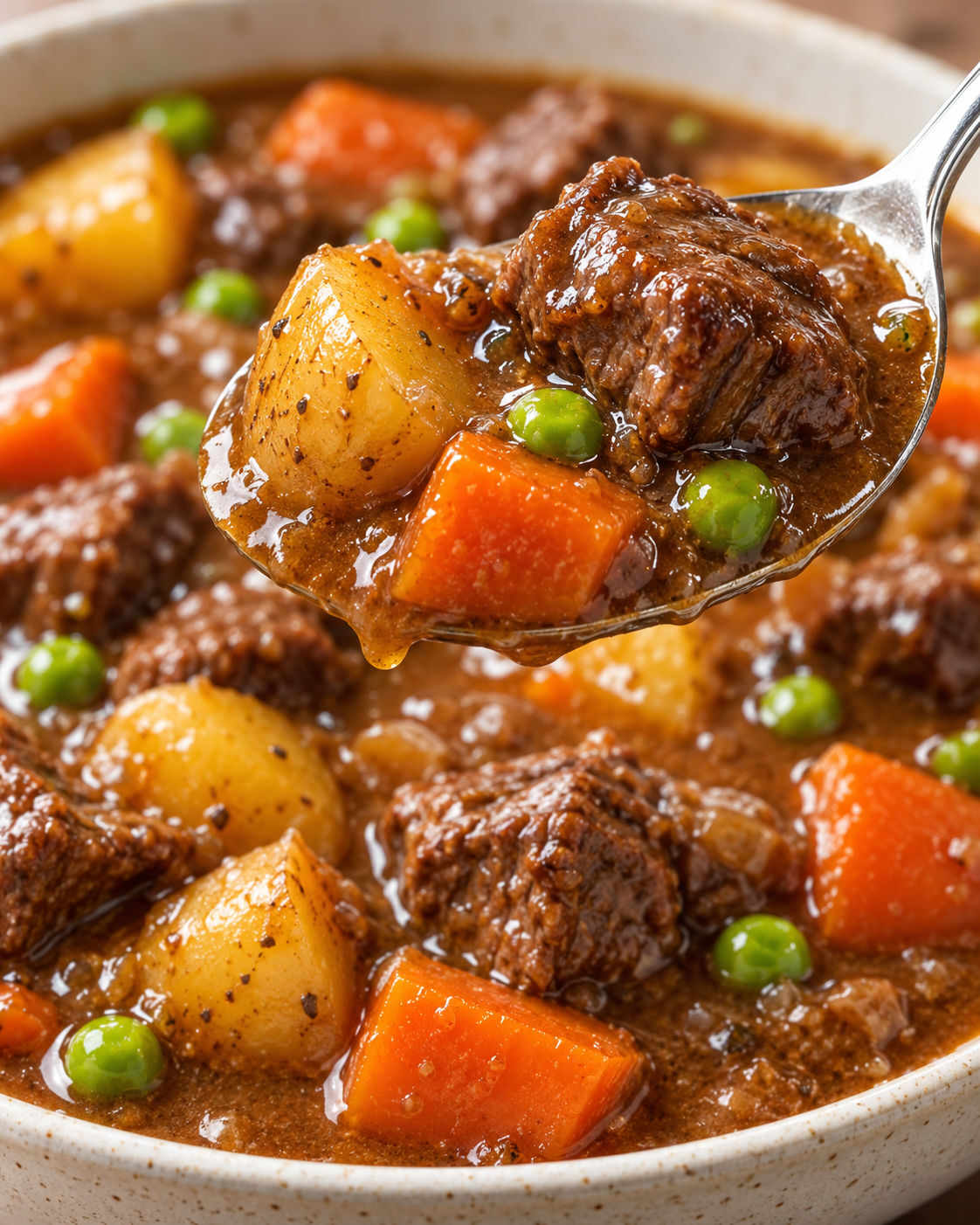
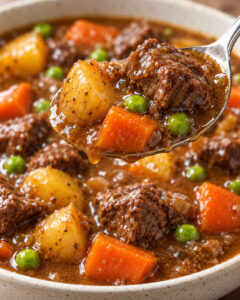
Slow cooker beef stew combines stew meat, potatoes, carrots, peas, onions, garlic, red wine, beef broth, and savory seasonings in one substantial main course. The finished dish includes pieces of beef and vegetables in a rich broth, with optional cornstarch, cold butter, and Gravy Master finishes.
The preparation has two paths. The preferred method begins by cutting the beef into cubes, seasoning it, coating it with flour, and searing it in batches. The onions and garlic are softened in the same skillet, and wine loosens the browned pieces before the skillet mixture joins the slow cooker. When searing is not possible, the seasoned flour-coated beef may go directly into the slow cooker with the uncooked onions and garlic.
A 6-quart slow cooker or larger is suitable for this 6-person main course. Baby Yukon Gold potatoes, carrots, and frozen peas provide the vegetable base. Bay leaves and rosemary are added during cooking and removed before serving. Warm biscuits, cornbread, or mashed potatoes can accompany the completed stew.
Ingredients
-
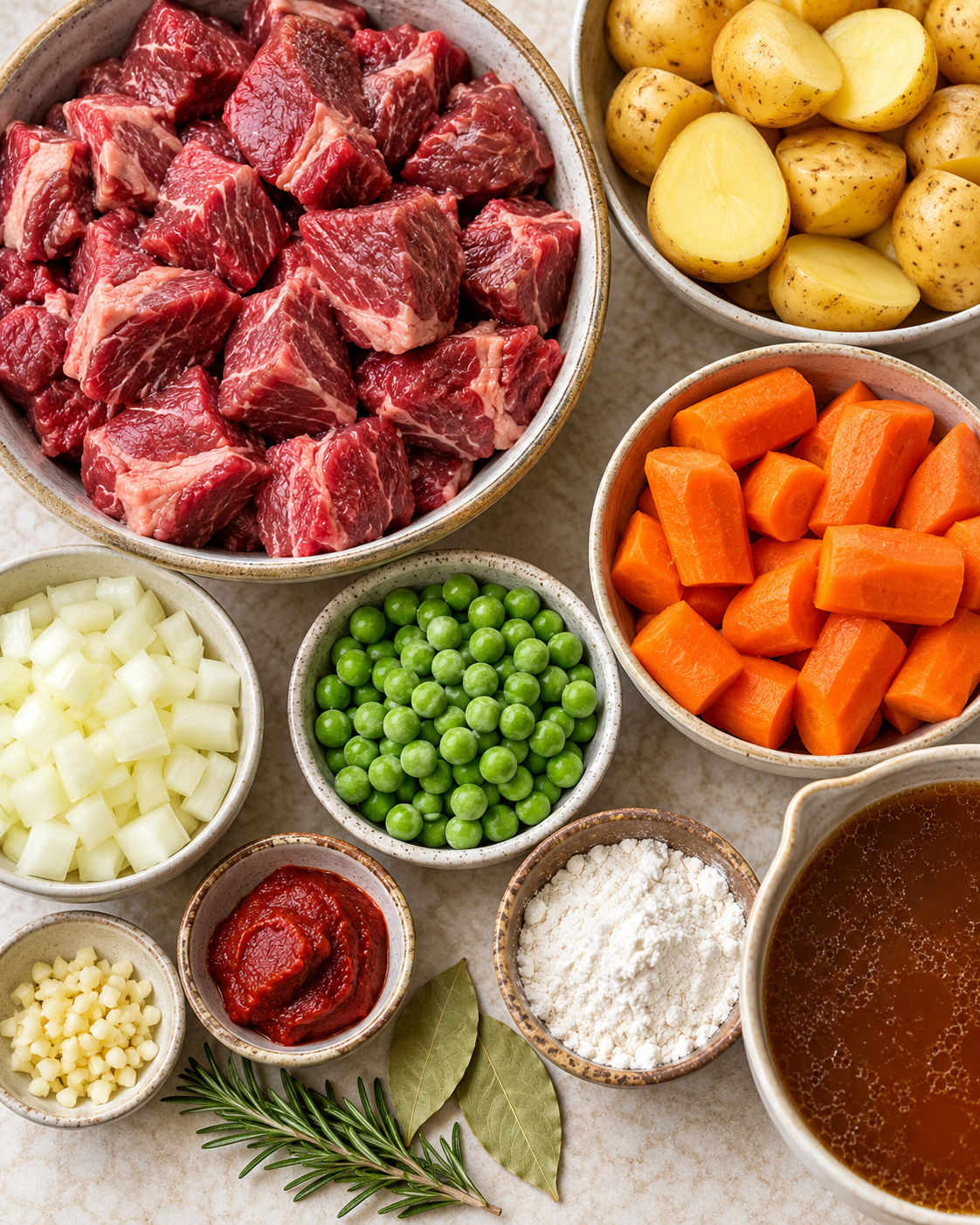
2 1/2 pounds stew meat
-
1/2 teaspoon black pepper
-
1/2 teaspoon garlic salt
-
1/2 teaspoon celery salt
-
1/4 cup flour
-
3 to 6 tablespoons olive oil
-
3 tablespoons cold butter, divided
-
2 cups diced yellow onions
-
4 cloves minced garlic
-
1 cup cabernet sauvignon or merlot
-
4 cups beef broth
-
2 beef bouillon cubes
-
2 tablespoons Worcestershire sauce
-
3 tablespoons tomato paste
-
5 medium carrots, cut into 1-inch chunks
-
1 pound baby Yukon Gold potatoes, halved or quartered
-
2 bay leaves
-
1 rosemary sprig
-
1 cup frozen peas
-
1/4 cup cold water and 3 tablespoons cornstarch, optional
-
2 to 3 drops Gravy Master, optional
Use a 6-quart slow cooker or larger. Chuck roast is the preferred beef option, particularly when it is well marbled. Rump roast and bottom round are also suitable alternatives. Yukon Gold potatoes are used here, and red potatoes are another preferred choice because both hold up better in stew than russet potatoes.
How to Make It
-
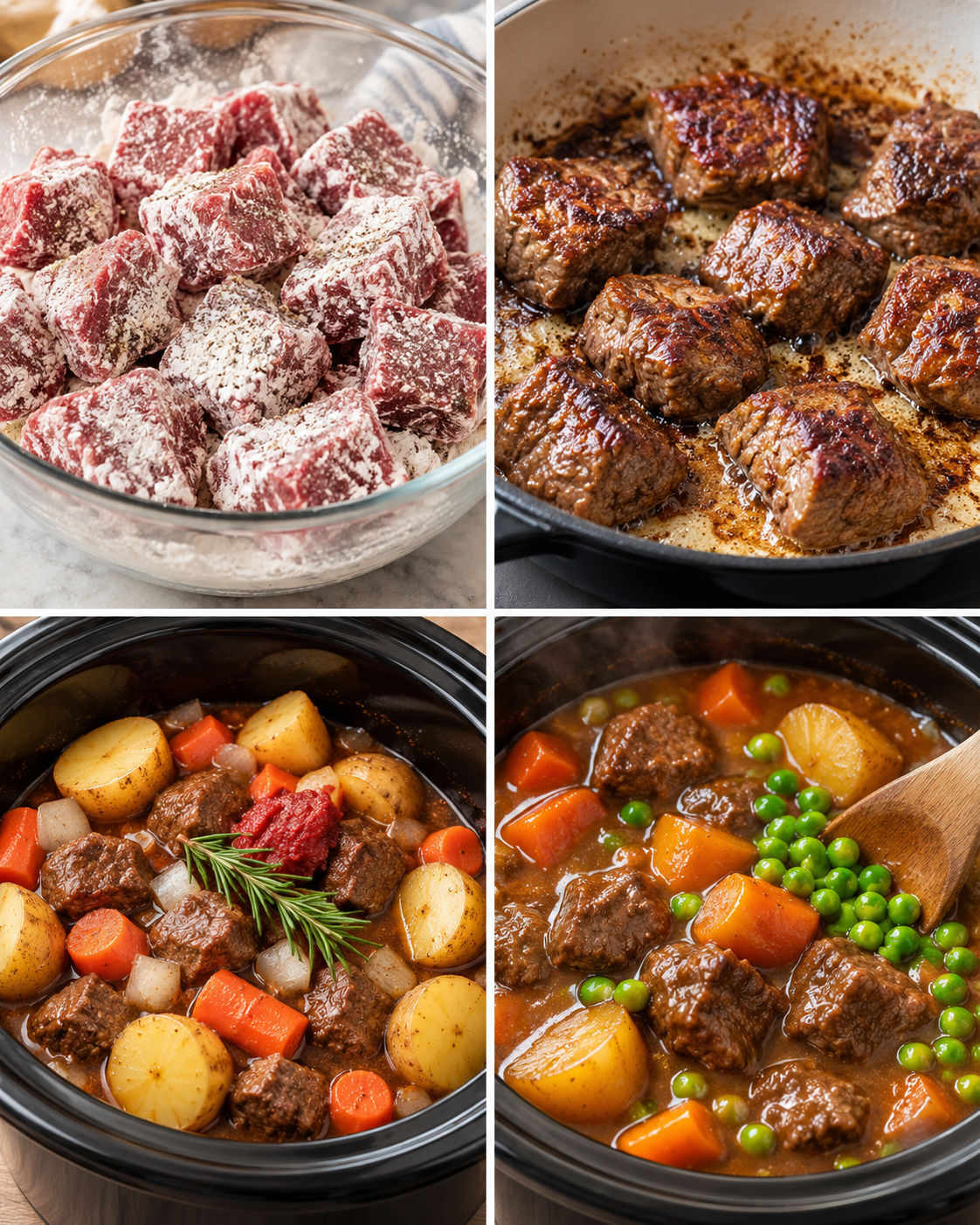
Cut the stew meat into 1-inch cubes and remove large pieces of fat. Smaller areas of marbling may remain on the beef.
-
Season the beef with black pepper, garlic salt, and celery salt. Toss the pieces so the seasoning is distributed, then add the flour and toss again until the beef is coated.
-
Heat 3 tablespoons of olive oil in a large skillet over medium-high heat. Sear the beef in batches for 45 seconds per side, adding more oil as needed. Transfer each browned batch to the slow cooker before starting the next batch.
-
Reduce the skillet to medium heat and melt 1 tablespoon of the divided butter. Add the diced onions and soften them for 5 minutes. Add the minced garlic and cook for 1 minute.
-
Pour some of the wine into the skillet and loosen the browned pieces from the bottom with a spatula. Transfer the onions, garlic, wine, and loosened skillet pieces to the slow cooker.
-
Add the beef broth, bouillon cubes, Worcestershire sauce, tomato paste, carrots, potatoes, bay leaves, and rosemary. Add the remaining wine. Do not add the frozen peas, cornstarch mixture, or 2 tablespoons of cold butter yet.
-
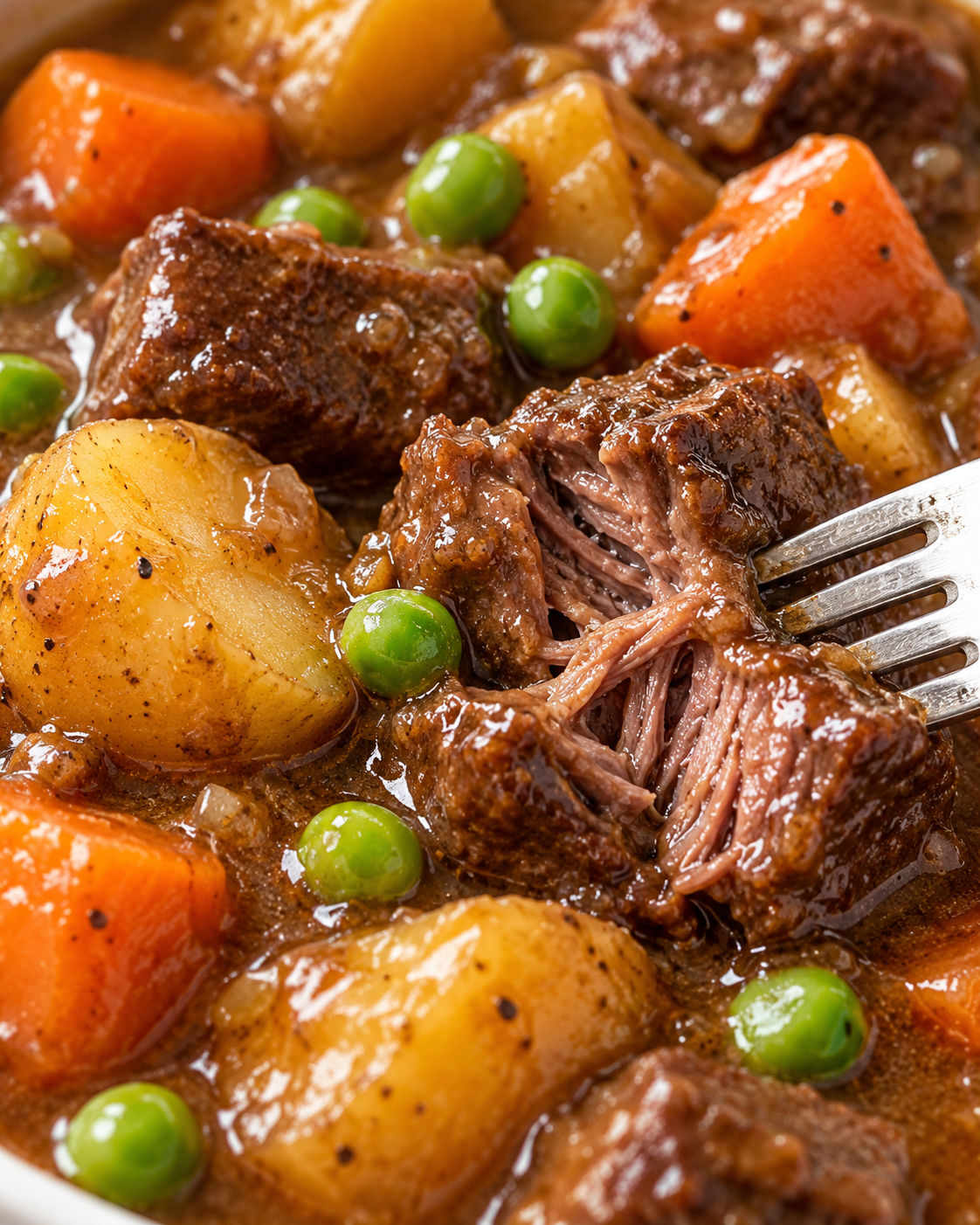
Cover the slow cooker and cook on low for 7 1/2 to 8 hours or on high for 3 1/2 to 4 hours. Continue until the vegetables are softened and the potatoes are fork tender.
-
Add the frozen peas during the final 15 minutes of cooking. Once the stew is finished, remove the bay leaves and rosemary stem.
-
For a thicker broth, stir together 1/4 cup cold water and 3 tablespoons cornstarch. Add the mixture slowly while stirring. The broth will continue to thicken as the stew stands.
-
Turn off the heat and swirl in the remaining 2 tablespoons of cold butter. Add 2 to 3 drops of Gravy Master if a darker color is desired.
The beef is seared in batches so the pieces can brown before they are transferred to the slow cooker. The skillet step also leaves browned pieces that are loosened with wine and carried into the cooking mixture with the onions and garlic. The searing stage is not intended to cook the beef completely; the slow cooker completes the preparation.
Handle the beef only as much as needed to season and coat it. Keeping the pieces in a single layer during each batch helps maintain contact with the skillet. Add more olive oil from the listed range when the pan needs it between batches. The slow cooker receives the beef after each batch, so all the browned pieces can continue together with the vegetables and broth.
The onions and garlic are prepared in the same skillet after the beef is removed. Butter softens the onions, while the garlic follows afterward. Wine loosens the browned remnants from the pan. This mixture is transferred rather than discarded, keeping the onion, garlic, wine, and skillet pieces with the beef broth, tomato paste, Worcestershire sauce, and bouillon.
The potatoes may be halved or quartered, and the carrots are cut into 1-inch chunks. These pieces cook with the beef until the vegetables soften and the potatoes become fork tender. The peas are held back until the end rather than added with the other vegetables. Bay leaves and the rosemary sprig are also removed after cooking.
When the searing step cannot be used, coat the beef with the flour and seasoning mixture and place it directly in the slow cooker with the uncooked onions and garlic. Add the remaining listed slow cooker ingredients in the same sequence, keeping the peas, cornstarch mixture, and finishing butter for their later stages. This alternate path omits the browned skillet pieces and the skillet transfer, while the core beef, vegetable, broth, and seasoning ingredients remain in the preparation.
Toppings and Serving
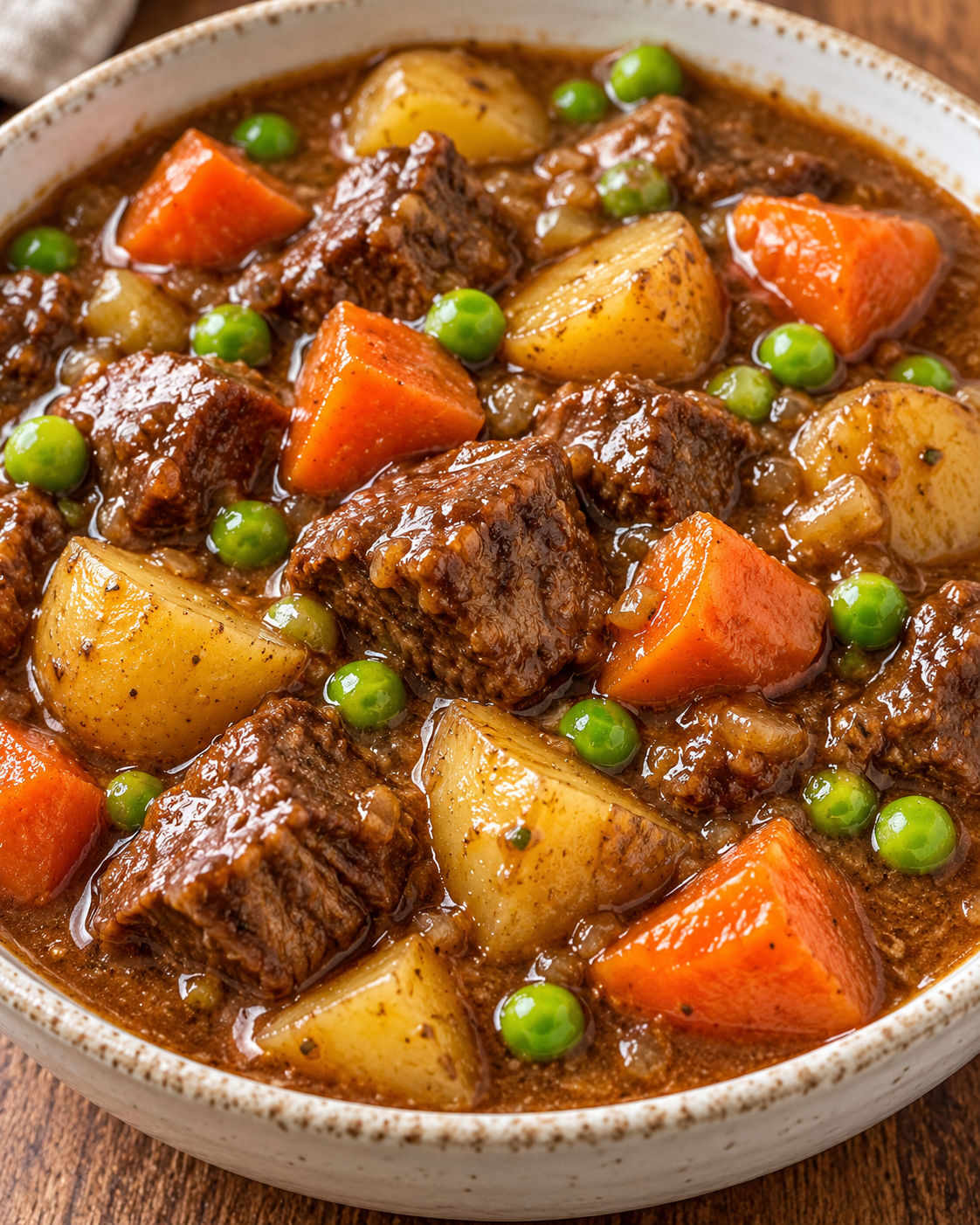
Ladle the completed stew into bowls with beef, potatoes, carrots, peas, and broth distributed together. Warm biscuits, cornbread, or mashed potatoes are the listed accompaniments. Each option can be served alongside the stew, giving the broth and vegetables a simple partner without changing the main preparation.
The cold butter finish is optional in the sense that it is added at the end rather than during the main cooking stage. Swirling it into the finished broth provides the listed final butter finish. Gravy Master is also optional and is used for a darker color. Neither addition is required for the stew to contain beef, vegetables, and broth.
A serving can remain focused on the stew itself: place the beef and vegetables in the bowl, add enough broth to surround them, and set the selected biscuit, cornbread, or mashed potatoes beside it. The five main vegetable elements are onions, carrots, potatoes, peas, and garlic, while bay leaves and rosemary are removed before the bowl is served.
Variations
Chuck roast is the preferred beef choice, with rump roast and bottom round listed as alternatives. Choose well-marbled meat when possible. The beef can be cut into the same 1-inch cubes regardless of which listed cut is selected. When the searing method is used, each option follows the same flour coating and skillet process. When searing is skipped, the raw seasoned beef can be placed directly into the slow cooker.
Yukon Gold and red potatoes are preferred for this type of stew because they hold up better than russet potatoes. Baby Yukon Gold potatoes may be halved or quartered. The potato choice can remain with the core preparation of beef, carrots, peas, onions, garlic, broth, and seasonings.
For a wine-free variation, replace the wine with an equal amount of beef broth or red grape juice and add 2 tablespoons of red wine vinegar. Another listed variation uses 1 cup of extra stout Guinness instead of wine. These options replace the wine component while keeping the rest of the listed stew ingredients available.
Celery, green beans, parsnips, and sweet potatoes are optional additions. They are alternatives to consider when a different vegetable combination is wanted, rather than required parts of the base ingredient list. The core version uses carrots, potatoes, and peas with the beef and broth.
A stovetop variation begins after the beef is seared. Use 1/2 cup of wine and let it reduce for about 5 minutes. Add the remaining ingredients, bring the mixture to a boil, and lower it to a simmer. Return the beef and its juices, cover the pot partially, and cook over medium-low heat for 1 to 2 hours, until the potatoes are fork tender. Stir occasionally and lower the heat if the mixture begins to boil. Add the peas near the end, then use the optional cornstarch and cold butter finishes if desired.
Storage and Make-Ahead
Transfer completed stew to an airtight container and refrigerate it for up to 3 days. For longer storage, place it in an airtight container and freeze it for up to 3 months.
Keep the beef, vegetables, and broth together when portioning the cooked stew. The peas, optional cornstarch mixture, cold butter, and Gravy Master belong to the final cooking sequence, so account for those additions when preparing the dish for storage. The listed storage guidance applies to the completed stew after cooking.
A stored portion includes the same central combination of beef, potatoes, carrots, peas, and broth. The selected serving accompaniment can be kept separate: warm biscuits, cornbread, or mashed potatoes are serving choices rather than ingredients that need to be placed in the storage container with the stew.
FAQ
How many people does this stew serve?
The recipe yields 6 people. The serving size listed for the nutrition information is 1 serving.
What equipment is needed?
Use a 6-quart slow cooker or larger. A large skillet is used for the beef, onions, garlic, and wine when the searing method is followed.
Can the beef go directly into the slow cooker?
Yes. Coat the beef with the flour and seasoning mixture, then place it directly in the slow cooker with the uncooked onions and garlic when searing is not possible. This omits the skillet browning step.
Which beef cut is preferred?
Chuck roast is preferred. Rump roast and bottom round are also listed options, and well-marbled meat is preferred.
Which potatoes are best for this stew?
Yukon Gold and red potatoes are preferred because they hold up better in stew than russet potatoes.
Can the wine be replaced?
Yes. Replace it with an equal amount of beef broth or red grape juice plus 2 tablespoons of red wine vinegar. Another listed option is 1 cup of extra stout Guinness.
When are the peas added?
The frozen peas are added near the end of the slow cooker preparation. They are kept separate from the initial slow cooker additions.
What can thicken the broth?
Stir together 1/4 cup cold water and 3 tablespoons cornstarch, then add the mixture slowly while stirring. The broth continues to thicken as the stew stands.
What gives the stew a darker color?
Add 2 to 3 drops of Gravy Master at the end if a darker color is desired. This addition is optional.
What can be served with the stew?
Warm biscuits, cornbread, and mashed potatoes are the listed serving options.
What are the nutrition details per serving?
The listed nutrition values for 1 serving are 507 calories, 49 grams of protein, 18 grams of fat, 7 grams of saturated fat, 35 grams of carbohydrates, 5 grams of fiber, 7 grams of sugar, 1,035 milligrams of sodium, and 132 milligrams of cholesterol.
More in Uncategorized
Crock Pot Roast with Potatoes, Carrots, and Gravy
Easy Crockpot Chicken and Stuffing
Slow Cooker Beef Stew with Potatoes, Carrots, and Peas