Crock Pot Roast with Potatoes, Carrots, and Gravy

Introduction
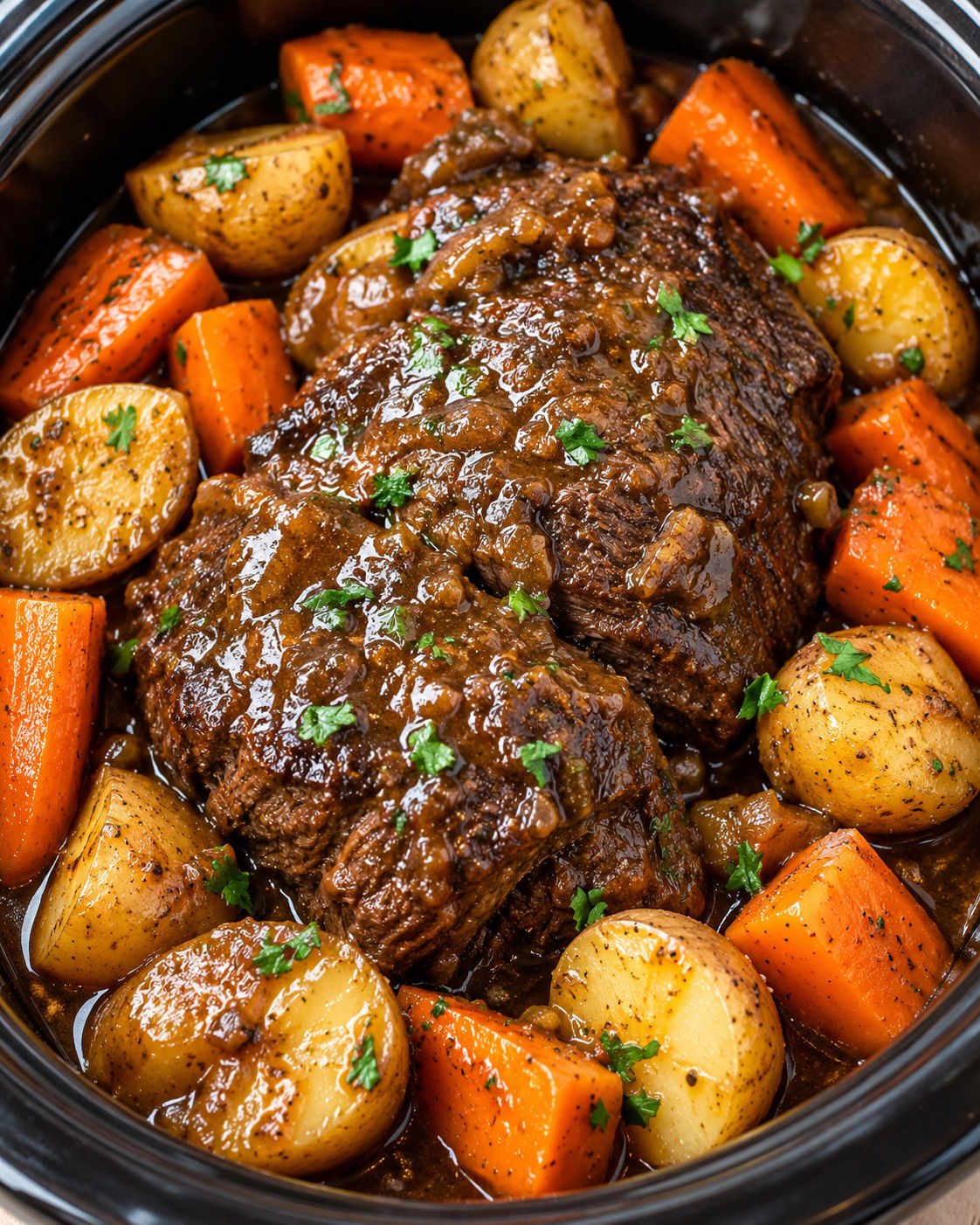
Crock Pot Roast is a hearty main course built around chuck roast, baby potatoes, whole carrots, and brown gravy. The ingredients cook together in the slow cooker, creating a complete one-pot meal for 8 servings. Chuck roast with even marbling is the preferred cut because it supports tender beef that can separate easily when fully cooked.
The roast receives a seasoned flour coating before cooking. The seasoning combines brown sugar, salt, garlic powder, onion powder, chili powder, paprika, and black pepper. Flour clings to the seasoned beef and also contributes to the browned exterior created during searing. Searing is optional, so the meal can be assembled without browning the roast first when a simpler preparation is preferred.
The gravy begins with chicken broth, beef broth, bouillon, onion powder, garlic powder, and low-sodium soy sauce. Worcestershire can be used as an alternative to the soy sauce. After the roast and vegetables are cooked, the juices are transferred to a saucepan or to a slow-cooker crock designed for stovetop use. A smooth cornstarch slurry thickens the juices, optional Kitchen Bouquet deepens the color, and cold unsalted butter completes the gravy.
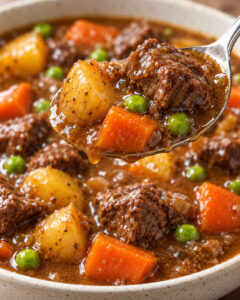
The vegetables remain substantial enough to serve beside the roast. Baby potatoes can be halved, sliced, or left whole according to their size, while whole carrots are peeled and cut into pieces. The finished platter includes the beef, potatoes, carrots, and gravy together, with the sauce spooned over the roast or passed alongside.
Each serving is listed as 564 calories, with 38 grams of protein, 29 grams of fat, 41 grams of carbohydrates, 6 grams of fiber, and 992 milligrams of sodium.
Ingredients
-
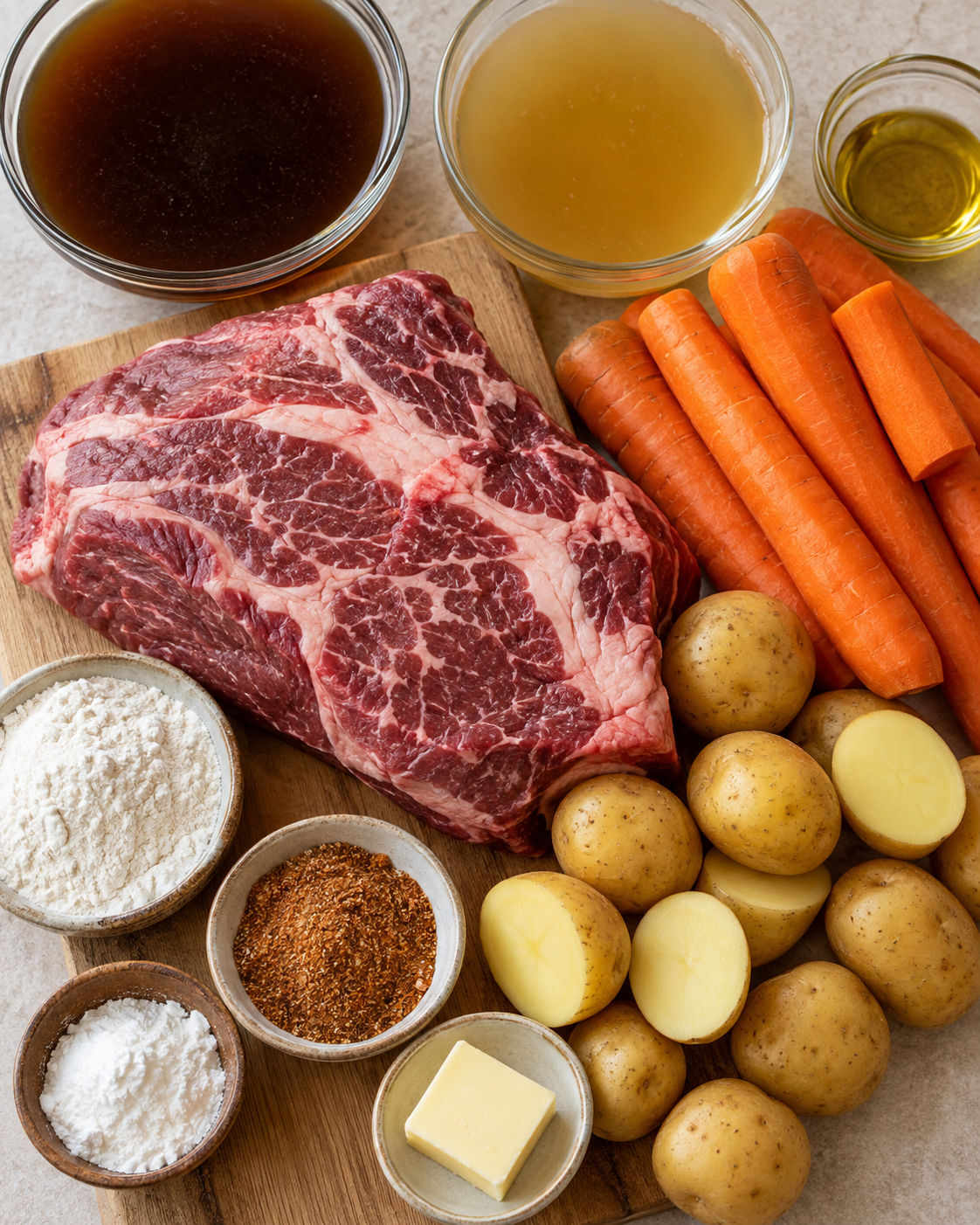
3 to 4 pounds chuck roast
-
2 tablespoons flour
-
2 teaspoons brown sugar
-
1 teaspoon salt
-
1 teaspoon garlic powder for the roast seasoning
-
1 teaspoon onion powder for the roast seasoning
-
1 teaspoon chili powder
-
1 teaspoon paprika
-
1/2 teaspoon black pepper
-
4 tablespoons olive oil
-
1 cup chicken broth
-
2 cups beef broth
-
1 beef bouillon cube or 1 teaspoon better than bouillon
-
1 1/2 teaspoons onion powder for the gravy
-
1 teaspoon garlic powder for the gravy
-
1 teaspoon low-sodium soy sauce, with Worcestershire as an alternative
-
2 1/4 pounds baby potatoes
-
2 pounds whole carrots
-
3 tablespoons cornstarch
-
3 tablespoons cold water
-
2 to 3 drops Kitchen Bouquet browning and seasoning sauce, optional
-
1 tablespoon cold unsalted butter
The main beef choice is chuck roast with even marbling. Rump roast can replace the chuck, but it may not shred as easily. Bottom round roast is another alternative; it may have a firmer finished texture and can be better suited to slicing.
Three- to four-inch round white potatoes can be cut in half before they go into the slow cooker. Red potatoes are another option. Yukon Gold potatoes can be sliced, while potatoes measuring one to two inches can remain whole. The potato pieces should be reasonably similar in size when they are cut.
The whole carrots are peeled and cut into halves or thirds. Especially thick carrots can be split lengthwise so the pieces are more uniform. Celery, sliced yellow onions, smashed garlic, fresh rosemary, and fresh thyme are optional additions for a variation of the slow-cooker assembly.
The finishing ingredients are kept separate from the initial seasoning. Cornstarch and cold water form the slurry used to thicken the cooking juices. Kitchen Bouquet is optional and is used when a darker gravy color is wanted. Cold unsalted butter is stirred into the finished gravy just before serving.
How to Make It
-
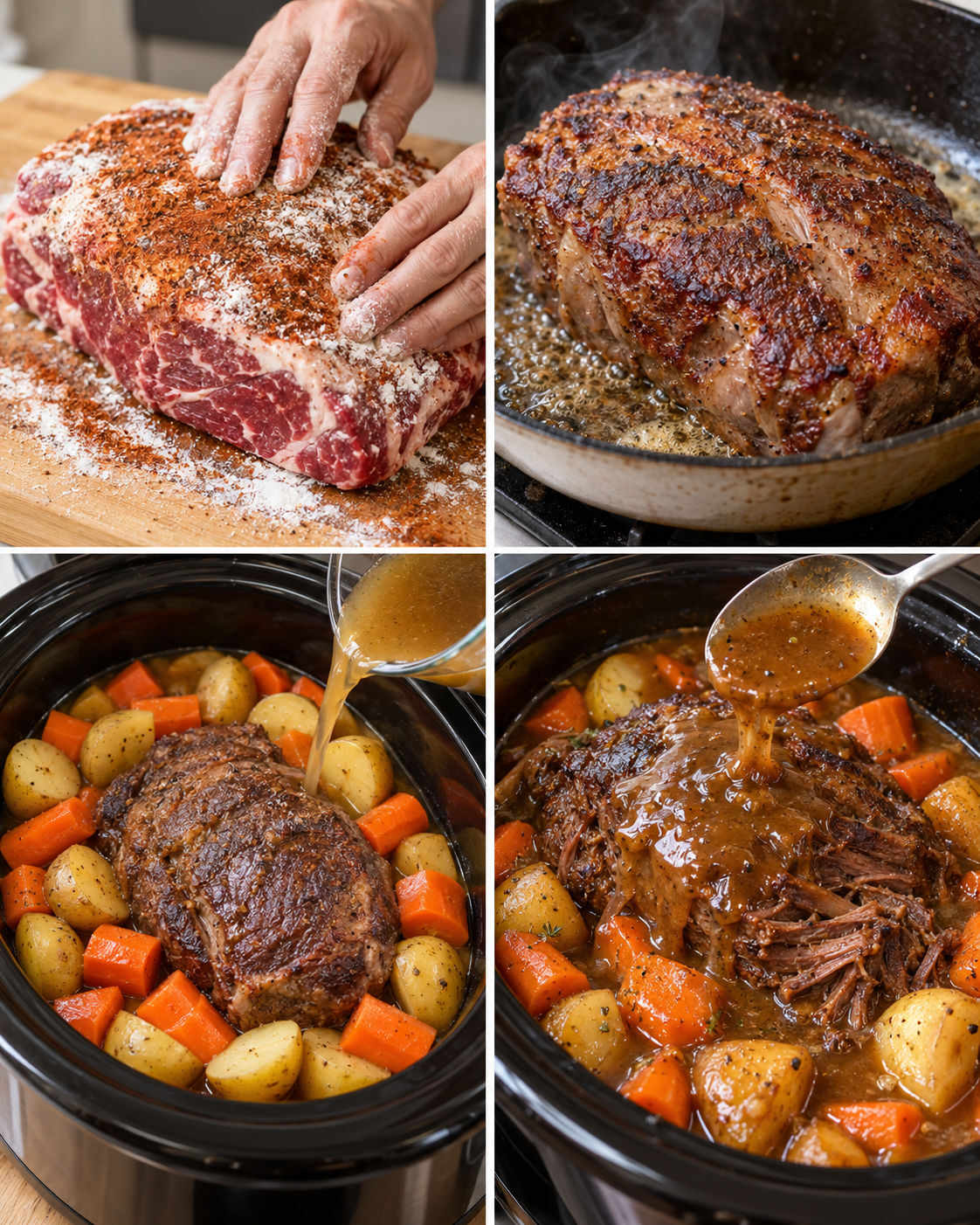
Pat the chuck roast completely dry. Combine the brown sugar, salt, garlic powder, onion powder, chili powder, paprika, and black pepper in a small bowl. Rub the seasoning mixture over every side of the beef, then coat the seasoned roast with the flour.
-
Add the olive oil to a large pan and sear the coated roast until a brown crust forms. Turn the beef so the sides receive browning as well. Searing is optional; if it is skipped, keep the seasoned, floured roast ready for the slow-cooker assembly.
-
Whisk the chicken broth, beef broth, bouillon, onion powder, garlic powder, and low-sodium soy sauce together. Worcestershire can replace the soy sauce. If the roast was seared, pour part of this broth mixture into the pan and loosen the browned bits from the bottom and sides.
-
Transfer the pan juices and loosened browned bits to the slow cooker. Add the remaining broth mixture. If the searing step was skipped, pour the combined gravy mixture into the slow cooker instead.
-
Place the roast into the slow cooker. Include any juices that collected while the seared beef rested. The liquid does not need to completely cover the roast.
-
Prepare the potatoes. Cut three- to four-inch round white potatoes in half, or cut larger pieces into halves or thirds of similar size. Red potatoes can be substituted, and sliced Yukon Gold potatoes can be used. Leave one- to two-inch potatoes whole if desired.
-
Peel the carrots and cut them into halves or thirds. Split particularly thick carrots lengthwise. Arrange the potatoes around the roast and place the carrots on top. Celery, sliced yellow onions, smashed garlic, fresh rosemary, or fresh thyme can be added when using one of the listed variations.
-
Cover the slow cooker and cook on HIGH for 5 to 6 hours or on LOW for 8 to 10 hours. Check the roast for fork tenderness before serving. A fork should slide into the meat easily, and the beef should separate with little resistance. If the beef remains tough, continue cooking on LOW and check again later.
-
Carefully remove the roast, potatoes, and carrots from the slow cooker. Arrange them on a serving platter. Keep the platter covered while the gravy is finished so the beef and vegetables remain ready for serving.
-
Transfer the cooking juices to a saucepan. If the slow-cooker crock is designed for stovetop use, the crock can be used for this step instead. Bring the juices to a boil.
-
Whisk the cornstarch and cold water together in a separate bowl until the mixture is completely smooth. Pour the slurry gradually into the boiling juices while whisking continuously so it blends into the gravy.
-
Reduce the heat to LOW and simmer the gravy until it reaches the desired thickness. Add 2 to 3 drops of Kitchen Bouquet if a darker color is wanted. Swirl in the cold unsalted butter just before serving.
-
Taste the potatoes and carrots. Add salt and pepper if desired. Serve the roast with the vegetables and spoon the finished brown gravy over the platter or pass it alongside.
Toppings and Serving
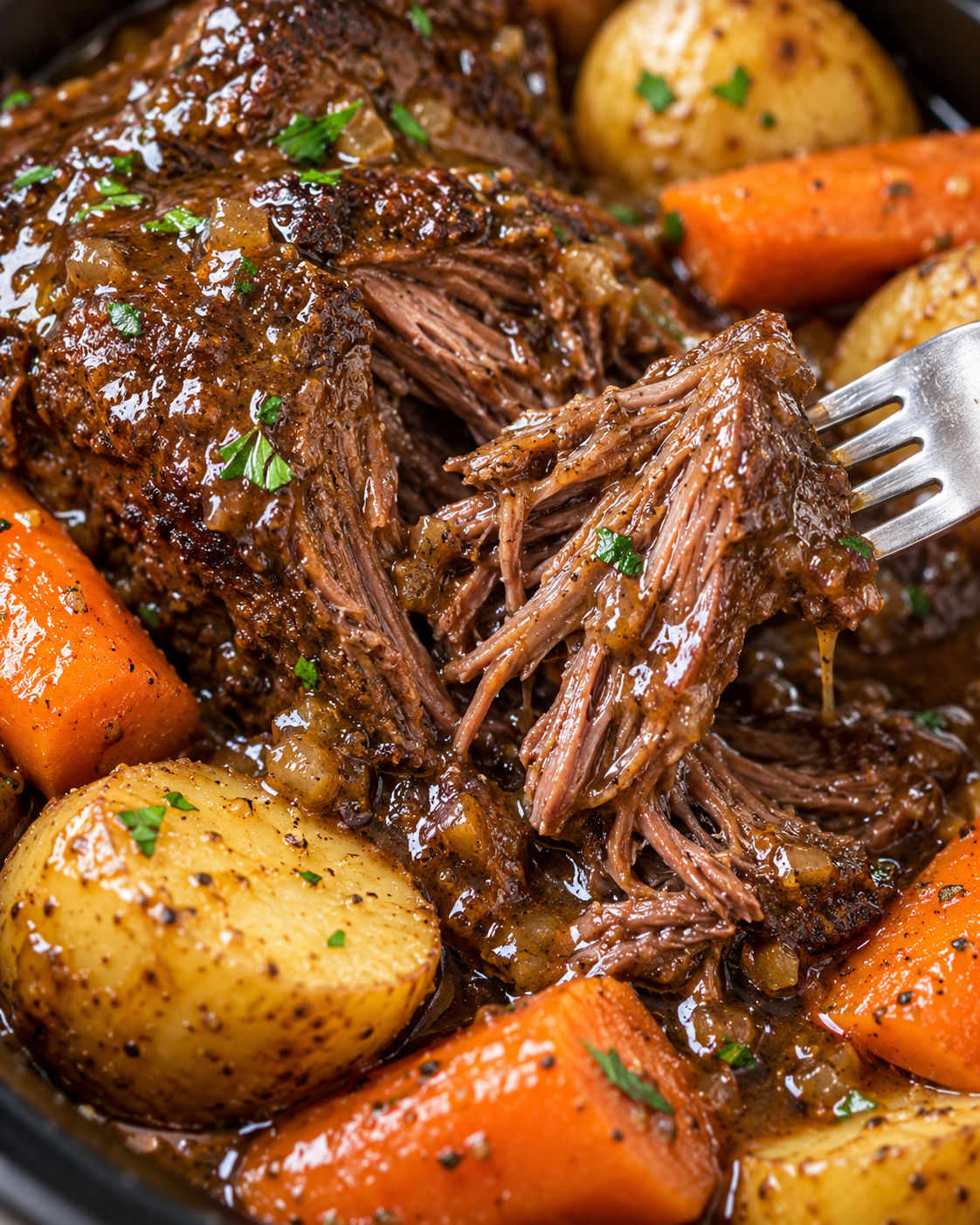
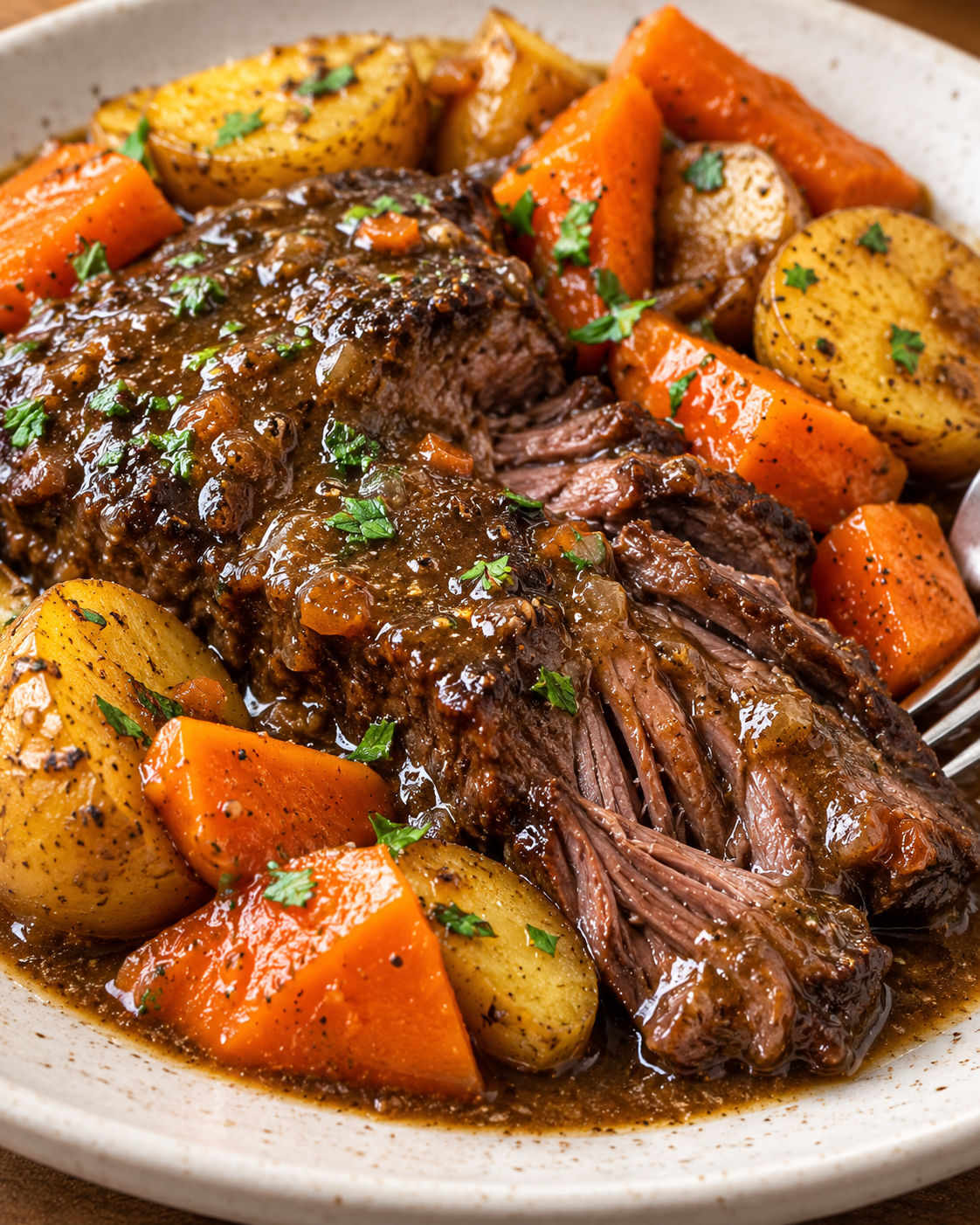
The finished dish is served with the roast, potatoes, and carrots on one platter. Brown gravy can be spooned over the beef and vegetables, or it can be passed alongside so each serving receives the preferred amount. The gravy is the listed finishing sauce for the meal, and the vegetables remain part of the central one-pot presentation.
For a darker gravy color, add the optional Kitchen Bouquet during the final gravy step. It is not required. The gravy can be served without it, and the cold unsalted butter remains the final listed addition to the sauce. Salt and pepper can be added to the potatoes and carrots before serving if desired.
The roast can be separated into tender pieces when it reaches the listed fork-tender texture. Bottom round may be better suited to slices because it can remain firmer, while rump roast may not shred as easily. These differences make the beef cut part of the serving style as well as a variation in the ingredient list.
Optional additions can be included in the slow cooker when a different version is wanted. Celery, sliced yellow onions, smashed garlic, fresh rosemary, and fresh thyme are all listed possibilities. They are not required for the main preparation and should not replace the potatoes or carrots.
A second finished-dish view can emphasize the brown gravy over sliced or separated roast pieces. Keep the visual serving elements limited to the roast, potatoes, carrots, gravy, and serving platter.
Variations
Chuck roast remains the preferred beef because even marbling supports tender results. Rump roast can be used when a different cut is available, but it may not separate as easily. Bottom round roast may produce firmer beef and can work better when slices are preferred. Roast size, thickness, and the slow cooker used can affect the finished texture.
The potato format can change while the main preparation stays the same. Three- to four-inch round white potatoes can be halved. Red potatoes can replace them. Yukon Gold potatoes can be sliced, and one- to two-inch potatoes can remain whole. Cutting larger potatoes into similar-sized pieces keeps the preparation consistent with the listed options.
Searing provides a browned exterior and adds color, texture, and depth to the gravy. It is optional, so the seasoned and floured roast can go directly into the slow cooker. The broth mixture is still combined with the bouillon, onion powder, garlic powder, and soy sauce or Worcestershire alternative.
Kitchen Bouquet is another optional choice. Add 2 to 3 drops when a darker gravy color is wanted, or leave it out when the listed broth-based gravy color is preferred. The cornstarch slurry and cold butter remain the finishing steps for thickening and completing the sauce.
Celery, sliced yellow onions, smashed garlic, fresh rosemary, and fresh thyme can be added to the slow cooker. These additions create a variation without changing the central combination of chuck roast, potatoes, carrots, and gravy. They are optional rather than necessary ingredients.
Storage and Make-Ahead
For advance preparation, mix the gravy ingredients, prepare the carrots, and wash and dry the potatoes without cutting them. The potatoes remain uncut during refrigeration so they are ready to prepare when the slow cooker is assembled. The roast can be seared immediately before cooking, or it can be placed into the slow cooker without searing.
Refrigerate the prepared components for up to 1 day. When beginning with chilled components, add 30 minutes to the cooking time. Continue with the same assembly: place the roast in the gravy mixture, arrange the potatoes around it, place the carrots on top, cover the slow cooker, and cook until the beef is fork-tender.
Store leftovers in an airtight container in the refrigerator for up to 3 days. The roast, vegetables, and gravy can be stored together or kept in separate containers. Keeping the gravy with the beef and vegetables makes reheating and serving straightforward, while separate storage allows the components to be arranged again on a platter.
The cooked roast, potatoes, carrots, and gravy can be frozen for up to 3 months. Label the container with the contents and storage date if desired. Thawing and serving should preserve the components together so the gravy remains available for the beef and vegetables.
FAQ
Do you have to brown the roast first?
No. Searing is optional. It creates a brown crust and adds color, texture, and depth to the gravy, but the seasoned and floured roast can be placed directly into the slow cooker.
Does the roast need to be completely covered with liquid?
No. The roast does not need to be completely submerged. The broth mixture becomes part of the cooking juices, and the roast and vegetables cook together under the covered slow-cooker assembly.
Is LOW or HIGH better for this roast?
LOW is recommended when time allows. HIGH also works, but the roast should be checked for easy fork tenderness before serving. If it remains tough, continue cooking on LOW and check again later.
Can a frozen roast go directly into the slow cooker?
Thaw the roast completely in the refrigerator before slow cooking. The listed preparation is based on a thawed roast that can be dried, seasoned, coated with flour, and seared or placed directly into the slow cooker.
Why is the roast still tough?
Continue cooking on LOW until a fork slides into the meat easily and the beef separates with little resistance. Cooking results can vary with the roast’s size, thickness, and the slow cooker used. Rump roast and bottom round can also have different textures from chuck roast.
What if the beef is dry?
Leaner cuts can dry more easily than chuck roast with even marbling. Chuck is the preferred cut for this preparation. Choosing chuck roast rather than a leaner alternative supports the tender texture associated with the main version.
How can the gravy become thicker?
Whisk 3 tablespoons of cornstarch with 3 tablespoons of cold water until smooth. Add the slurry gradually to the boiling cooking juices while whisking continuously, then reduce the heat to LOW and simmer until the gravy reaches the desired thickness.
Can the gravy be made darker?
Yes. Add 2 to 3 drops of optional Kitchen Bouquet during the final gravy step when a darker color is wanted. The sauce can also be served without Kitchen Bouquet.
What is the serving size and listed nutrition?
The recipe makes 8 servings, with a serving size listed as 1 serving. Each serving is listed at 564 calories, 38 grams of protein, 29 grams of fat, 41 grams of carbohydrates, 6 grams of fiber, and 992 milligrams of sodium.
More in Uncategorized
Crock Pot Roast with Potatoes, Carrots, and Gravy
Easy Crockpot Chicken and Stuffing
Slow Cooker Beef Stew with Potatoes, Carrots, and Peas