Slow Cooker Turkey Breast with Citrus Herb Butter and Gravy

Slow Cooker Turkey Breast with Citrus Herb Butter and Gravy
Introduction
Slow cooker turkey breast creates a focused main course for a holiday meal, a Thanksgiving dinner for a small gathering, or a simple family dinner. This recipe uses a bone-in turkey breast, a thick layer of citrus herb butter, and sliced onion arranged beneath the meat. The turkey cooks gently until the center reaches the required doneness, then the skin is browned separately for a crisp exterior.
The flavor comes from orange zest, fresh sage, fresh thyme, fresh rosemary, garlic, dried oregano, salt, pepper, and butter. The onions form the base inside the slow cooker, while the collected drippings become the liquid for a simple gravy. Together, the tender meat, browned skin, and gravy make a complete centerpiece without preparing a whole bird.
The finished turkey can be carved and arranged on a serving platter, with gravy spooned over the slices or passed separately. The recipe yields 8 servings. Per serving, the listed nutrition is 357 calories, 50 g protein, 15 g fat, 5 g carbohydrates, 1 g fiber, 1 g sugar, 1314 mg sodium, 8 g saturated fat, 154 mg cholesterol, and 0.5 g trans fat.
Ingredients
-
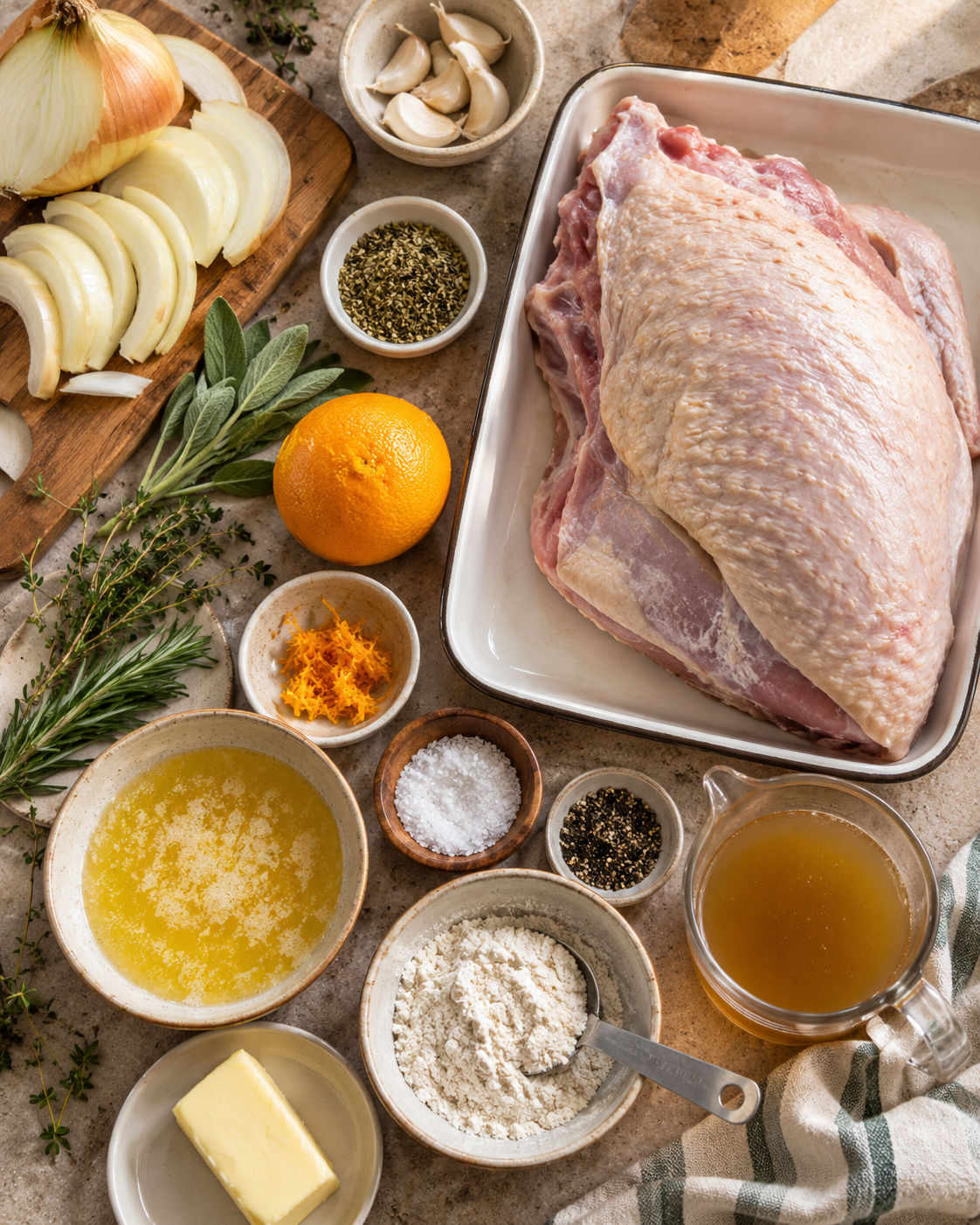
4 lb bone-in turkey breast
-
1 large onion, sliced thick
-
4 tablespoons unsalted butter, melted
-
Zest of 1 orange
-
1/2 tablespoon chopped fresh sage
-
1/2 tablespoon chopped fresh thyme
-
4 freshly minced garlic cloves
-
1/2 teaspoon pepper
-
1/2 tablespoon chopped fresh rosemary
-
1 teaspoon dried oregano
-
2 to 3 teaspoons salt
-
2 cups slow cooker drippings, adding broth if needed
-
1/4 cup butter
-
1/4 cup flour
-
Salt and pepper to taste
The turkey is the central ingredient in this Crock Pot turkey breast preparation. A bone-in cut provides the form used in the method, while a single-breasted or double-breasted cut can fit the same general arrangement. Some cuts may have legs attached. Boneless turkey breast may be used as well, but it cooks more quickly, so its center needs attention during cooking.
The herb butter combines melted unsalted butter with orange zest, sage, thyme, garlic, pepper, rosemary, oregano, and salt. Orange zest supplies the citrus element without adding an unlisted liquid. Fresh herbs give the mixture its main herb character, and dried oregano rounds out the blend. Salted butter can be used if the added salt is adjusted. Olive oil may replace butter in the rub.
The onion is sliced thick and placed underneath the turkey. This arrangement keeps the listed vegetable in a clear layer beneath the breast. The gravy ingredients are the slow cooker drippings, butter, and flour. If the drippings do not reach the listed volume, broth may be added. Gluten-free all-purpose flour may replace regular flour in the gravy.
How to Make It
-
Bring the thawed turkey breast to room temperature before cooking. This preparation begins with a thawed cut rather than a frozen one.
-
Whisk the melted butter, orange zest, chopped sage, chopped thyme, freshly minced garlic, pepper, chopped rosemary, dried oregano, and salt in a bowl. Continue whisking until the herb butter mixture is evenly combined.
-
Dry the turkey breast. Coat the exterior with the herb butter, working some of the mixture beneath the skin as well. Keep the coating distributed over the surface rather than leaving the butter only in one area.
-
Arrange the thick onion slices across the bottom of the slow cooker. Place the coated turkey breast over the onion bed, using the onions as the layer beneath the meat.
-
Cover the slow cooker and cook on low until the center reaches 165°F. Begin checking a larger turkey at 5 hours. A smaller turkey breast may take 4 to 5 hours on low. Do not use the high setting for this preparation.
-
Move the cooked turkey to a sheet pan, baking pan, or other heat-safe dish. Broil on high until the skin is browned. Watch the exterior during the 4- to 6-minute browning period so the desired browned finish is reached.
-
Remove the turkey from the broiler and let it rest for 20 minutes before carving. Keep the turkey intact during this pause, then slice it for serving.
-
Pour the slow cooker drippings into a measuring container. Add broth if needed to reach 2 cups. The drippings may be strained if a smoother gravy is preferred.
-
Melt 1/4 cup butter in a saucepan over medium heat. Whisk in the flour for about 1 minute, making sure the butter and flour are fully combined.
-
Add half of the drippings mixture gradually while whisking. Keep whisking as the liquid meets the flour mixture so the gravy remains smooth.
-
Slowly add the remaining drippings while whisking. Cook for 3 to 4 minutes, or until the gravy is nearly the desired thickness.
-
Remove the gravy from the stove and let it stand for a few minutes. Season with salt and pepper to taste. Carve the rested turkey, arrange the slices on a serving dish, and serve with the gravy.
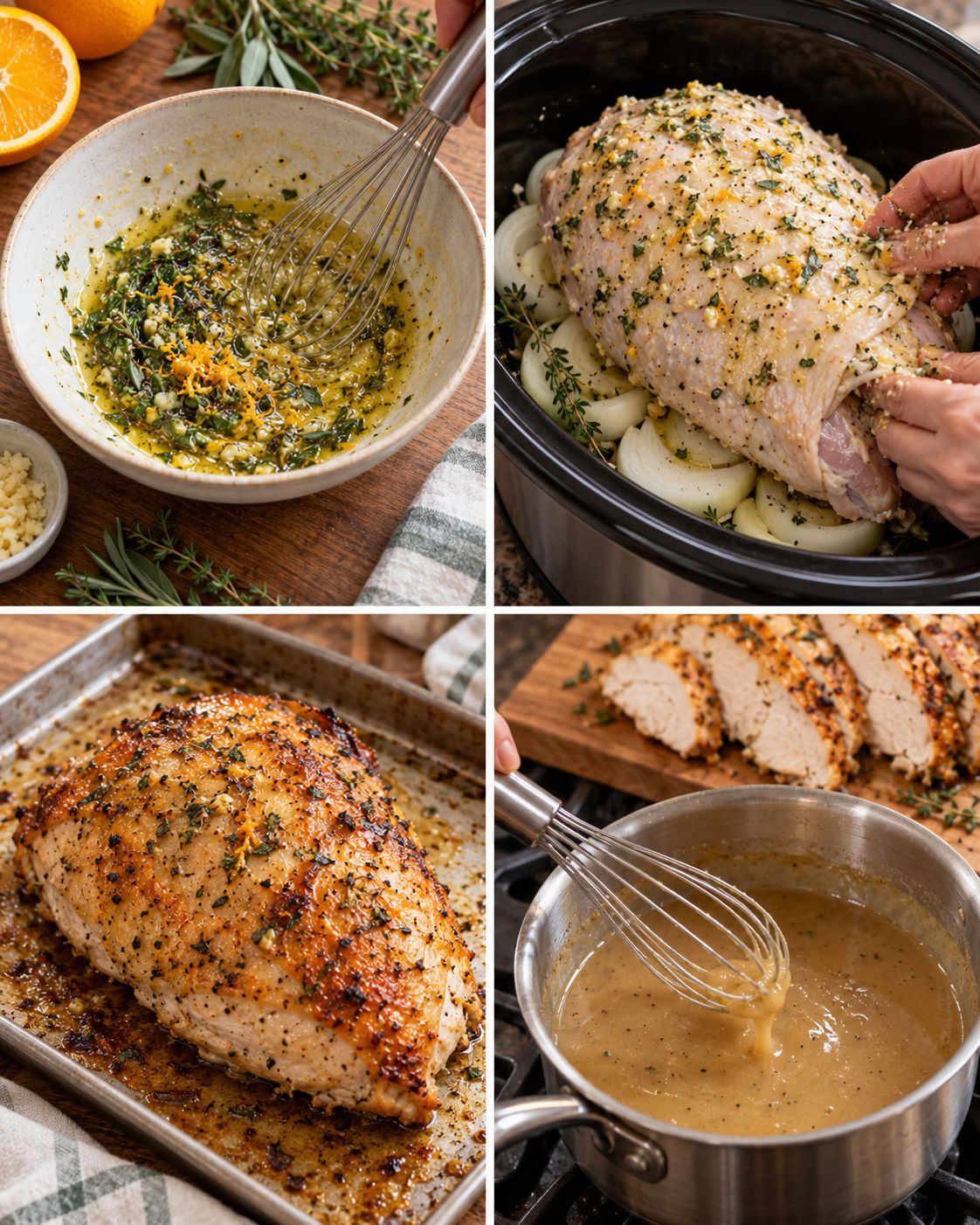
The method has three distinct parts: coating and arranging the turkey, cooking the breast in the slow cooker, and finishing the skin under high heat. The coating should cover the outer surface and reach beneath some of the skin. The onion layer belongs beneath the turkey rather than mixed into the butter.
Once the turkey is cooked, the separate browning step changes the exterior without changing the slow cooker arrangement. The skin becomes browned and crisp while the meat remains tender and juicy. Resting comes before carving, and carving comes before the gravy is served over the slices.
The drippings remain important after the turkey leaves the slow cooker. They supply the liquid portion of the gravy, while butter and flour create the base that thickens as it cooks. Add the liquid in stages and whisk throughout the process. Season only after the gravy has come together, because the drippings and butter already contribute flavor.
Toppings and Serving
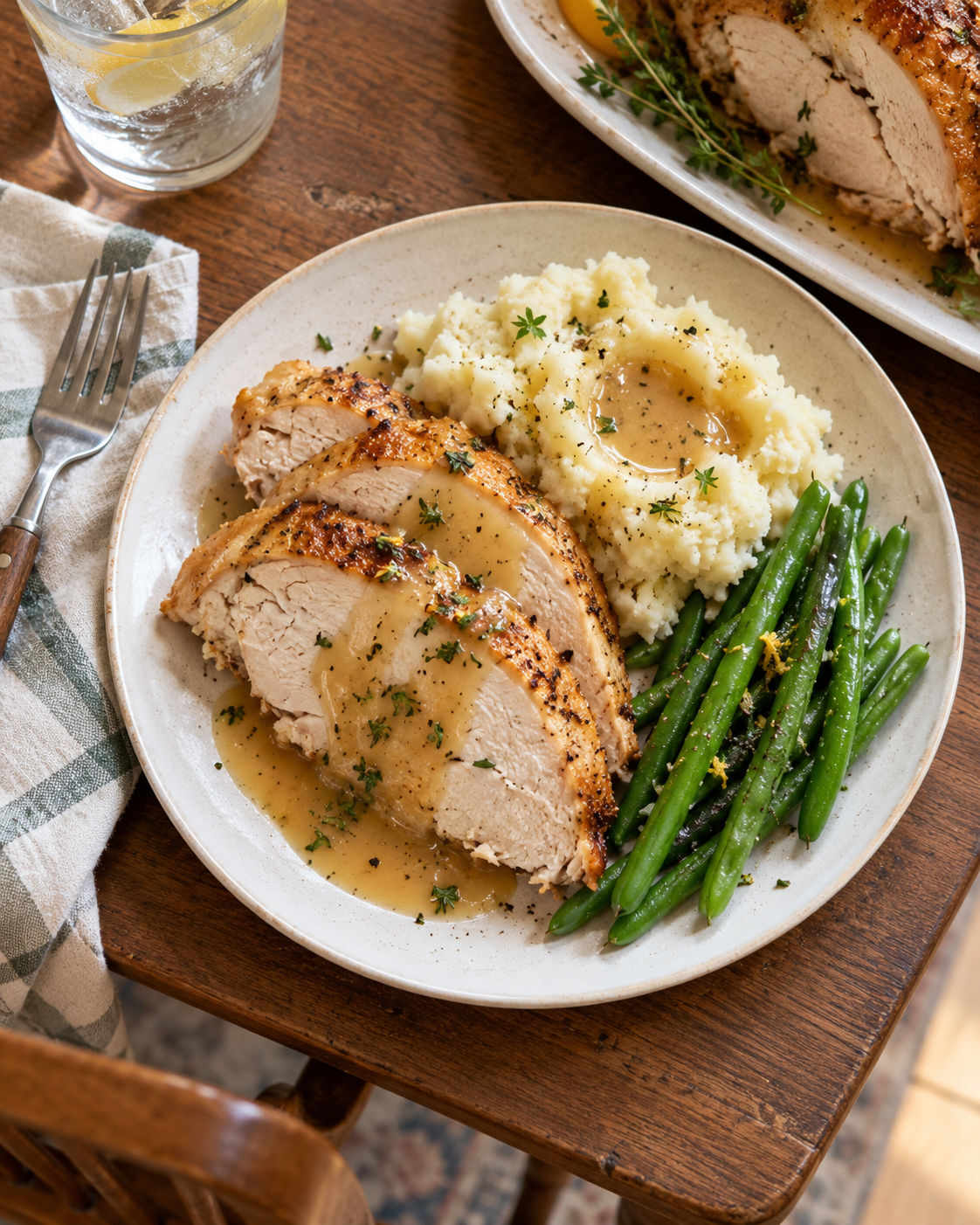
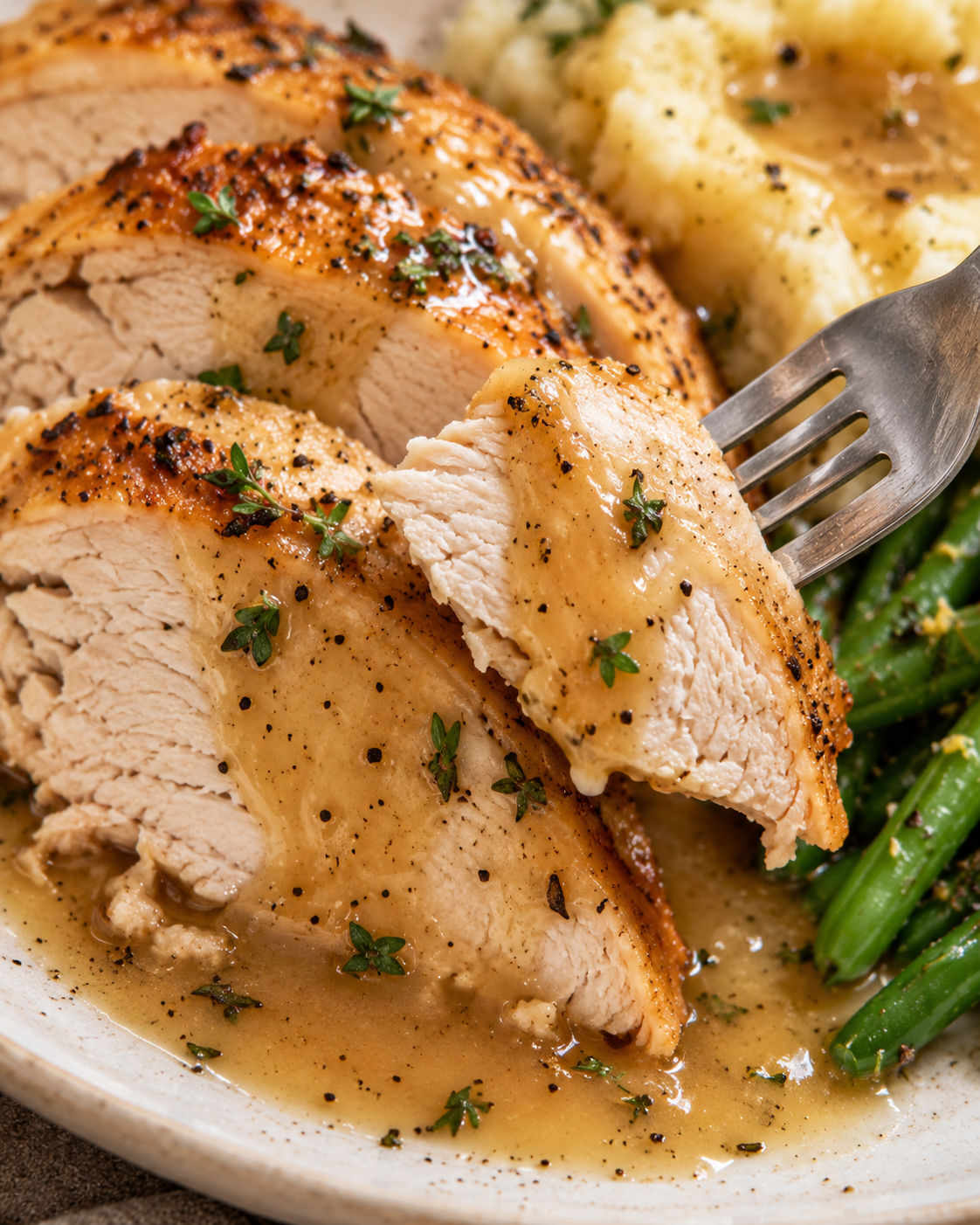
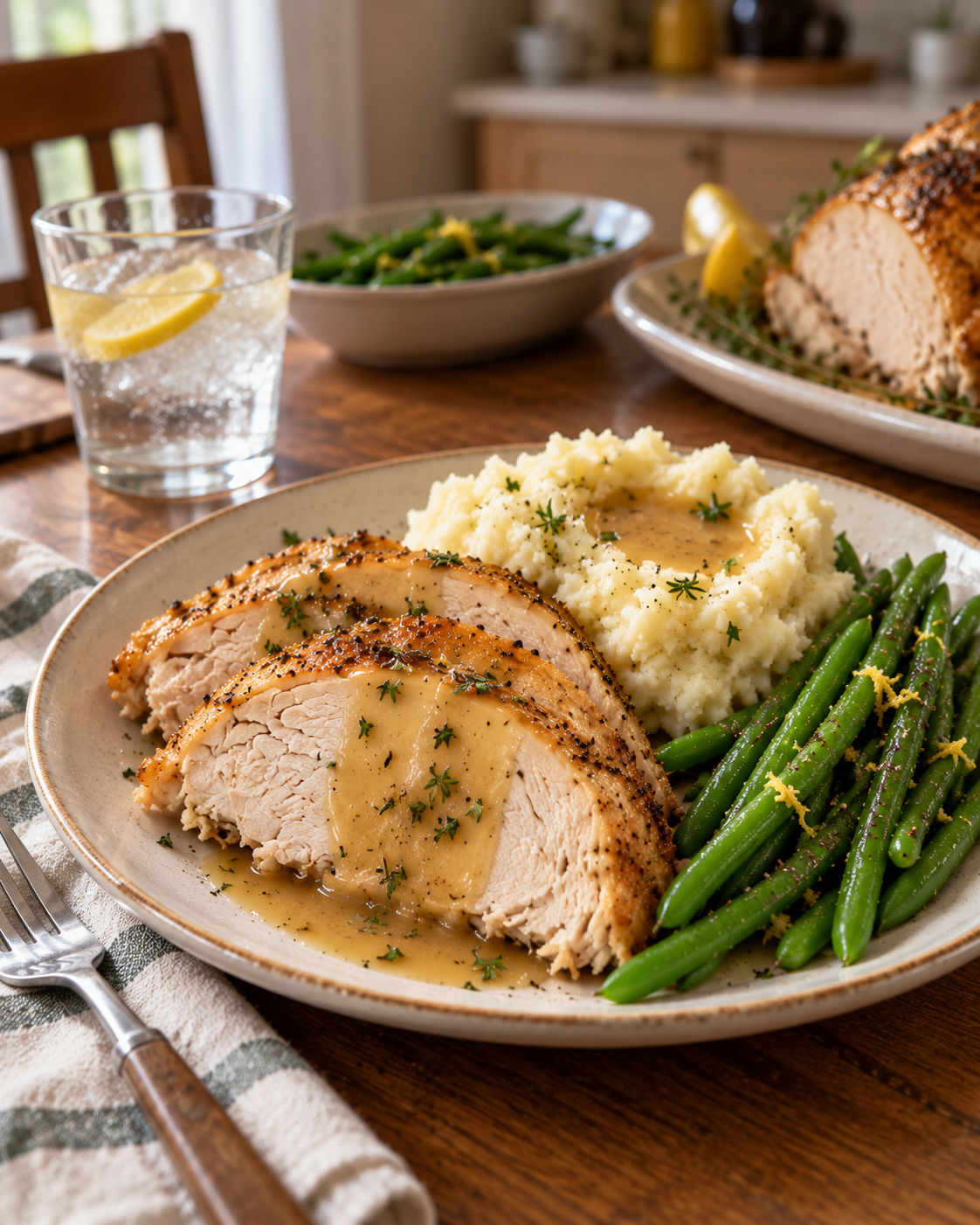
Serve the sliced turkey with the homemade gravy made from the cooking drippings. The browned skin, tender slices, citrus herb butter, and smooth gravy provide the main elements of the finished plate. Arrange the meat on a serving platter, then spoon the gravy over individual portions or pass it separately.
For a holiday meal, pair the turkey with parmesan mashed potatoes, cornbread casserole, cranberry chutney, roasted green beans, Boursin mashed potatoes, Brussels sprouts, or dinner rolls. These sides keep the meal centered on the turkey and gravy while offering several different combinations for the table.
A broader Thanksgiving dinner for a small gathering can also include apple sage stuffing, maple-glazed herb roasted carrots, Parmesan-crusted potatoes, or a fall apple arugula salad. The same choices also suit a simple family dinner outside the holiday season. The turkey does not need a complicated presentation: the browned exterior and gravy provide the defining finish.
The recipe is designed as a main course rather than as a mixed dish. Keep the slices visible on the platter and keep the gravy available with them. This makes the tender texture, browned skin, and sauce easy to serve together.
Variations
A single-breasted turkey breast or a double-breasted turkey breast may be selected according to the available cut. Some turkey breast cuts may include legs. A boneless turkey breast is another option and cooks more quickly than the bone-in breast, so the center should be monitored during the cooking process.
Unsalted butter is listed for the herb mixture because it leaves the added salt adjustable. Salted butter may replace it when the salt in the mixture is reduced as needed. Olive oil may also be used instead of butter in the rub. The coating will still include the orange zest, herbs, garlic, oregano, pepper, and adjusted salt.
A poultry seasoning blend may replace the fresh herbs when fresh sage, thyme, or rosemary is not available. Fresh oregano may replace dried oregano. These substitutions keep the herb component within the listed variation options without adding another seasoning.
For the gravy, gluten-free all-purpose flour may replace regular flour. The listed butter and drippings remain the base, and the liquid should still be added gradually while whisking. If the turkey is packaged frozen, check whether it has already been brined. If it has not been brined, brining is recommended.
Storage and Make-Ahead
The turkey is best prepared on the day it will be served. Reheating can reduce the tenderness and juiciness, so the cooking, browning, resting, carving, and gravy steps are best organized around serving day when possible.
Store leftover turkey in an airtight container in the refrigerator for about 3 to 4 days. Keep the cooked meat contained rather than leaving it exposed. The slices can be served with the gravy as leftovers.
For longer storage, cool the cooked meat completely. Place it in a freezer-safe bag or container and freeze for up to 3 months. Thaw frozen turkey overnight in the refrigerator before reheating.
The make-ahead choice involves a tradeoff: preparing the turkey in advance can make serving-day work more convenient, while the listed preparation-day approach better supports tenderness and juiciness. If leftovers remain, use the storage directions rather than holding the cooked meat at room temperature.
FAQ
Can a frozen turkey breast be cooked in the slow cooker?
No. The recipe advises against cooking a frozen turkey breast in the slow cooker because of food-safety risk. Use another cooking method for a frozen turkey breast instead.
Should the turkey skin be left on?
Keep the skin on when possible. It supports the moist texture described for the meat and provides the exterior that browns and becomes crisp during the final broiling step.
Does the turkey breast need to be brined?
Packaged frozen turkey breasts may already have been brined. If the turkey has not been brined, brining is recommended. Check the package information before deciding whether additional brining is needed.
Can boneless turkey breast be used?
Yes. Boneless turkey breast may be used, but it cooks more quickly than the bone-in cut. Monitor the center during cooking and use the listed doneness check rather than relying only on the cut’s size.
What can be served with slow cooker turkey breast?
Serve it with gravy and sides such as parmesan mashed potatoes, cornbread casserole, cranberry chutney, roasted green beans, Boursin mashed potatoes, Brussels sprouts, dinner rolls, apple sage stuffing, maple-glazed herb roasted carrots, Parmesan-crusted potatoes, or fall apple arugula salad.
What makes the gravy?
The gravy uses 2 cups of slow cooker drippings, with broth added if needed, along with 1/4 cup butter and 1/4 cup flour. The butter and flour are whisked together, the drippings are added gradually, and the mixture cooks until nearly the desired thickness. Salt and pepper are added to taste.
How should the finished turkey be served?
Rest the cooked breast before carving, arrange the slices on a serving platter, and serve them with the gravy. The intended finished texture is tender, juicy meat with browned, crisp skin and homemade gravy.
More in Uncategorized
Crock Pot Roast with Potatoes, Carrots, and Gravy
Easy Crockpot Chicken and Stuffing
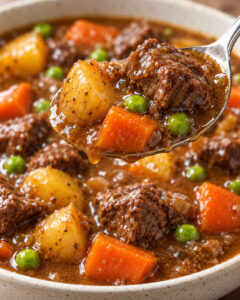
Slow Cooker Beef Stew with Potatoes, Carrots, and Peas