Big Soft Ginger Cookies
Introduction
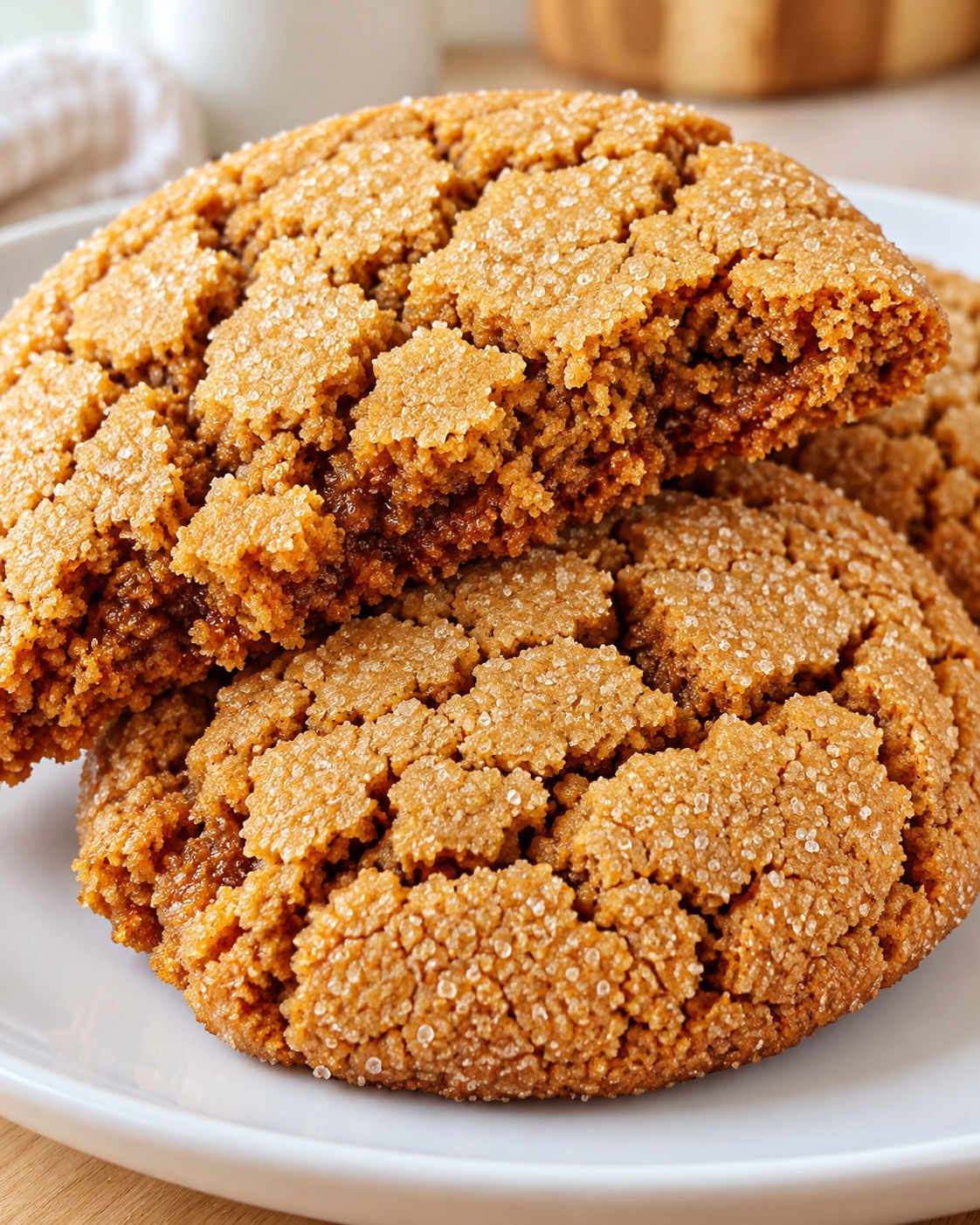
Big Soft Ginger Cookies are an American dessert built around molasses, ginger, cinnamon, and cloves. The flavor is tender, sweet, and warmly spiced, while the baked cookie combines a slightly crisp edge with a soft interior. Cracks form across the tops as the cookies bake, giving the batch its recognizable finish.
This recipe makes 24 cookies, which is also a two-dozen batch. It has been described as a holiday favorite and as the oldest son’s favorite recipe. The Allrecipes community has rated the cookies highly. Their uses include decorating, gifting, or enjoying them with hot cocoa, so the same batch can remain plain or receive a finishing touch after cooling.
Each portion receives a coat of white sugar before baking, then the surface cracks while the middle stays soft. Molasses brings the stated warm sweetness, and the three listed spices give the cookies their gingerbread character. The finished result keeps the focus on the cookie’s tender texture and spiced flavor.
Preparation is listed as 20 minutes, cooking as 10 minutes, and the complete recipe as 35 minutes. Those figures cover mixing, forming the portions, coating them, baking, and beginning the cooling sequence. Complete cooling takes place after the cookies leave the sheets.
Ingredients
-
2 tablespoons white sugar
-
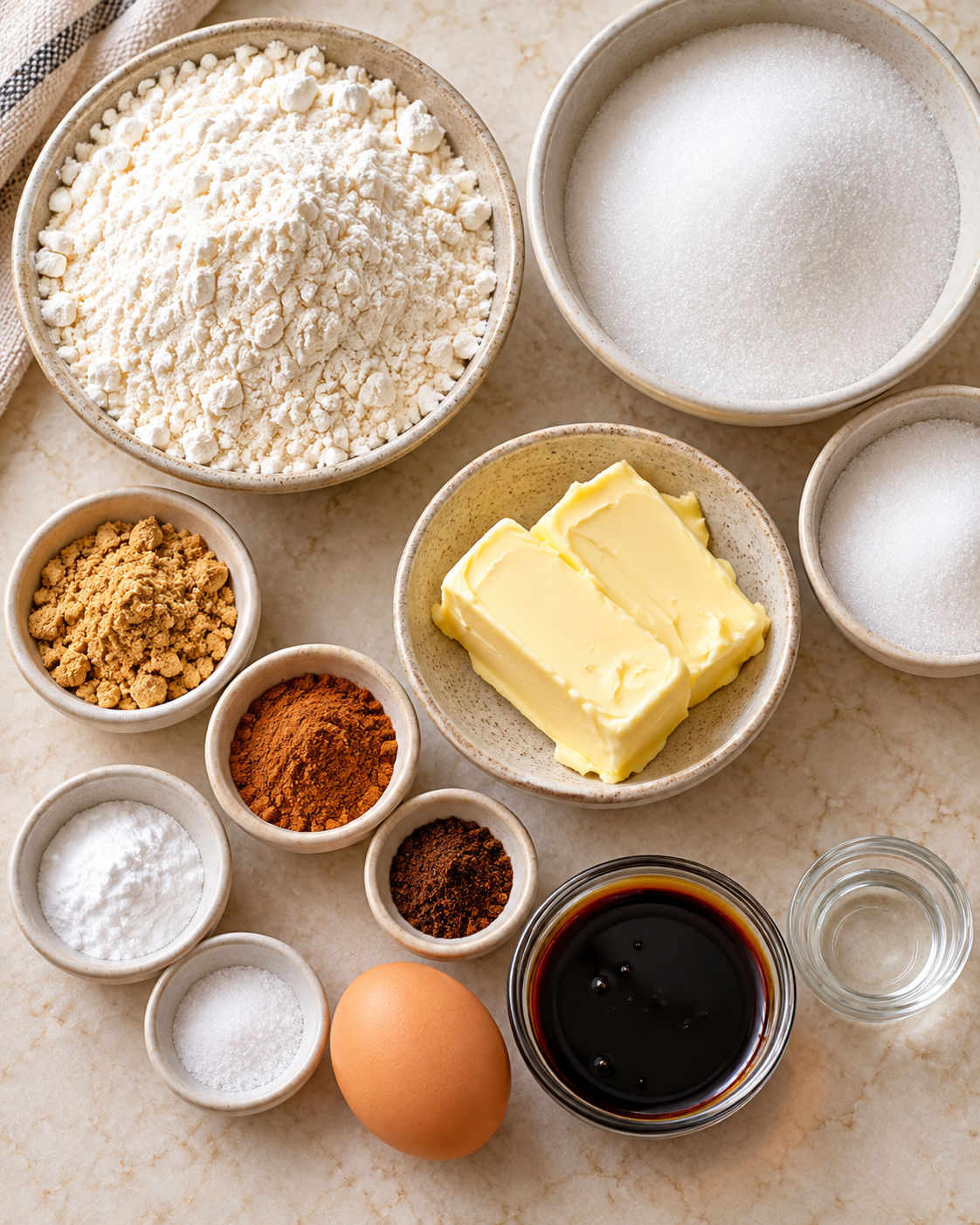
2 ¼ cups all-purpose flour
-
2 teaspoons ground ginger
-
1 teaspoon baking soda
-
¾ teaspoon ground cinnamon
-
½ teaspoon ground cloves
-
¼ teaspoon salt
-
¾ cup butter, softened
-
1 cup white sugar
-
1 large egg
-
¼ cup molasses
-
1 tablespoon water
The smaller sugar measure is the coating portion. Keep it separate from the larger measure, which goes into the dough with the softened butter. This division gives the dough its sweetened base and gives every shaped portion an exterior sugar layer.
All-purpose flour supplies structure and is associated with a tender texture here. Ground ginger, cinnamon, and cloves make up the listed spice combination. Baking soda is the leavening ingredient, while salt is identified as an enhancer for the other flavors.
The softened butter is associated with soft cookies and somewhat crisp edges. The egg contributes moisture and binds the mixture. Molasses contributes warm, sweet flavor. Water joins the molasses during the wet-mixing stage.
Use ¾ cup softened butter for the listed version. Another ingredient listing gives 0.75 cup softened margarine instead. Treat those as two distinct fat choices: use the butter listing or the margarine listing, and do not combine both amounts.
The two sugar measures have different jobs, and the spices remain separate measured ingredients before they are sifted with the flour, baking soda, and salt. Keeping each quantity visible makes the coating step distinct from the butter mixture.
How to Make It
-
Set the oven to 350 degrees F (175 degrees C). Measure the 2 tablespoons of white sugar into a small bowl and leave it ready for the shaped dough.
-
Sift the all-purpose flour, ginger, baking soda, cinnamon, cloves, and salt into a medium bowl.
-
Put the softened butter and 1 cup of white sugar in a large bowl. Beat them with an electric mixer until light and fluffy. Work in the egg, then stir in the molasses and water. Add the sifted dry mixture a little at a time, mixing until the dough comes together.
-
Flour the hands and divide the dough into 24 walnut-sized balls. Turn each ball through the reserved sugar so that its outside is coated.
-
Place the coated portions on ungreased cookie sheets. Leave 2 inches between them, then press each ball slightly with the bottom of a glass.
-
Bake for 8 to 10 minutes. Change the positions of the oven racks halfway through. The cookies are ready when their tops are cracked and their centers remain soft.
-
Keep the cookies on the baking sheets for 5 minutes. Transfer them to a wire rack and allow them to cool completely.
The process has three mixing stages. First, the dry ingredients are sifted together. Next, the butter and the larger sugar portion are beaten before the egg, molasses, and water join them. Finally, the dry mixture enters gradually, producing the dough that will be divided and coated.
The shaping instructions call for 24 walnut-sized portions. Floured hands are part of that step, and the reserved sugar belongs on the outside of each ball rather than in the dough. The cookie sheets remain ungreased, and the spacing is fixed at 2 inches before the glass is used to press the portions slightly.
The visual cue at the oven is important: cracked tops accompany soft centers. The rack positions change halfway through baking, and the cookies first stay on their sheets before moving to the wire rack. The final cooling stage is complete cooling, not merely the short rest on the sheets.
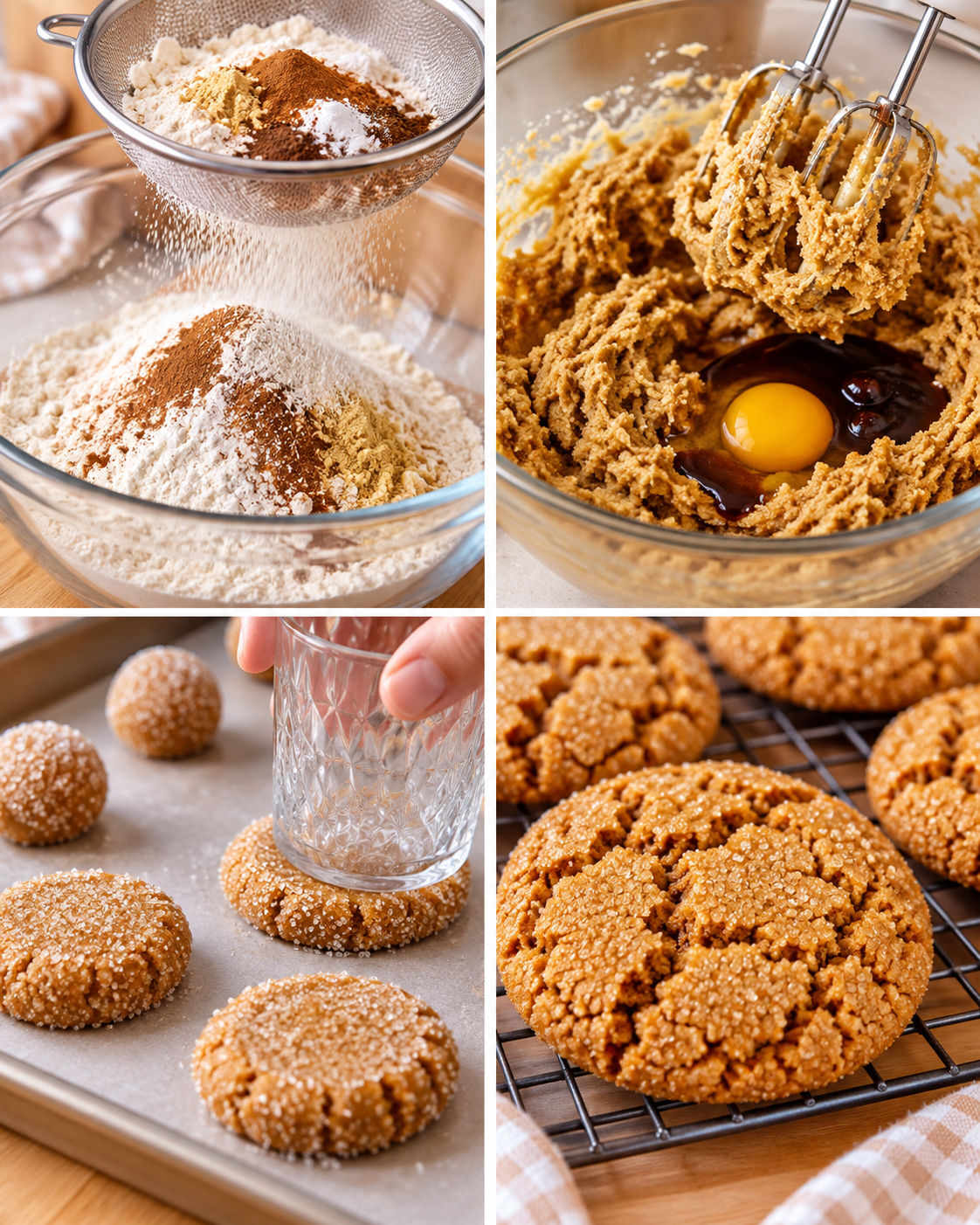
The finished texture is defined by contrast. The edges are slightly crisp, the centers are soft, and the tops show cracks. The sugar coating remains the simple exterior treatment applied before the dough enters the oven. The listed fat, egg, molasses, leavener, shaping, and baking sequence all belong to this cookie preparation.
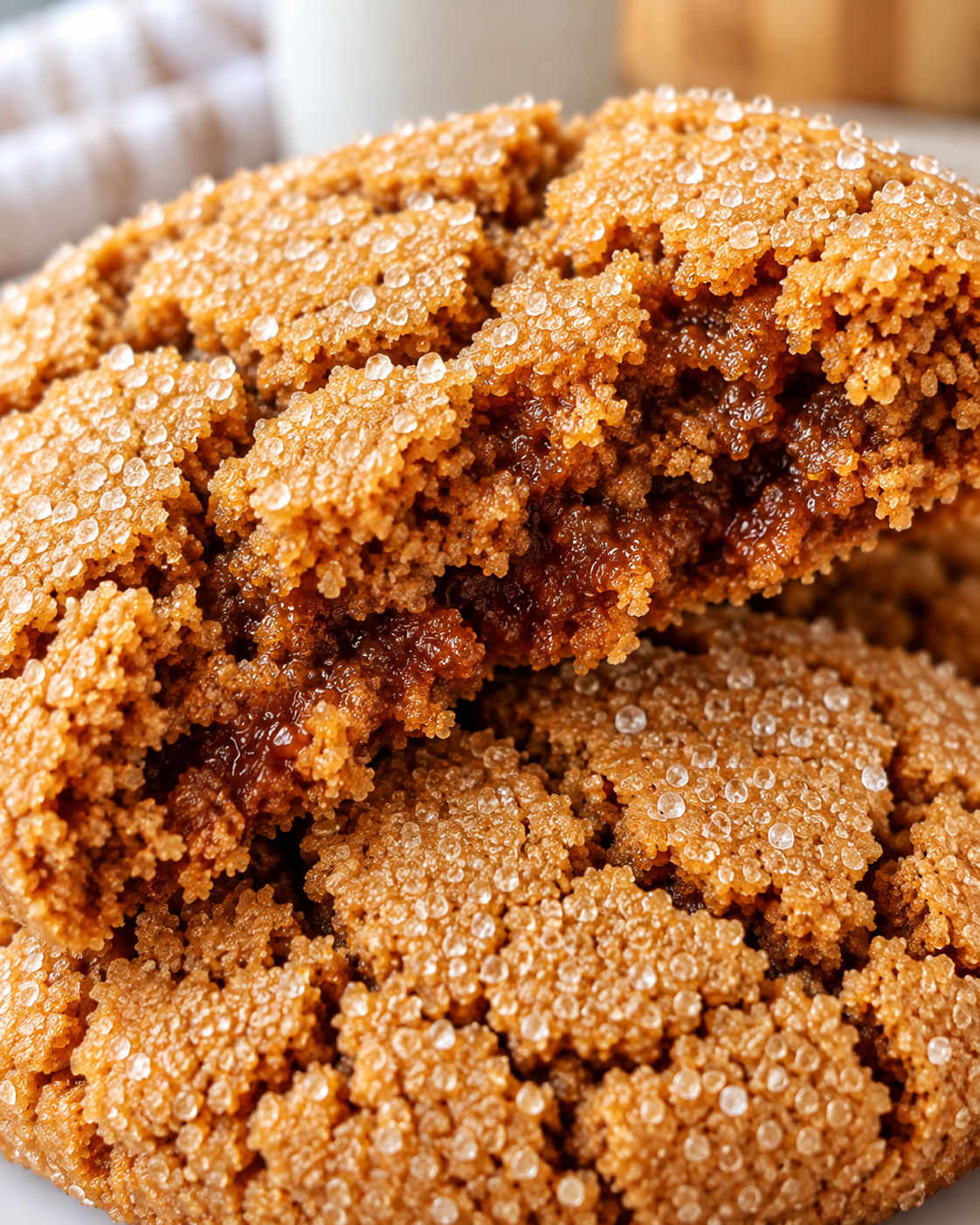
After complete cooling, the cookies appear as individual walnut-sized portions with cracked surfaces and soft middles. This appearance follows the stated shaping and baking cues. A second finished-cookie view can represent the cooled batch without adding a new garnish, vessel, arrangement, or presentation detail.
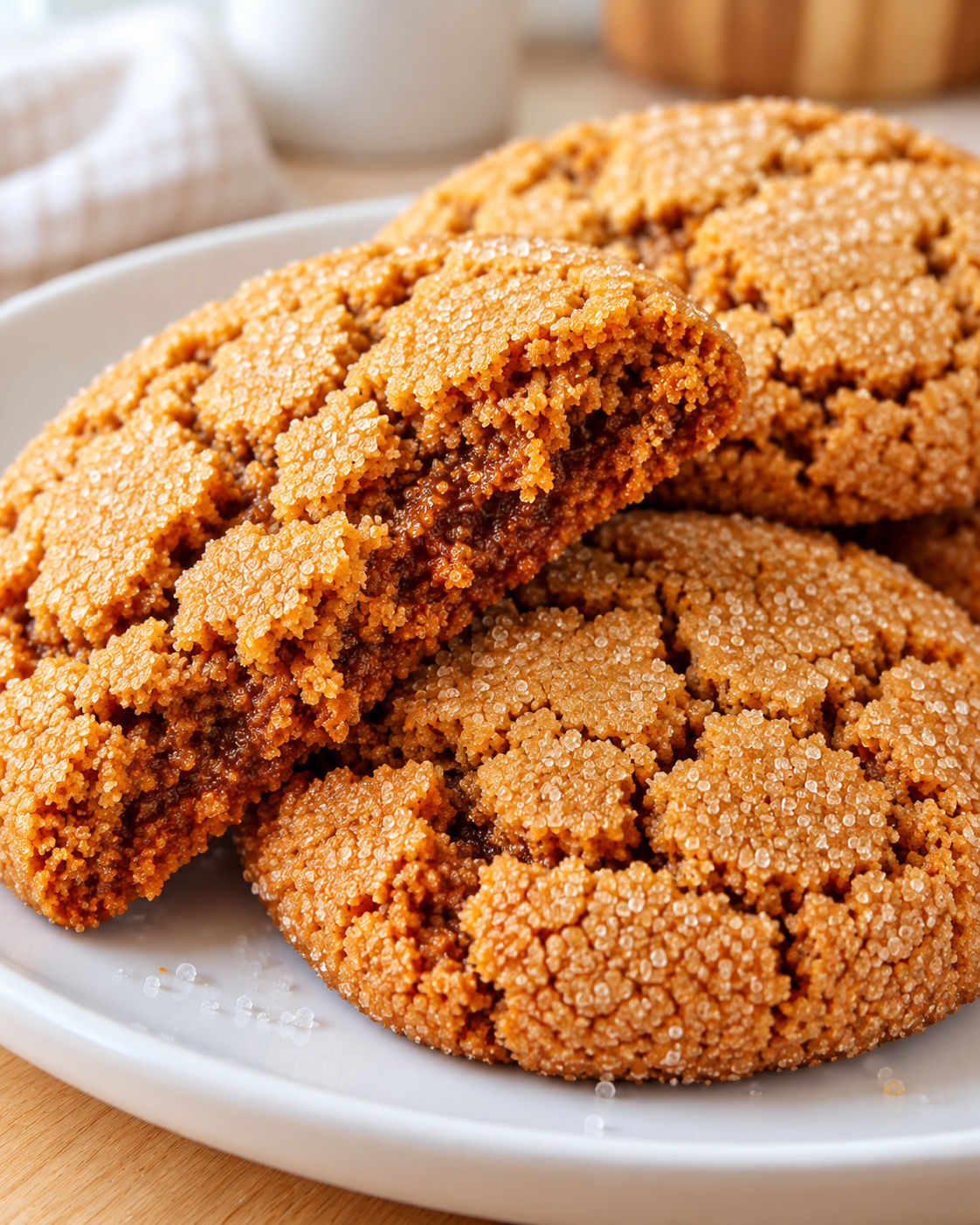
Toppings and Serving
The cookies are suitable for enjoying with hot cocoa, decorating, and gifting. They can also remain in their sugar-coated form after cooling. The batch size makes it possible to serve 24 individual cookies or describe the same quantity as two dozen.
Peppermint icing is one reported decorating choice. It belongs on the baked and cooled cookies as a finish; it is not part of the dough ingredient list and is not placed on the portions before baking. This keeps the base preparation separate from the optional decorated version.
The sugar coating is applied while the dough is being shaped. Each ball is turned through the reserved sugar, then placed on the cookie sheet and pressed slightly. The coating therefore belongs to the pre-baking sequence, while icing belongs to the post-baking decorating option.
The supported flavor description is tender, sweet, and spiced. Molasses, ginger, cinnamon, and cloves supply the named flavor focus, while the final texture pairs slightly crisp edges with soft centers. Those characteristics describe the plain cookie whether it is served on its own, offered with hot cocoa, decorated, or prepared as a gift.
One batch is 24 cookies. The phrase “two dozen” refers to the same yield, not an additional batch. Any decorating choice should be made after the cookies have reached complete cooling so that the plain cookie and its optional finish remain distinct.
Variations
Orange juice can replace the tablespoon of water. Katie reported that this change worked well, and the variation affects the liquid used in the dough. The rest of the listed quantities remain unchanged when this substitution is made.
The shape can be changed by leaving the dough unpressed. VUCN described that approach as producing a more homemade, rustic appearance. The standard method uses the bottom of a glass for slight flattening, so an unpressed portion is a shape variation rather than a different mixing sequence.
The fat choice has two listings that should not be combined. One names softened butter, and the other names softened margarine in the same quantity. Select one of those alternatives before beginning, rather than adding both.
Peppermint icing is another optional change to the finished cookie. Melissa called the cookies amazing and the best gingerbread cookies while describing peppermint icing as a topping. That choice changes the decoration after baking; it does not alter the listed flour, spices, leavener, salt, fat, egg, molasses, water, or sugar-coating steps.
Katie also said coworkers liked the cookies and connected that comment with the orange-juice substitution. VUCN described the cookies as soft and chewy and preferred the less-pressed look. These comments describe individual variations and reactions; the ordered method remains the clear path for the butter-based, water-containing, slightly flattened version.
The plain cookie, the orange-juice liquid variation, the unpressed shape, the margarine alternative, and the peppermint-iced finish are distinct choices. The molasses, ginger, cinnamon, and cloves remain the defining flavor elements described for the cookie.
Storage and Make-Ahead
Storage begins only after the cookies have cooled completely. Put them in a shallow, airtight container and keep them for up to five days. A slice of bread may be placed in the container as a moisture buffer to help the cookies stay soft. That bread is a storage aid and is not mixed into the dough.
Baked cookies can be prepared ahead for freezing. Arrange the cooled cookies on a baking sheet, freeze them for three hours or up to overnight, then transfer them to a zip-top bag or freezer-safe container. Wrap the package with at least one layer of foil and freeze for up to two months.
Unbaked dough can also be prepared ahead. Form the dough into balls and set them on a parchment-lined baking sheet. Cover the portions and freeze for about three hours or up to overnight. Move the frozen balls to a zip-top bag or freezer-safe container, add at least one foil layer around the package, and freeze for up to two months.
The dough portions need an overnight refrigerator thaw before baking. Once thawed, roll the balls in sugar and follow the recipe’s baking directions. This make-ahead path keeps the shaping stage completed before freezing while reserving the sugar coating for the point just before baking.
The baked-cookie and dough options have different starting points. Cookies are cooled before they enter the freezer. Dough is portioned before freezing and receives its sugar coating after thawing. Both options use a zip-top bag or freezer-safe container and a foil layer.
FAQ
What is the yield?
The recipe makes 24 cookies, also called two dozen. The dough is divided into walnut-sized balls before the sugar coating, spacing, slight flattening, and baking steps.
What makes these big soft ginger cookies?
The identity comes from the molasses-and-spice dough, the cookie portions, the sugar coating, and the baked contrast of slightly crisp edges with soft centers. Ginger, cinnamon, and cloves provide the stated spice profile, while molasses supplies warm, sweet flavor.
What should the tops look like?
Cracks should appear across the tops while the centers stay soft. The stated result also includes slightly crisp edges. Complete cooling follows the brief time on the baking sheets and the transfer to a wire rack.
Can they be decorated or given as gifts?
Yes. Decorating and gifting are supported uses, and peppermint icing is a named topping option. Hot cocoa is another stated serving pairing. The sugar-coated cookie is already a finished plain version before any optional icing is added.
Can water be replaced?
Orange juice is the reported replacement for the tablespoon of water. Katie said that this version worked well. It is a liquid variation, while the other listed ingredients and preparation remain unchanged.
Can the dough be frozen?
Yes. Shape the dough into balls, freeze the covered portions, move them to a freezer-safe bag or container with a foil layer, and keep them frozen for up to two months. Thaw the portions in the refrigerator overnight, roll them in sugar, and bake them according to the recipe.
How should baked cookies be stored?
Cool them completely, then place them in a shallow, airtight container for up to five days. A slice of bread may be included as a moisture buffer to help preserve softness.
What nutrition is listed per serving?
Per serving, the listed values are 143 calories, 6 g fat, 1 g saturated fat, 8 mg cholesterol, 147 mg sodium, 21 g carbohydrates, 11 g sugar, 0 g fiber, and 2 g protein. Daily Value percentages are based on a 2,000-calorie diet, and individual calorie needs may make those percentages higher or lower.
These amounts use available nutrient data, and nutrient information is not available for every ingredient. Any unavailable nutrient information is marked as not currently available. People following a medically restrictive diet are advised to consult a doctor or registered dietitian before preparing the recipe.
More in Uncategorized
Crock Pot Roast with Potatoes, Carrots, and Gravy
Easy Crockpot Chicken and Stuffing
Slow Cooker Beef Stew with Potatoes, Carrots, and Peas