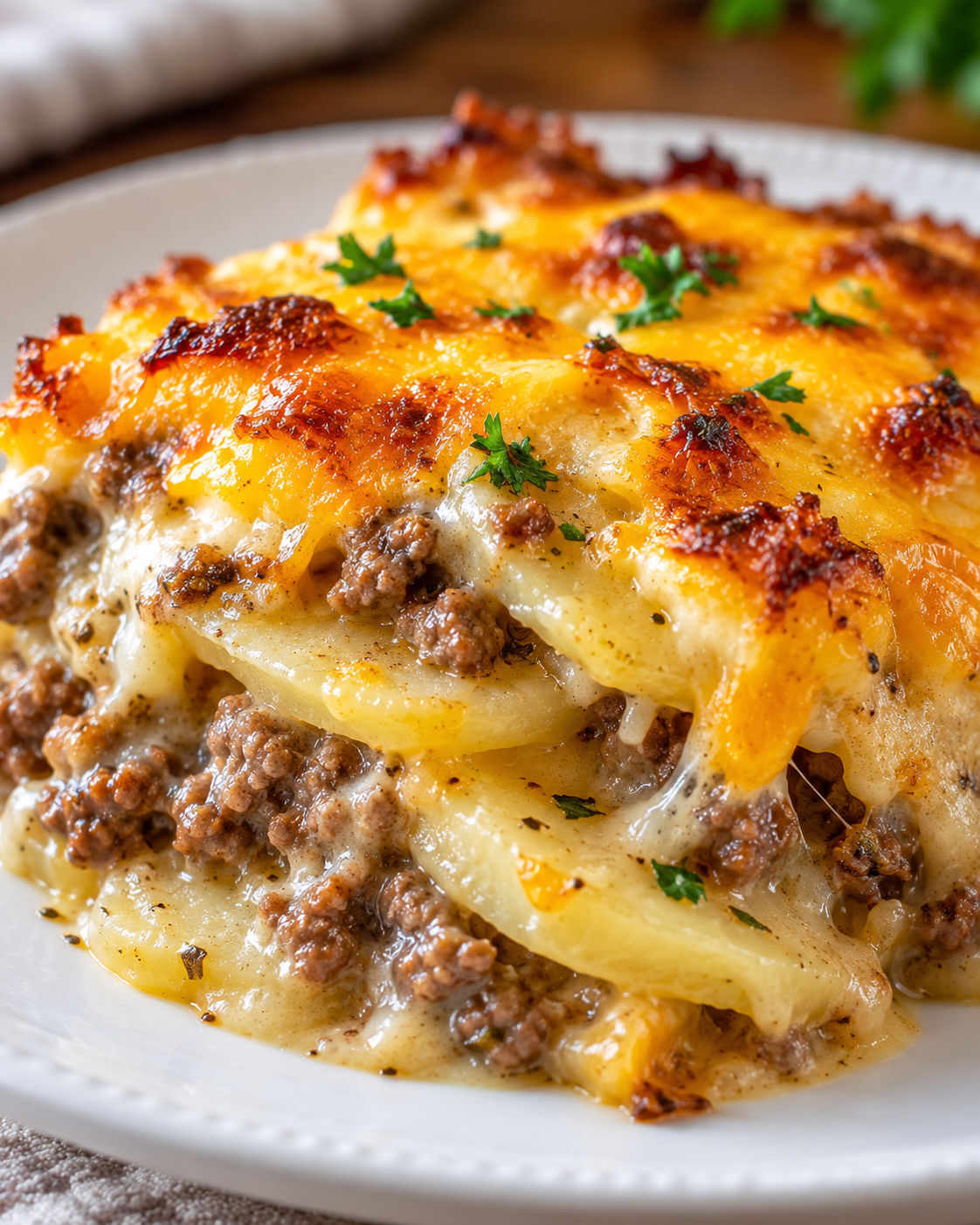
Hamburger Potato Casserole

Hamburger Potato Casserole
Introduction
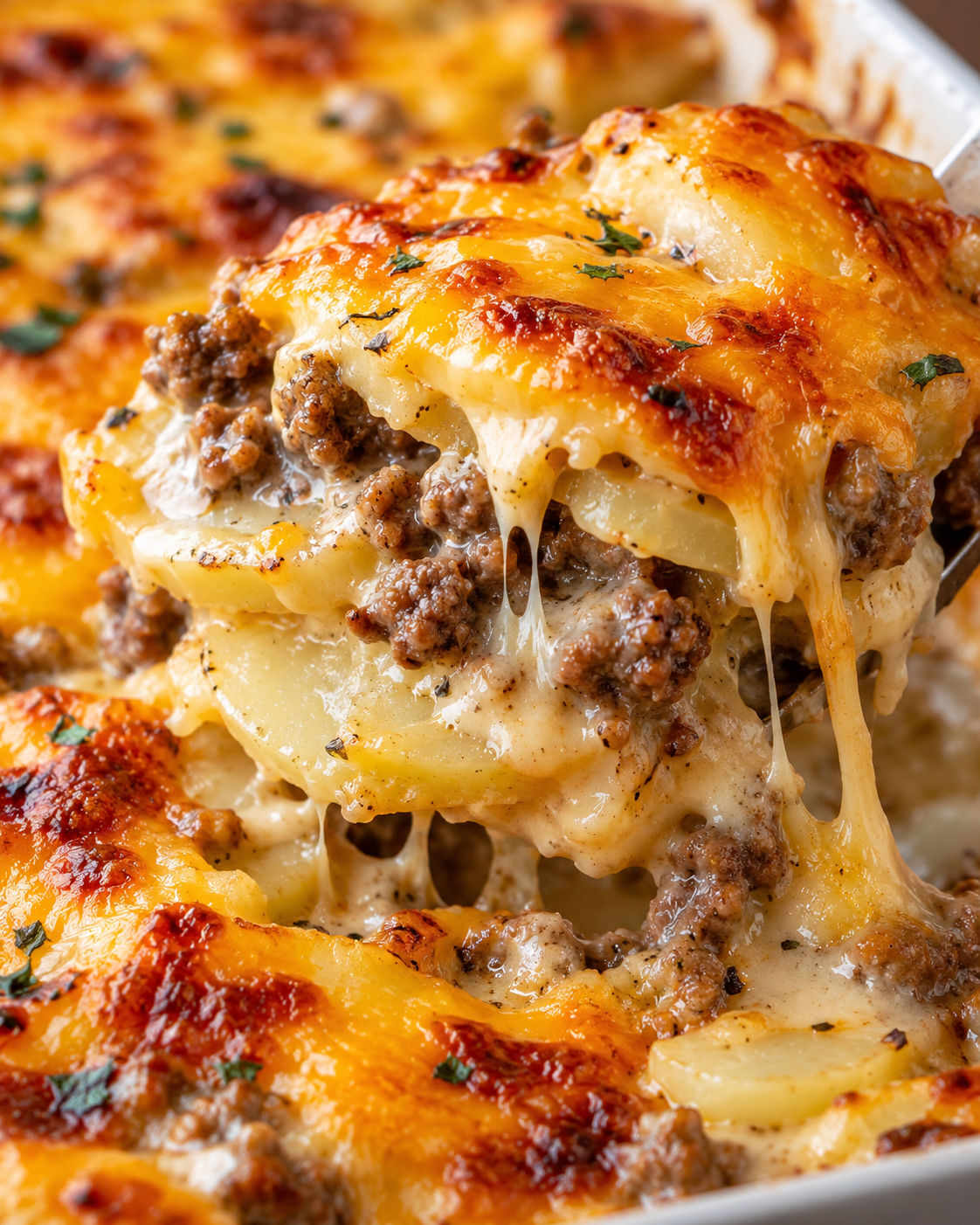
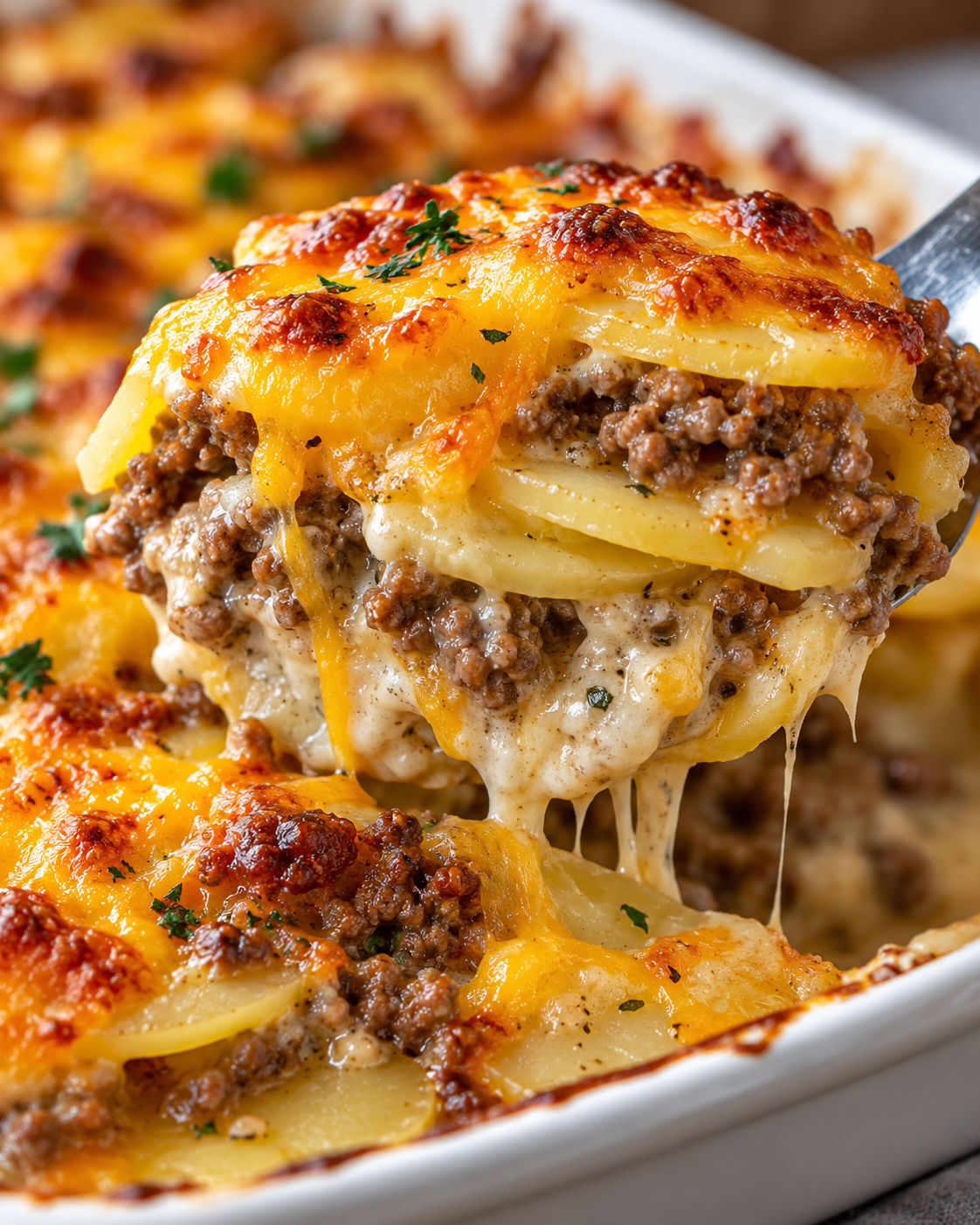
Hamburger Potato Casserole is a layered dinner built from thinly sliced russet potatoes, seasoned ground beef, onion, and a creamy sauce made with condensed cream of mushroom soup, milk, paprika, and melted butter. Cheddar cheese goes on top near the end of baking, where it melts into a bubbly finish. The recipe yields 6 servings and uses a 9×13-inch (23×33 cm) baking dish.
The preparation has two documented method variants. The primary method below follows the measured recipe directions: the beef and onion cook together, the sauce is poured over the potato-and-beef layers, and all of the cheese is added after the covered bake. A separately labeled alternate method keeps the other recorded sequence intact, including its different stovetop order, sauce layering, cheese placement, and baking ranges. Keeping them apart makes the choice clear instead of blending two different sets of directions.
This casserole is also suited to planning ahead. It can be assembled, covered, and refrigerated for up to 24 hours before baking. Leftovers can be refrigerated, frozen, and reheated using the supplied storage directions. For the best chance of evenly cooked potatoes, slice them thinly and consistently before you begin.
Ingredients
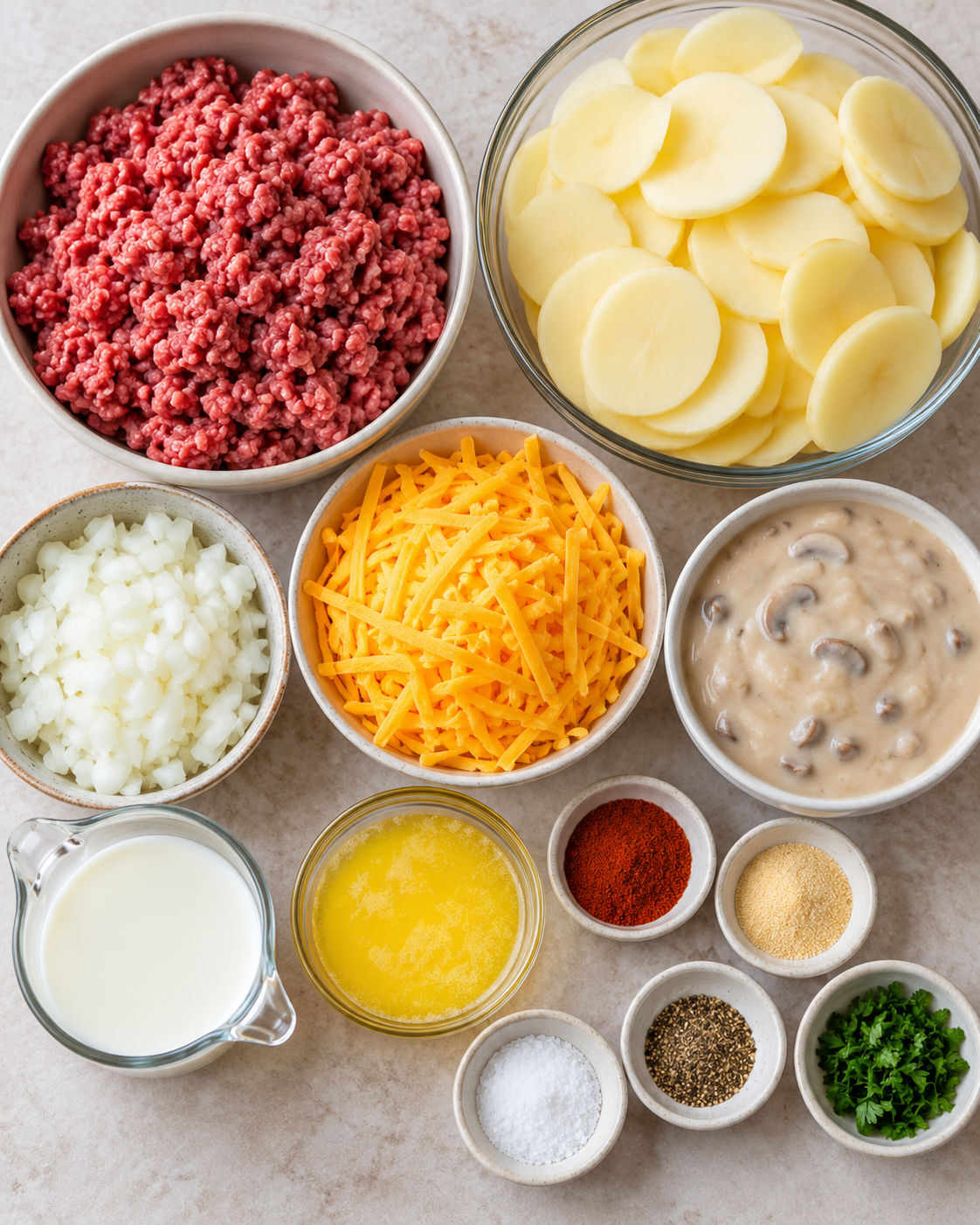
The following measured list belongs to the primary recipe method. Keep the optional parsley for the end rather than treating it as part of the casserole layers.
-
1 lb (450 g) ground beef
-
1 medium onion, finely chopped
-
3 cups, about 4 medium russet potatoes, peeled and thinly sliced
-
1 cup (240 ml) milk
-
1 can (10.5 oz / 295 g) condensed cream of mushroom soup
-
1 cup (115 g) shredded cheddar cheese
-
2 tbsp butter, melted
-
1 tsp garlic powder
-
1 tsp paprika
-
Salt and pepper, to taste
-
2 tbsp fresh parsley, chopped (optional, for garnish)
The russet potatoes are the listed choice, and the accompanying preparation notes give about 1/8 inch as a useful target for even slices. The onion should be finely chopped so it cooks with the beef in the primary method. The milk loosens the condensed soup into a pourable sauce, while melted butter, paprika, and the seasonings supply the remaining listed sauce and beef components.
Whole milk is the preferred milk option, with 2% milk also available. Freshly minced garlic can be used in the alternate method, although the measured primary list uses garlic powder. Those are choices to make before cooking; the required measured ingredients above remain the clearest starting point for the primary version.
How to Make It
Primary method
-
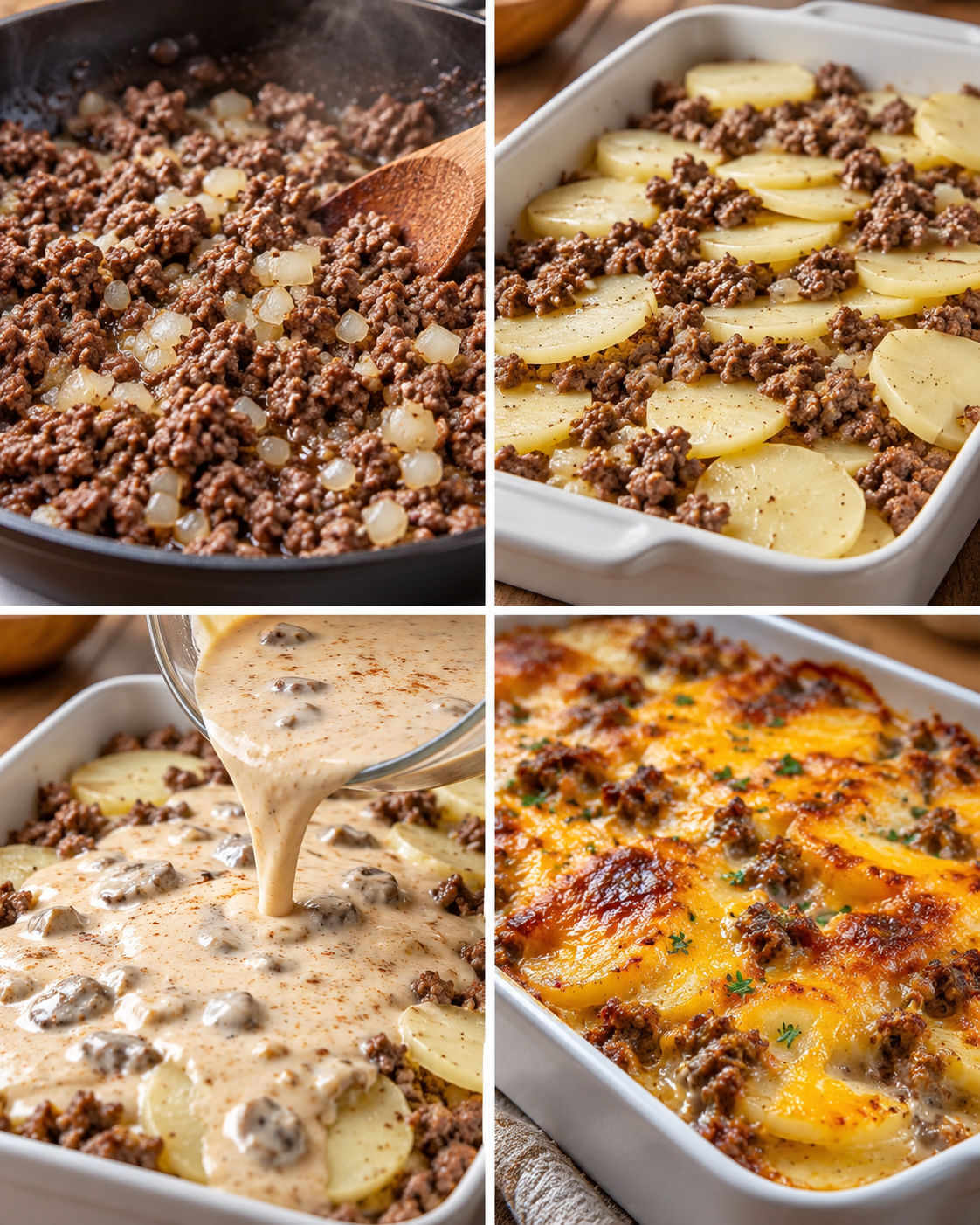
**Heat the oven and prepare the dish.** Preheat the oven to 350°F (175°C). Lightly grease a 9×13-inch (23×33 cm) baking dish. Set out a large skillet, a medium bowl, and aluminum foil so the cooking and assembly steps stay in order.
-
**Brown the beef and onion.** Cook the ground beef with the finely chopped onion in a large skillet over medium heat until no pink remains. Drain the excess fat. Season the cooked mixture with salt, pepper, and garlic powder. In this primary version, the onion cooks with the beef rather than being added afterward.
-
**Build the potato and beef layers.** Arrange half of the peeled, thinly sliced potatoes in the prepared baking dish. Add half of the cooked beef mixture over the potatoes. Repeat with the remaining potatoes and remaining beef. This version creates two potato-and-beef layers before the sauce is added.
-
**Mix the sauce.** In a medium bowl, whisk together the milk, condensed cream of mushroom soup, paprika, and melted butter until smooth. Pour the sauce evenly over the layered potatoes and beef. The primary method keeps the cheddar out of the sauce at this stage.
-
**Bake covered.** Cover the baking dish with aluminum foil. Bake for 50 minutes. The foil keeps the dish covered during this first baking stage.
-
**Add the cheese and finish baking.** Remove the foil and sprinkle the shredded cheddar over the top. Return the dish to the oven and bake uncovered for another 15–20 minutes, or until the potatoes are tender and the cheese is melted and bubbly.
-
**Rest and serve.** Let the casserole rest for 5 minutes before serving. Garnish with the chopped parsley if desired.
A separate cook time of 45 minutes is also given, while the detailed primary directions specify 50 minutes covered plus 15–20 minutes uncovered. Both figures are retained here because they differ. Use the detailed sequence and its doneness cues when following this version rather than trying to compress the two timing statements into one.
Alternate method
The alternate method is a distinct sequence, not an adjustment to the primary directions. Choose this version from start to finish if its order better suits your cooking plan.
-
**Prepare the oven and dish.** Heat the oven to 350°F (175°C) and lightly grease a 9×13-inch baking dish.
-
**Brown the beef, then cook the aromatics.** Brown the ground beef over medium-high heat. Drain the excess grease. Add diced onion and garlic, then cook for another 2–3 minutes, until softened. Season this beef mixture with salt, pepper, and paprika. This differs from the primary method, which cooks the onion with the beef over medium heat and uses garlic powder with the beef.
-
**Make the alternate sauce.** Whisk the condensed cream of mushroom soup and milk together until smooth. Stir half of the shredded cheese into the sauce. Unlike the primary method, this version places some cheese in the sauce before the casserole is assembled.
-
**Layer potatoes, beef, and sauce.** Arrange half of the sliced potatoes in the baking dish. Top with half of the beef mixture and half of the sauce. Repeat the potato, beef, and sauce layers, finishing with sauce on top.
-
**Bake covered.** Cover the dish with foil and bake for 50–60 minutes, or until the potatoes are fork-tender.
-
**Finish with the remaining cheese.** Remove the foil and sprinkle the remaining cheese over the top. Bake uncovered for another 10–15 minutes, until bubbly and golden.
-
**Rest before slicing.** Let the casserole rest for 5–10 minutes before slicing.
The alternate method therefore differs in heat level, when the onion and garlic are added, where paprika is used, how the sauce is distributed, when the cheese is divided, and how long each covered and uncovered bake may take. It remains separate so those differences are visible and usable.
Toppings and Serving
For the primary method, chopped fresh parsley is an optional garnish added after the casserole rests. It is not required for the layers or sauce. The finished primary version is ready when the potatoes are tender and the cheddar is melted and bubbly. The alternate version uses fork-tender potatoes and a bubbly, golden uncovered finish as its cues.
Serve the casserole after the five-minute primary rest, or after the 5–10 minute rest specified for the alternate method. Resting gives the hot layers time to settle before serving. Serve it with a fresh salad, steamed green beans, or on its own.
If the dish is being served as the center of a meal, keep the presentation simple: spoon or slice the rested layers, add parsley only if using it, and let the potato, beef, sauce, and melted cheese remain the focus. No additional topping is required by the measured recipe.
Variations
These options change the ingredients or flavor direction while keeping the basic casserole idea recognizable. They are optional additions, not part of the required measured list.
-
**Potato choice:** Use Yukon Gold potatoes instead of russets. Whichever potato you choose, keep the slices thin and even.
-
**Onion choice:** White, yellow, or red onion can replace the listed medium onion.
-
**Garlic choice:** Use freshly minced garlic where the alternate method calls for garlic, or stay with the measured garlic powder in the primary method.
-
**Soup choice:** Replace the condensed cream of mushroom soup with cream of chicken soup, or use a homemade white sauce made from butter, flour, milk, and chicken or beef broth.
-
**Milk choice:** Use whole milk as listed in the notes, or use 2% milk.
-
**Cheese choice:** Sharp cheddar gives the boldest listed cheese option. Colby, Gouda, or Monterey Jack are also named as melting-cheese alternatives. Monterey Jack or a Colby blend can provide a milder direction, while pepper jack suits the Tex-Mex option.
-
**Seasoning choice:** Italian seasoning, cayenne, or smoked paprika can be added as variations. The classic measured seasoning remains salt, pepper, garlic powder, and paprika.
-
**Tex-Mex version:** Add taco seasoning to the beef, layer in diced green chiles, and use pepper jack cheese on top.
-
**Bacon version:** Add crispy cooked bacon between the layers.
-
**Creamy ranch version:** Stir ranch seasoning mix into the sauce.
-
**Mushroom and Swiss version:** Replace the cheddar with Swiss cheese and add sautéed mushrooms.
-
**Vegetable version:** Layer frozen peas, carrots, corn, or broccoli between the beef and potatoes. A vegetable-heavy variation also names zucchini, spinach, or bell peppers.
When using a variation, keep the extra ingredient clearly optional and avoid presenting it as part of the base recipe. The primary measured version remains the combination of ground beef, onion, russet potatoes, milk, condensed cream of mushroom soup, cheddar, butter, garlic powder, paprika, salt, pepper, and optional parsley.
Storage and Make-Ahead
To make the casserole ahead, assemble it, cover it tightly, and refrigerate it for up to 24 hours before baking. A casserole that starts cold may need an additional 10 minutes in the oven. Keep the baking temperature at 350°F (175°C). Use one of the complete method variants rather than combining the primary and alternate assembly steps.
For leftovers, transfer the cooled casserole to an airtight container and refrigerate it for up to 4 days. To freeze it, cool the casserole completely, wrap it well, and freeze it for up to 3 months. Thaw it in the refrigerator overnight before reheating in the oven.
Reheat the casserole in a 350°F oven for 20–25 minutes. Individual servings can be warmed in the microwave for 2–3 minutes. No additional timing adjustment is given for different portion sizes, so use these times as the reference points for the whole casserole and individual portions.
FAQ
Can I make Hamburger Potato Casserole ahead of time?
Yes. Assemble the casserole, cover it tightly, and refrigerate it for up to 24 hours before baking. If it goes into the oven cold, it may need an additional 10 minutes.
Can I freeze the casserole?
Yes. Cool it completely, wrap it well, and freeze it for up to 3 months. Thaw it overnight in the refrigerator before reheating it in the oven.
Why might the potatoes stay firm?
The slices may have been too thick, or the oven may run low. Thin, even potato slices are specified to support even cooking. Use the doneness cue for the method you selected: tender potatoes in the primary version or fork-tender potatoes in the alternate version.
Can I add vegetables?
Yes. Frozen peas, carrots, corn, or broccoli can be layered between the beef and potatoes. Zucchini, spinach, and bell peppers are also listed for a vegetable-heavy version.
Which cheese works best?
Sharp cheddar is the boldest listed choice. Colby, Gouda, or Monterey Jack are named as melting-cheese alternatives, and pepper jack is used for the Tex-Mex variation.
Can I make it without canned soup?
Yes. Replace it with a homemade white sauce made from butter, flour, milk, and chicken or beef broth.
Which method should I use?
Use the primary method if you want the structured sequence in which the onion cooks with the beef, the sauce is poured over the completed potato-and-beef layers, and all the cheese is added after the covered bake. Use the alternate method if you want the separately recorded sequence with medium-high heat, onion and garlic added after browning, cheese divided between the sauce and topping, and its own baking ranges. Do not combine the two sequences.
More in Uncategorized
Chicken and Broccoli Alfredo Bake
Hamburger Potato Casserole
Million Dollar Chicken Casserole