Chicken and Broccoli Alfredo Bake

Chicken and Broccoli Alfredo Bake
Introduction
Chicken and Broccoli Alfredo Bake is a warm, cheese-forward pasta casserole built for a straightforward weeknight meal. Penne, broccoli florets, cooked chicken, Alfredo sauce, Parmesan, and mozzarella come together in one baking dish after a short stovetop start. The pasta is cooked just shy of done, the broccoli joins it near the end, and the assembled casserole finishes in the oven until it is hot and bubbly.
The combination works because each part has a clear job. Penne is sturdy enough to hold the sauce, and its shape gives the Alfredo mixture plenty of surface to cling to. Broccoli brings the vegetable component and cooks alongside the pasta rather than requiring a separate pan. Cooked chicken makes the assembly quick, while Parmesan adds a savory cheese layer inside the mixture and mozzarella melts over the top.
This recipe makes 6 servings. The preparation time is 10 minutes, the cooking time is 30 minutes, and the total time is 40 minutes. It is especially useful when a cooked rotisserie chicken is already available, though any cooked chicken that can be shredded or chopped fits the ingredient list. The result is a casserole that can be mixed directly in a 9-by-13-inch dish, covered with cheese, and baked uncovered.
Ingredients
-
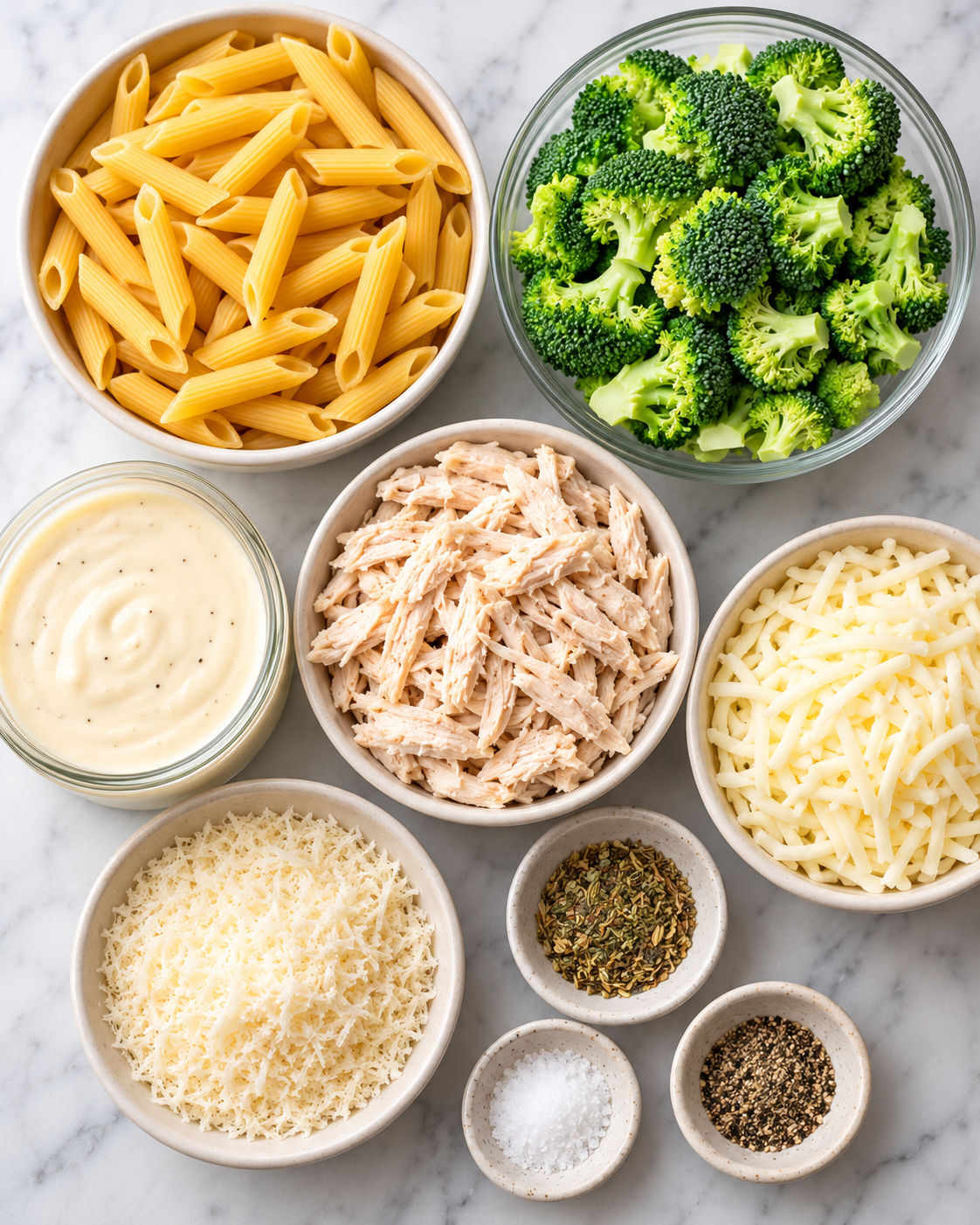
**8 ounces uncooked pasta:** Penne is the stated choice because it is sturdy and lets the sauce coat the pasta. A similarly sized shape, such as bowties, can be used when you want to change the shape without changing the general proportions.
-
**4 cups broccoli florets:** This is the amount used for the bake. Fresh broccoli can be cut into florets before cooking. Frozen broccoli is also an option, but it should join the boiling pasta water for only up to about 1 minute because it is already partially cooked.
-
**2 cups cooked chicken:** Shred or chop the chicken before it goes into the casserole. Rotisserie chicken is a convenient option, and the recipe uses it as the example, but the important preparation detail is that the chicken is already cooked.
-
**1 (15-ounce) jar Alfredo sauce:** The regular amount gives the dish its creamy sauce base. For a saucier result, a jar around 19 ounces can be used instead.
-
**1/2 teaspoon Italian seasoning:** This dried herb blend seasons the casserole without requiring several separate jars.
-
**1/2 cup freshly grated Parmesan cheese:** Grating Parmesan from a wedge is the preferred approach in the recipe notes. Keep it ready to add with the sauce and chicken.
-
**2 cups shredded mozzarella:** This goes on top after the casserole has been mixed and spread evenly. It supplies the melted cheese finish.
-
**Salt and pepper, to taste:** Salt is used in the pasta water, and the finished casserole can be seasoned as needed before serving.
The ingredient list is short, but the timing matters. The pasta and broccoli share the boiling water, the chicken is ready before assembly, and the mozzarella is held back until the mixture has been leveled in the dish. If you prefer homemade Alfredo, a doubled batch of the referenced homemade sauce is suggested because the smaller version makes approximately 1.5 cups, while a 15-ounce jar is about 2 cups. That keeps the sauce quantity closer to what this casserole needs.
How to Make It
1. Set up the oven and the pasta water
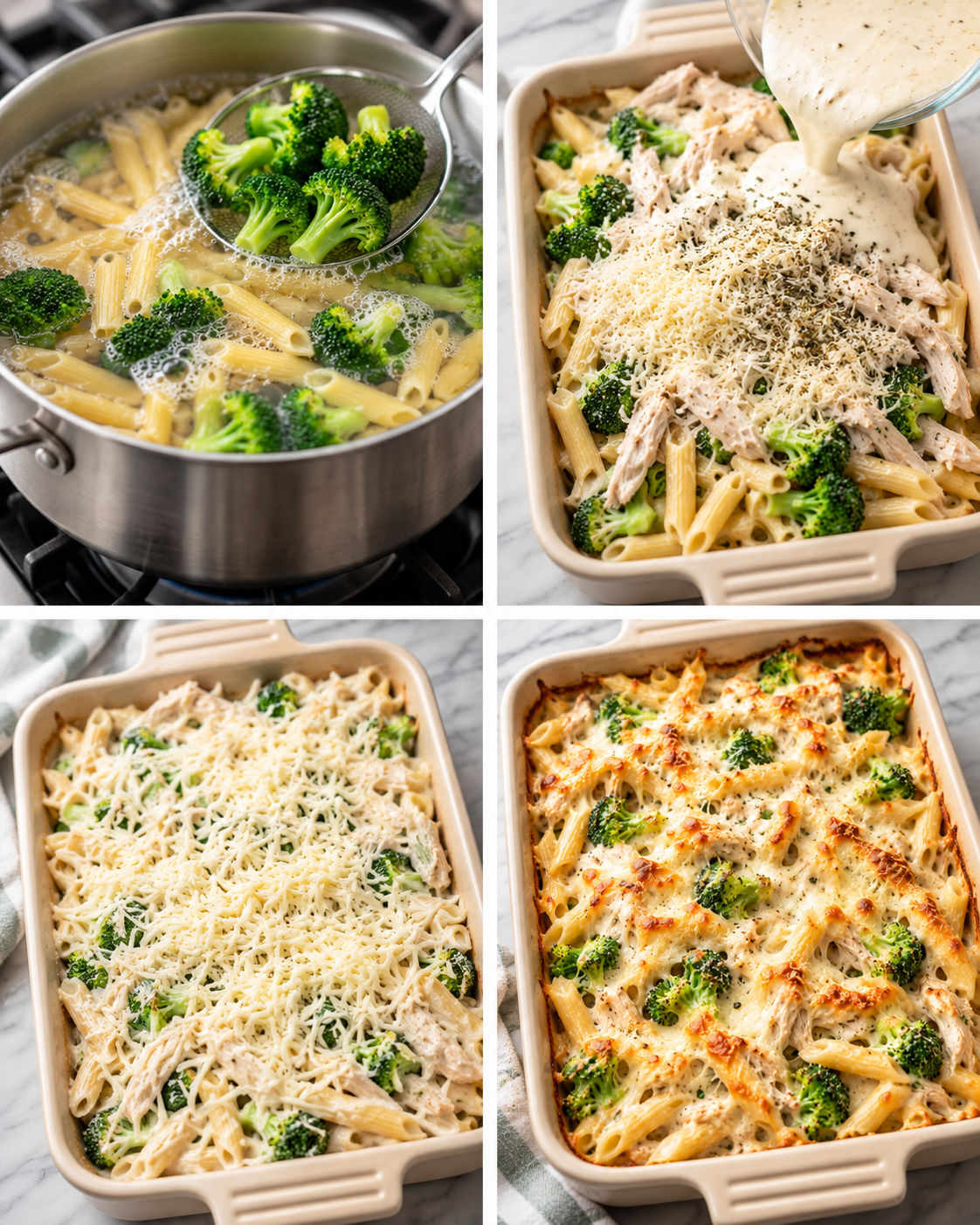
Preheat the oven to 375°F and position the oven rack in the top third. This setup should be completed before the casserole is assembled so the baking dish can go into a hot oven as soon as it is ready. At the same time, bring a large pot of salted water to a boil. Salting the water is part of the cooking step, not an extra seasoning decision for the casserole mixture.
A 9-by-13-inch casserole dish is the stated baking vessel. Have it ready before draining the pasta and broccoli, because the drained ingredients go directly into the dish for mixing. Keeping the assembly in that dish avoids transferring the mixture after it has been combined and gives you an even surface for the mozzarella.
2. Cook the pasta slightly short of the package time
Add the penne to the boiling salted water and cook it for 1 minute less than the package directions indicate. That shortened cooking time is deliberate: the pasta will continue cooking while the casserole bakes. Avoid treating the package time as the finish line here; the bake is the second cooking stage.
When the pasta has 2 minutes left, add the broccoli florets to the same pot. This gives the fresh broccoli a brief cooking window while the pasta completes its shortened boil. Drain the pasta and broccoli together, then transfer them to the 9-by-13-inch casserole dish.
If using frozen broccoli, do not follow the full fresh-broccoli timing. Add the frozen florets to the boiling pasta water during this part of the process, but limit the cooking to up to about 1 minute. The shorter window matters because frozen broccoli is already partially cooked, and a longer boil can leave it mushy.
3. Mix the casserole base
Add the cooked chicken, Alfredo sauce, freshly grated Parmesan, and Italian seasoning to the dish with the drained pasta and broccoli. Toss the ingredients together until the sauce and seasonings are distributed through the pasta, vegetables, and chicken. The chicken can be shredded or chopped; either preparation works as long as the pieces are ready to combine.
This is also the point to use the larger Alfredo portion if you selected it for a saucier casserole. A 19-ounce jar, or a similar amount, is the recommended direction for extra sauce instead of the regular 15-ounce jar. If you prepared homemade Alfredo, use the doubled batch described in the ingredient guidance so the dish has approximately the sauce volume it needs.
4. Level the mixture and add mozzarella
Once the chicken, pasta, broccoli, Alfredo sauce, Parmesan, and Italian seasoning are tossed together, smooth the mixture into an even layer. Leveling the surface creates one consistent base for the shredded mozzarella. Scatter all 2 cups of mozzarella over the top rather than mixing it into the casserole at this stage; the cheese is intended to form the upper layer.
The Parmesan belongs inside the mixture, while the mozzarella belongs on the surface. Keeping those two cheeses in their assigned stages preserves the recipe’s two-part cheese structure: Parmesan is combined with the sauced filling, and mozzarella melts over the casserole as it bakes.
5. Bake until hot and bubbly
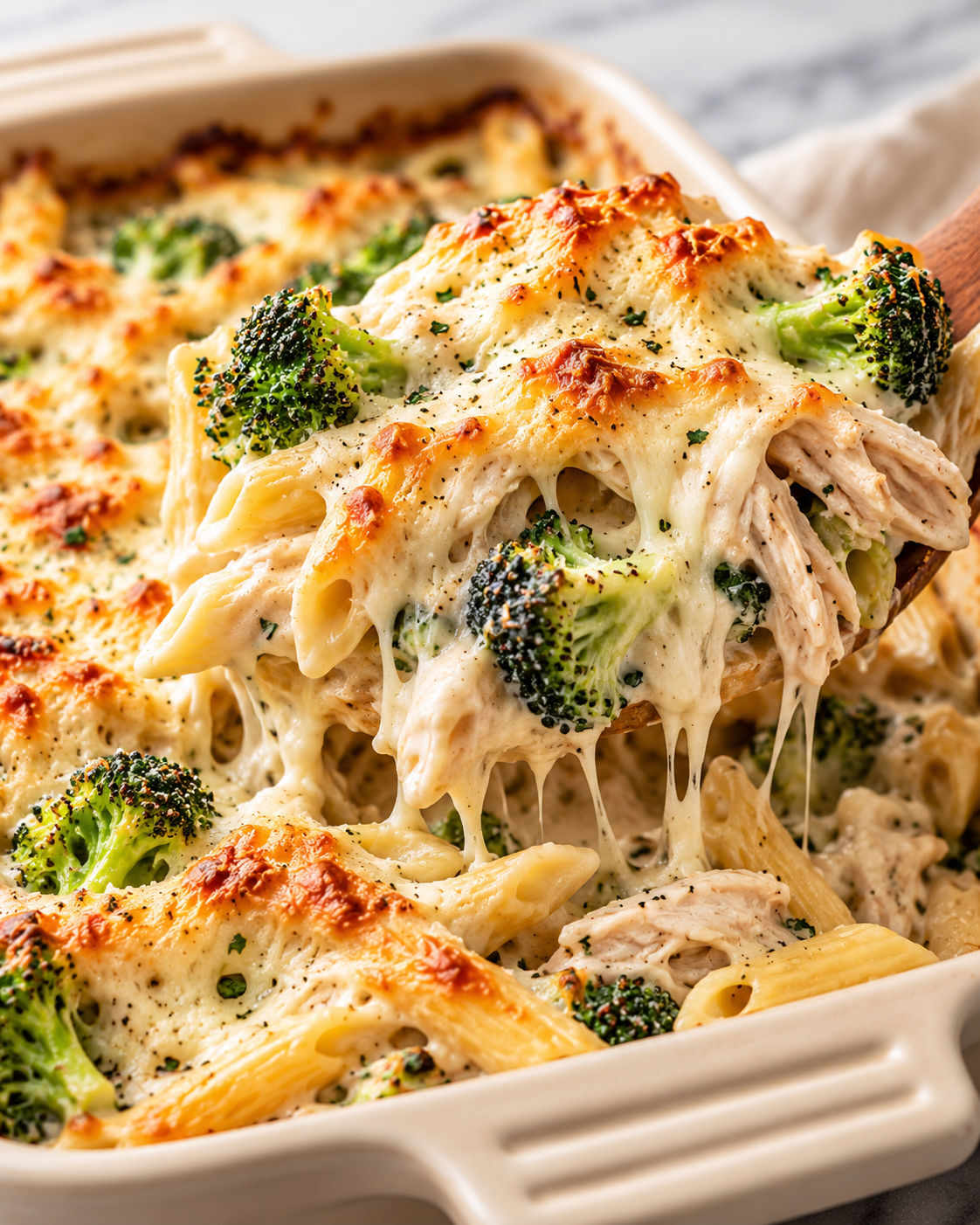
Bake the casserole uncovered for 15 to 20 minutes. It is ready when it is hot and bubbly. Because the pasta was cooked for 1 minute less than its package direction and the broccoli was added during the final 2 minutes, the oven time completes the cooking while the sauce heats through and the mozzarella melts.
If you want a browned cheese surface, broil the casserole for a few minutes after baking. Watch it closely during broiling so the mozzarella does not burn. Broiling is optional; the required bake is complete when the casserole is hot and bubbly. Finish by tasting and adding salt and pepper as needed, then serve immediately.
What to look for before serving
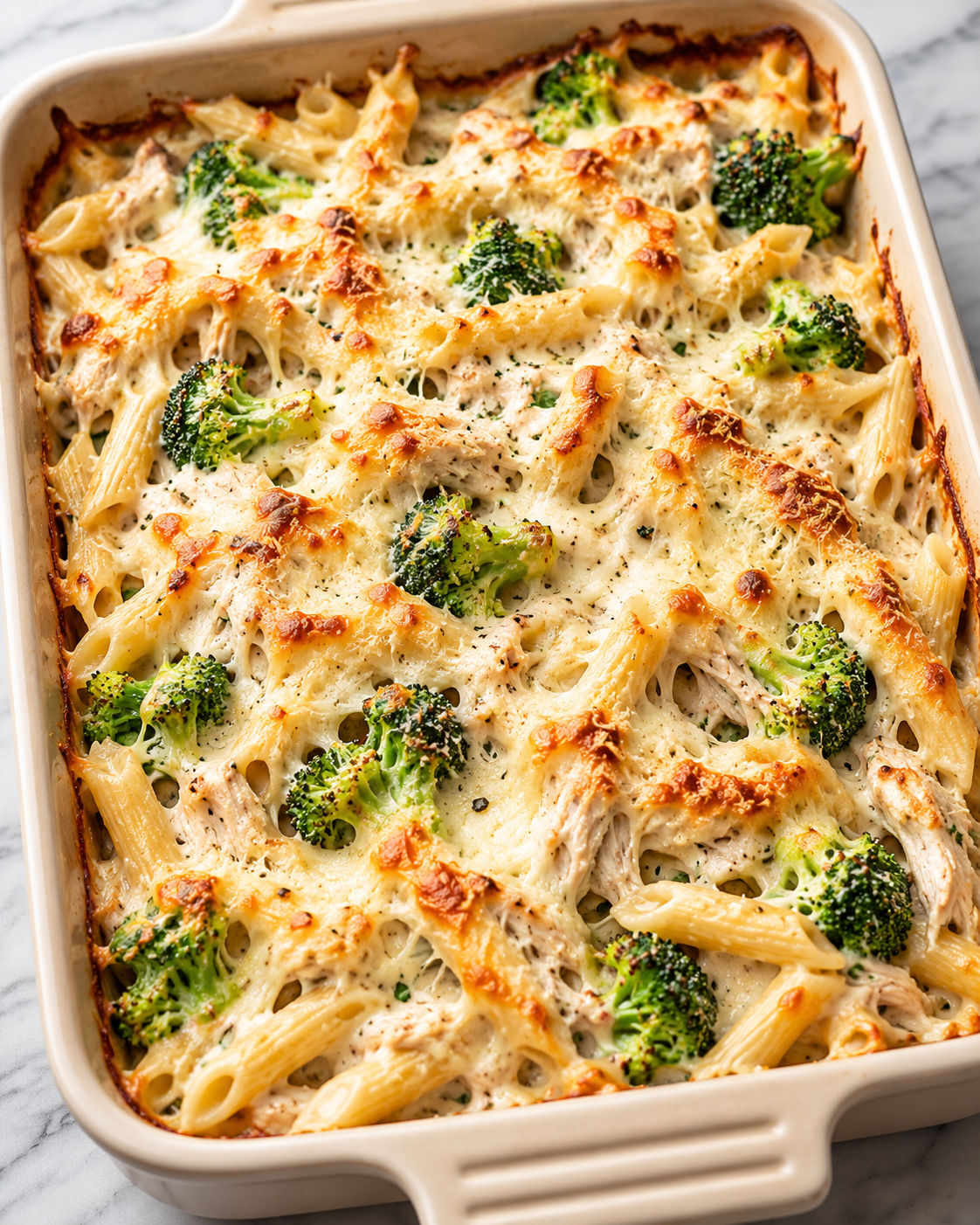
Use the visual cues rather than adding extra cooking steps. The center should be hot, the sauce should be active and bubbly, and the mozzarella should be melted. If you choose the optional broil, the top can take on a browned appearance, but close attention is necessary because the cheese can burn quickly under direct heat. The recipe does not call for a covered bake, so keep the casserole uncovered throughout the oven portion.
The sequence is simple but worth preserving: preheat, boil the salted water, cook the pasta short, add broccoli near the end, drain, combine the chicken and sauce ingredients in the dish, add mozzarella, bake uncovered, and optionally broil. Moving the broccoli into the pot too early or cooking the pasta all the way to its package time would change the timing that the casserole relies on.
Toppings and Serving
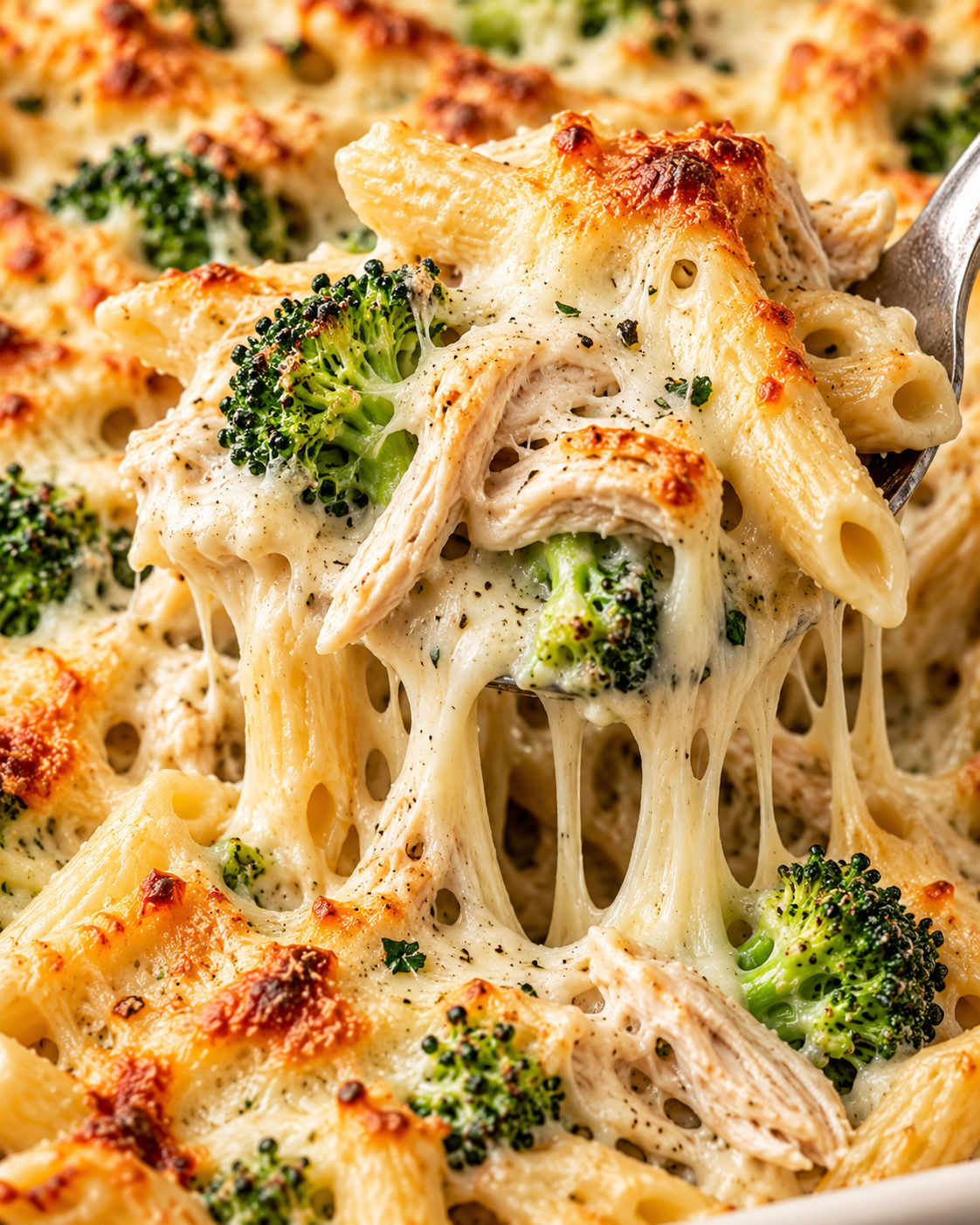
The mozzarella is the topping built into this recipe. Add the full 2 cups after the casserole has been mixed and smoothed into an even layer. The cheese should be visible on the surface before the dish enters the oven, where it melts during the uncovered bake. If a browned finish is wanted, the optional broil comes after the 15-to-20-minute bake rather than replacing it.
Season the finished casserole with salt and pepper as needed immediately before serving. That final check lets you adjust the seasoning after the Alfredo sauce, Parmesan, Italian seasoning, chicken, pasta, and broccoli have been combined. Serve the bake immediately once it has reached the hot-and-bubbly stage.
The stated yield is 6 servings. For a serving plan, divide the casserole into six portions after it comes out of the oven. The supplied nutrition estimate is 519 calories per serving, with 26 grams of fat, 13 grams of saturated fat, 118 milligrams of cholesterol, 919 milligrams of sodium, 38 grams of carbohydrates, 3 grams of fiber, 4 grams of sugar, and 32 grams of protein. The listed serving size is 1 serving.
Variations
Change the pasta shape
Penne is the named pasta, but another shape of a similar size can replace it. Bowties are one suggested example. Keep the amount at 8 ounces uncooked pasta and still use the package directions as the timing reference, cooking the pasta 1 minute less before the oven stage.
Use frozen broccoli
Frozen broccoli can replace fresh florets. Add it to the boiling pasta water during the same general stage as the broccoli, but cook it for only up to about 1 minute. Since the frozen broccoli is already partially cooked, the shorter time helps avoid a mushy result. The amount in the ingredient list remains 4 cups of broccoli florets.
Make the casserole saucier
Use a 19-ounce jar of Alfredo sauce, or a jar close to that size, instead of the regular 15-ounce jar when you want more sauce. This is a quantity change, not a change to the mixing order: add the sauce with the chicken, Parmesan, and Italian seasoning after draining the pasta and broccoli.
Prepare homemade Alfredo
A homemade Alfredo sauce can be used in place of jarred sauce. The referenced homemade recipe makes approximately 1.5 cups, so the direction is to double it for this bake. That brings the amount closer to the approximately 2 cups in a 15-ounce jar. Use the homemade sauce at the same assembly stage as jarred Alfredo.
Choose a different cooked chicken preparation
Rotisserie chicken is the convenient example, but the recipe also allows chicken that has been prepared separately and then shredded. The chicken must be cooked before it is added to the casserole. Two cups, shredded or chopped, is the amount to prepare for the dish.
Storage and Make-Ahead
Place leftovers in an airtight container and refrigerate them for 3 to 4 days. The storage guidance is for leftovers after the bake has been served, so portion the remaining casserole into the container once it is ready to put away. Keep the container sealed during refrigeration.
For reheating, use gentle heat. Warm the casserole in a covered saucepan over low heat, or use intervals in the microwave. Avoid reheating over too high a heat because the Alfredo sauce may separate and the chicken may dry out. If the leftovers look dry, add a splash of Alfredo sauce before or during reheating.
Freezing is not recommended because of the dairy in the casserole. For the best texture from leftovers, use the refrigerated storage window and reheat only the portion you plan to eat. The key storage distinction is simple: airtight refrigeration is supported for 3 to 4 days, while freezing is not recommended.
FAQ
Can I use rotisserie chicken?
Yes. Rotisserie chicken is the convenient example for this bake. Use 2 cups of cooked chicken, shredded or chopped, and add it to the casserole dish with the drained pasta and broccoli.
Can I use a different pasta shape?
Yes. Replace the penne with a similarly sized shape, such as bowties. Keep the amount at 8 ounces uncooked pasta and cook it for 1 minute less than the package directions before adding the broccoli near the end.
How much extra Alfredo sauce should I use?
For a saucier casserole, use a jar around 19 ounces instead of the regular 15-ounce jar. If making homemade Alfredo, double the referenced recipe because it makes approximately 1.5 cups and a 15-ounce jar is about 2 cups.
When should frozen broccoli go into the pot?
Add frozen broccoli to the boiling pasta water during the broccoli stage, but cook it for only up to about 1 minute. It is already partially cooked, so a longer boil can make it mushy.
Can I brown the mozzarella?
Yes. After the uncovered bake, broil the casserole for a few minutes if you want browned cheese. Watch it closely so the mozzarella does not burn.
How long will leftovers keep?
Leftovers will keep for 3 to 4 days in an airtight container in the refrigerator. Reheat them gently in a covered saucepan over low heat or in microwave intervals.
Why did the sauce separate during reheating?
The sauce may separate if the casserole is reheated over too high a heat. Reheat gently instead, using a covered saucepan over low heat or short microwave intervals. Add a splash of Alfredo sauce if the leftovers look dry.
Can I freeze this Alfredo bake?
Freezing is not recommended because the casserole contains dairy. Refrigerate leftovers in an airtight container and use them within 3 to 4 days.
More in Uncategorized
Chicken and Broccoli Alfredo Bake
Hamburger Potato Casserole
Million Dollar Chicken Casserole