Marry Me Chicken Pasta

Marry Me Chicken Pasta
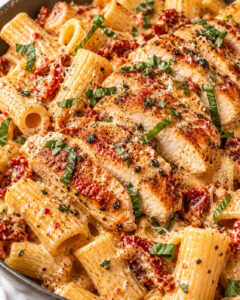
Marry Me Chicken Pasta brings together seared boneless, skinless chicken breasts, sun-dried tomatoes, garlic, Parmesan, half and half, and pasta in one skillet-style dinner. The chicken is seasoned in two stages: some of the herb mixture goes on the chicken before searing, while the rest seasons the sauce. That order gives the finished dish a clear, savory seasoning base without adding extra steps at the end.
With 20 minutes of prep time, 25 minutes of cooking time, and a total time of about 45 minutes, this recipe fits a weeknight schedule while still giving you several useful details to manage: reserve pasta water, keep the heat low while the Parmesan melts, and let the sauce simmer gently rather than boil hard. The finished pasta can be served in a large dish, individual bowls, or the skillet used for cooking.
Introduction
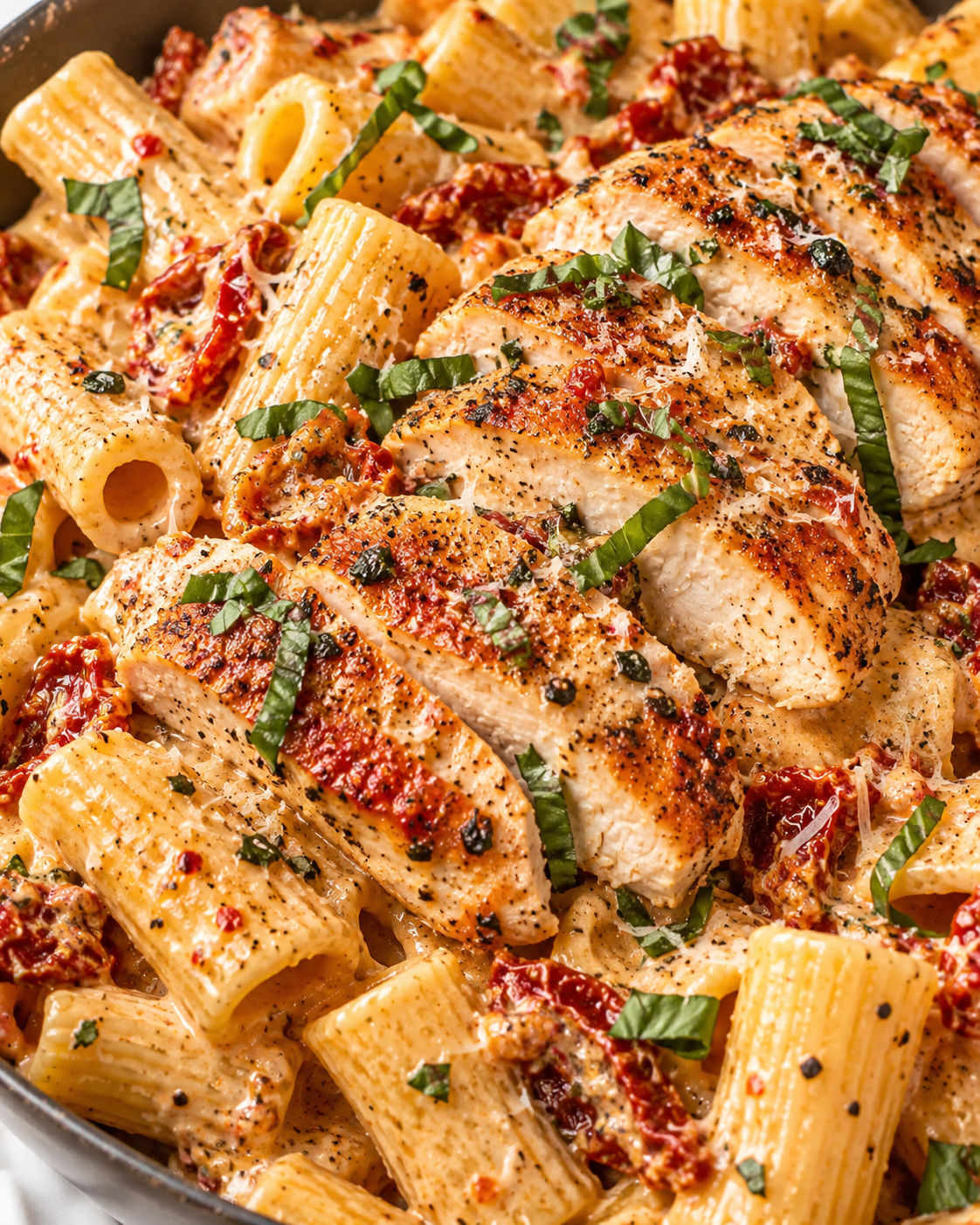
This is a four-serving pasta dinner built around a creamy sun-dried tomato sauce and sliced chicken breasts. The sauce starts in the same skillet used for the chicken, so the garlic, tomatoes, chicken stock, half and half, and Parmesan come together after the chicken has been seared. A final addition of pasta water lets you adjust the consistency before serving.
The recipe has several natural points where preparation makes a difference. The seasoning is mixed before the chicken goes into the pan. The Parmesan is added gradually at low heat. The chicken returns to the skillet for a 5-to-10-minute simmer, with the exact time depending on the thickness of the breasts. Finally, the pasta is tossed directly with the sauce, then topped with sliced chicken, fresh basil, and extra Parmesan.
Ingredients
-
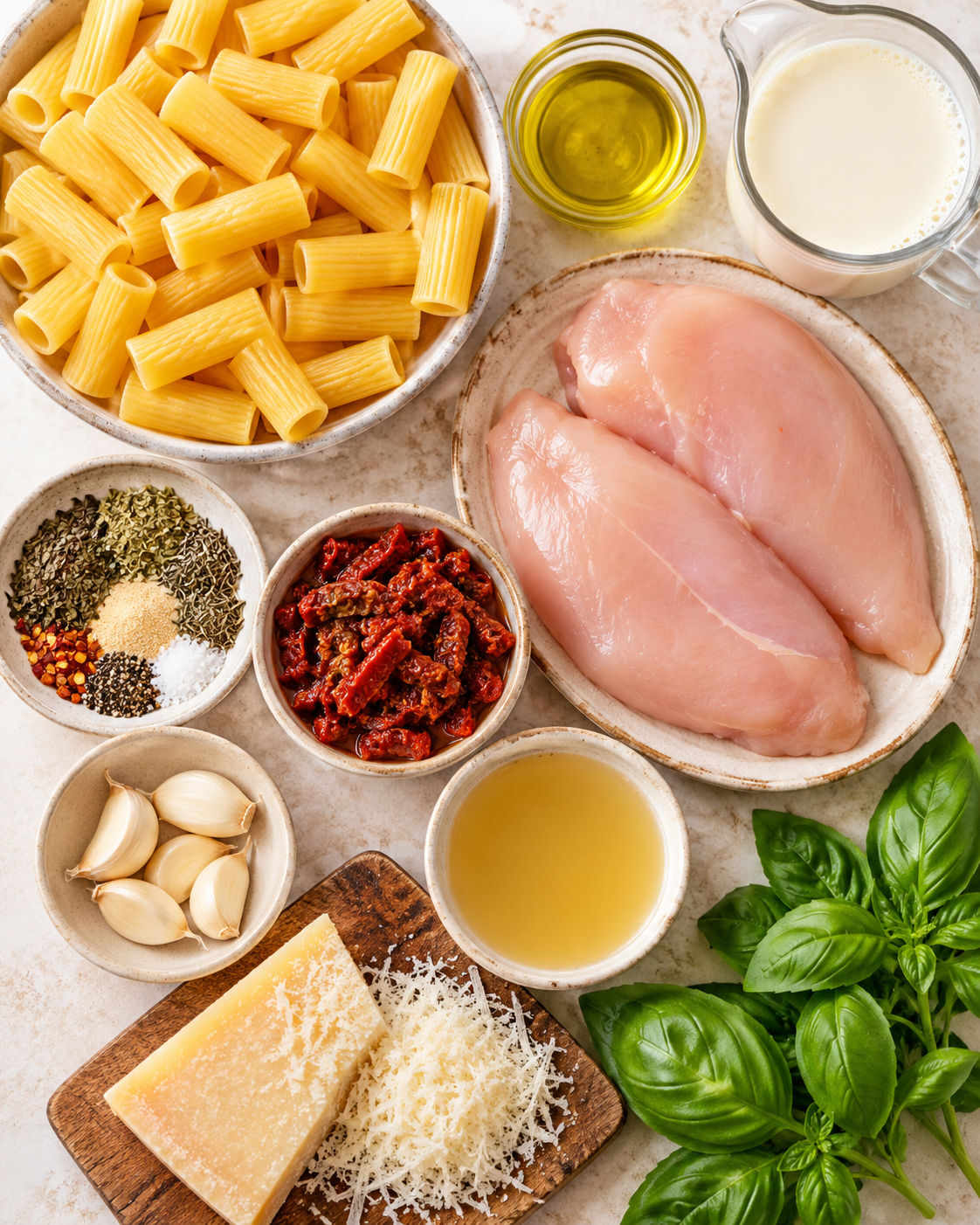
12 ounces dry pasta
-
1 to 2 tablespoons olive oil
-
2 large boneless, skinless chicken breasts
-
1 teaspoon dried basil
-
Dried oregano
-
1 teaspoon garlic powder
-
1 teaspoon onion powder
-
1/2 teaspoon dried thyme
-
1/2 teaspoon red pepper flakes
-
1/2 teaspoon salt
-
1/4 teaspoon black pepper
-
5 fresh garlic cloves, minced
-
1/4 cup chopped sun-dried tomatoes
-
1 1/2 cups chicken stock
-
1 cup half and half
-
1/2 cup freshly grated Parmesan cheese
-
Fresh basil, for finishing
The pasta can be any shape you prefer, and fresh pasta is also an option when cooked according to its package directions. Keep a portion of the cooking water before draining either type. Its starchy liquid can be added later to help bring the sauce and noodles together.
For the seasoning, the dried basil, dried oregano, garlic powder, onion powder, dried thyme, red pepper flakes, salt, and black pepper are combined in one bowl. Half is rubbed onto the chicken, and the remaining half goes into the sauce after it reaches a simmer. This split is part of the recipe’s method, so it helps to mix the full seasoning batch before cooking.
Freshly grated Parmesan is the preferred form for this sauce. Let it come to room temperature before adding it, then add it in small amounts. Fresh basil is used at the end; fresh parsley can be used as an alternative garnish. The sun-dried tomatoes may be dried and bagged or packed in olive oil. If using oil-packed tomatoes, a splash of their red-tinged oil may be used when searing the chicken.
How to Make It
1. Cook the pasta and reserve the water
Bring a large pot of water to a boil and cook the pasta according to the package directions. Salt the pasta water, and test the noodles a minute or two before the recommended cooking time if you want to keep the final texture firmer. Before draining, reserve some of the cooking water. Drain the pasta and set it aside while the skillet work continues.
2. Mix the seasoning and coat the chicken
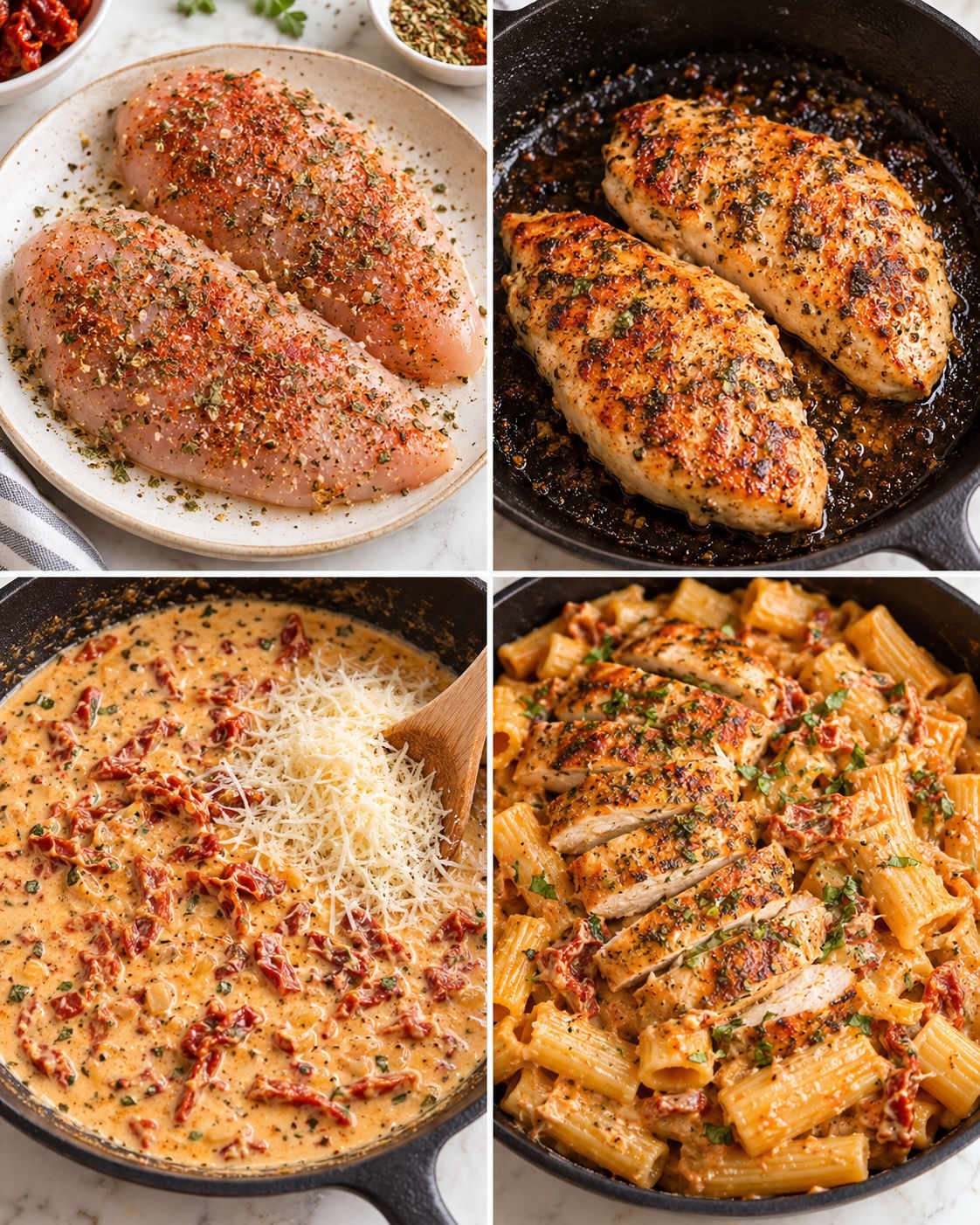
Add the dried basil, dried oregano, garlic powder, onion powder, dried thyme, red pepper flakes, salt, and black pepper to a small bowl. Stir until the seasonings are evenly combined. Rub half of the mixture over both sides of the chicken breasts. Keep the other half nearby for the sauce.
For more even cooking, the chicken breasts may be gently pounded with a meat mallet or the bottom of a heavy pan. Another supported option is to make cutlets by slicing the breasts horizontally, as if opening a bun. Thinner cutlets cook more quickly than whole breasts, so keep the thickness in mind when judging the simmering time later.
3. Sear the chicken
Pour the olive oil into a large skillet and set it over medium-high heat. When the oil is hot, add the seasoned chicken. Let the breasts stay in contact with the pan rather than moving them around repeatedly. Sear each side for about 5 to 7 minutes, until the outside is golden brown. Transfer the chicken to a plate and leave the skillet ready for the sauce.
The same pan matters here because the next ingredients go directly into it. Any browned bits left on the bottom become part of the sauce when the chicken stock is added. A large skillet gives the chicken room to sear and later accommodates the sauce and pasta.
4. Sauté the garlic and sun-dried tomatoes
Lower the heat. Add the minced fresh garlic and chopped sun-dried tomatoes to the skillet. If the tomatoes are packed in oil, add a splash of that oil if desired. Sauté the mixture for 1 to 2 minutes, keeping the heat low while the garlic and tomatoes cook in the pan.
5. Deglaze with chicken stock
Pour in the chicken stock. Use a spatula to scrape the bottom of the skillet and lift the browned bits into the liquid. Homemade or store-bought low-sodium stock can be used. This step forms the liquid base for the sauce before the half and half and Parmesan are added.
6. Melt in the half and half and Parmesan
Keep the skillet over low heat and add the half and half. Add the room-temperature Parmesan a little at a time rather than all at once, stirring frequently as it melts into the sauce. Low heat is important during this stage. Continue stirring until the cheese is thoroughly incorporated.
Adding the cheese gradually gives you more control over the sauce as it comes together. The goal at this point is to melt the Parmesan into the half-and-half mixture before raising the heat for the next simmer.
7. Simmer the chicken and finish the sauce
Once the Parmesan has melted, raise the heat to medium and bring the sauce to a simmer. Stir in the remaining seasoning mixture. Return the seared chicken to the skillet and simmer for 5 to 10 minutes. The precise time depends on how thick the chicken breasts are; cutlets will need less time than thicker pieces.
Remove the chicken from the skillet after this simmer. Keep the sauce at a gentle simmer while the chicken cooks so it does not reduce too quickly and become overly thick. If the sauce is still thinner than you want after the chicken is removed, continue simmering it until it thickens. This may take a little time, so watch the consistency instead of relying on a fixed extra duration.
8. Toss the pasta with the sauce
Add the cooked pasta to the skillet and mix thoroughly so the sauce coats the noodles. Add some of the reserved pasta water if the sauce needs loosening or if you want a different consistency. Start with a small amount and add more as needed.
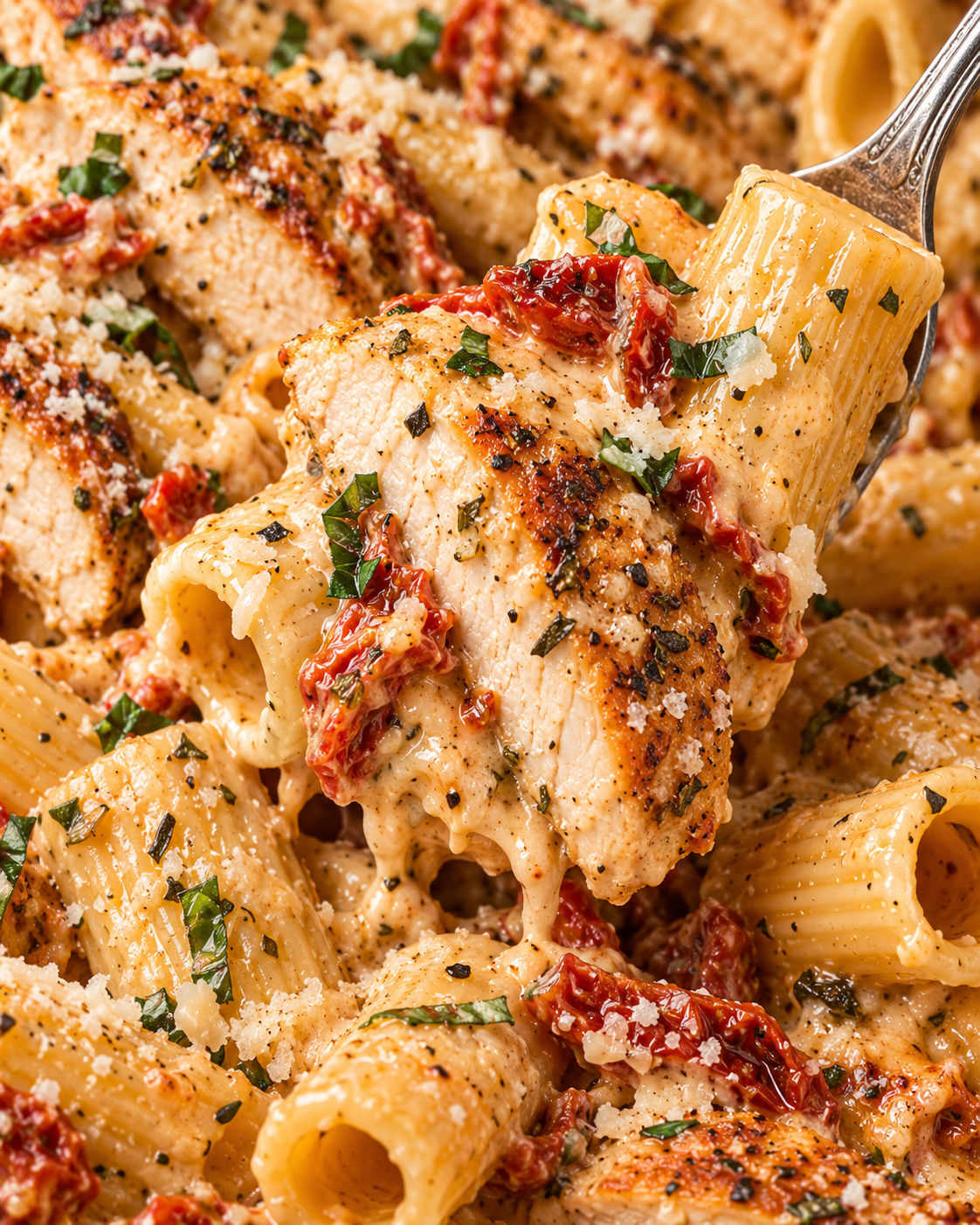
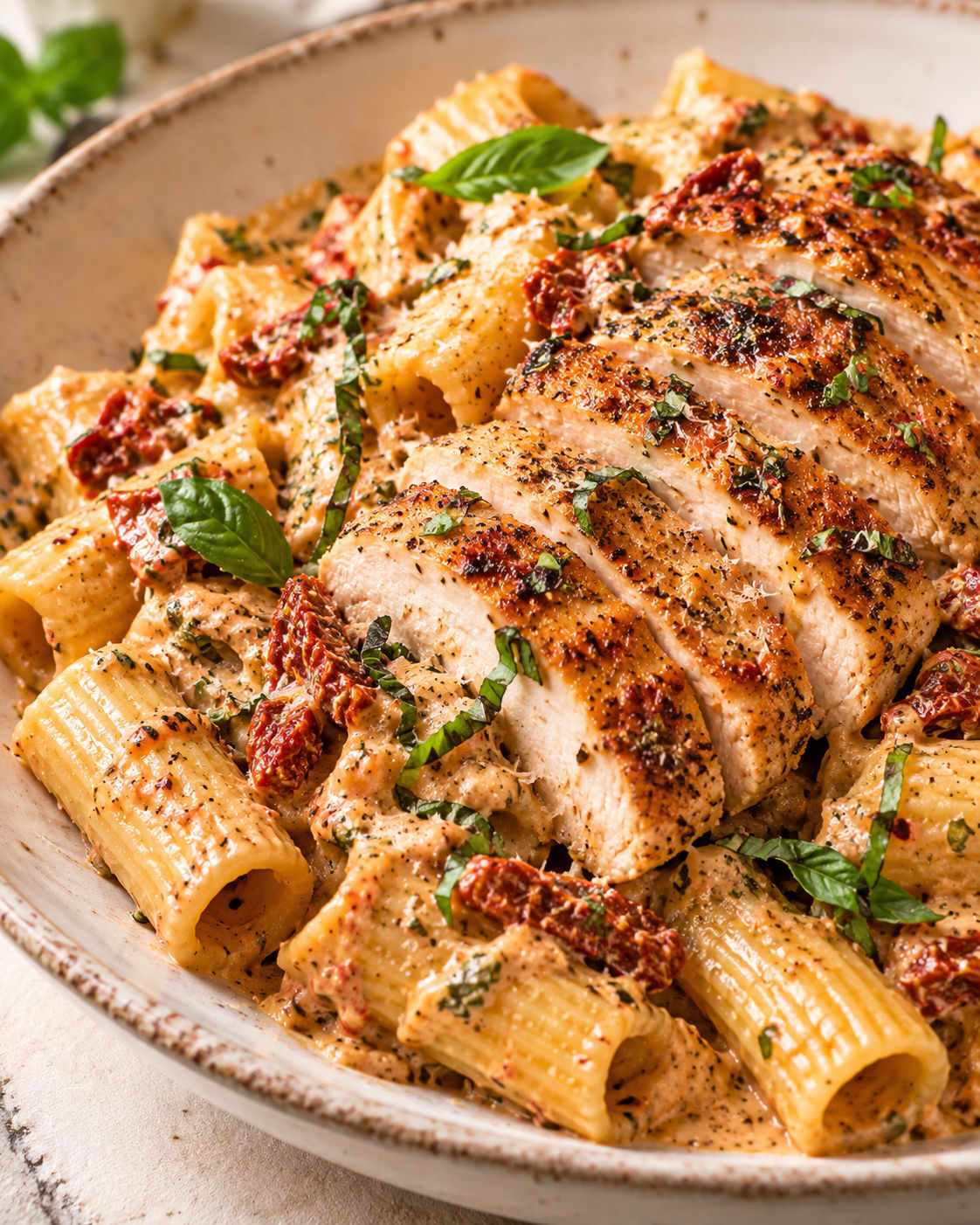
Slice the chicken and arrange it on top of the pasta. Finish with fresh basil and extra shredded Parmesan cheese. Serve while the pasta and sauce are hot.
Toppings and Serving
Fresh basil and extra shredded Parmesan are the listed finishing touches. Add them after the sliced chicken has been placed over the pasta so they remain visible when the dish reaches the table. The pasta can be transferred to a large serving dish for everyone to share, portioned into individual pasta bowls, or served directly from the cooking pot for a more casual presentation.
This dinner can be paired with garlic bread, which gives you something to serve alongside the sauce. A simple green salad offers a fresh contrast. Other listed side ideas include roasted asparagus, bell peppers, zucchini, and cherry tomatoes; Caprese salad; Caesar salad; or an antipasto platter with cured meats, olives, marinated artichokes, and cheeses. A crisp glass of white wine and a light lemon dessert are also suggested accompaniments.
For the best pasta texture, serve the dish soon after tossing the noodles with the sauce. If you are serving several people, a large colorful serving dish makes it easy to portion the pasta and keep the sliced chicken visible on top. Individual bowls work well when you want each serving to receive its own basil and Parmesan finish.
Variations
-
**Use a different pasta shape:** Any preferred dry pasta shape works. Fresh pasta can also be used when cooked according to its package directions.
-
**Simplify the dried herbs:** Replace the dried basil, dried oregano, and dried thyme with an equivalent amount of Italian seasoning.
-
**Adjust the heat:** Reduce or increase the red pepper flakes. Aleppo pepper or cayenne powder can also be used in their place.
-
**Change the garlic format:** Jarred minced garlic can stand in for fresh garlic when needed.
-
**Choose your tomatoes:** Use dried, bagged sun-dried tomatoes or tomatoes packed in olive oil. The oil-packed option also provides oil that can be splashed into the skillet.
-
**Change the finishing herb:** Use fresh parsley instead of fresh basil as the finishing herb.
-
**Make it gluten-free:** Use your preferred gluten-free noodles.
-
**Make it dairy-free:** Use plant-based cream and plant-based Parmesan cheese.
-
**Use stuffed pasta:** Replace the regular noodles with tortellini for a richer pasta variation.
-
**Lower the carbohydrate content:** Use vegetable noodles or cauliflower rice instead of regular pasta.
-
**Use chicken cutlets:** Slice the breasts horizontally to make thinner pieces that cook more quickly than whole breasts.
Storage and Make-Ahead
Store leftover chicken and pasta in an airtight container. The leftovers keep best for up to 5 days. The pasta and sauce may also be stored separately, which makes it easier to refresh the sauce and avoid overworking the noodles during reheating.
For the separate-storage approach, warm the sauce gently on the stovetop and combine it with freshly cooked pasta. Add a splash of chicken broth as needed to bring the sauce back to a looser consistency. If the chicken and pasta are already together, reheat them gently in a pan and add a little chicken stock or cream to refresh the sauce. Gentle stovetop heat is the recommended reheating approach.
If preparing components ahead, the pasta can be cooked according to the package directions and the cooking water reserved before draining. The chicken can be seasoned with the prepared mixture before it is seared. When finishing the sauce, keep the Parmesan at room temperature and melt it in gradually over low heat rather than rushing the process.
FAQ
Can I adjust the spice level?
Yes. Red pepper flakes can be reduced for a milder dish or increased for more heat. The amount is adjustable to taste, and Aleppo pepper or cayenne powder can be used instead.
Can roasted red peppers replace the sun-dried tomatoes?
Yes. Roasted red peppers are a listed substitute for the sun-dried tomatoes. They can be used in the sauce in their place.
How do I help the sauce cling to the pasta?
Cook the pasta until al dente, reserve some starchy pasta water, and toss the drained noodles directly into the hot skillet with the sauce. Add the reserved water gradually until the sauce reaches the consistency you want, then serve the pasta soon after mixing.
Why should the Parmesan be added slowly?
The Parmesan is added bit by bit over low heat so it can melt into the half and half while you stir. Bringing the cheese to room temperature and stirring frequently are also recommended parts of this step.
How long should the chicken simmer in the sauce?
Simmer the chicken over medium heat for 5 to 10 minutes after the sauce reaches a simmer. The exact timing depends on the thickness of the breasts; thinner cutlets cook more quickly.
What should I do if the sauce becomes too thick?
Add reserved pasta water a little at a time when tossing in the cooked pasta. For leftovers, a splash of chicken stock or cream can refresh the sauce during gentle stovetop reheating.
How long do leftovers keep?
Leftover chicken and pasta keep best for up to 5 days in an airtight container. Reheat gently in a pan on the stovetop, adding a little chicken stock or cream if the sauce needs loosening.
More in Uncategorized
Chicken and Broccoli Alfredo Bake
Hamburger Potato Casserole
Million Dollar Chicken Casserole