Glazed Eggnog Bread
Introduction
Glazed Eggnog Bread is a moist loaf built around eggnog, vanilla, cinnamon, nutmeg, and cloves. The bread has a loaf presentation with a creamy eggnog glaze drizzled over the fully cooled top. Eggnog appears in both the batter and the glaze, while vanilla and nutmeg are repeated in the two parts of the recipe. The result is a loaf with a clear eggnog flavor and a warm spice profile.
The loaf is made in a loaf pan prepared with cooking spray. Its mixture begins with flour, white sugar, baking powder, salt, cinnamon, nutmeg, and cloves. Eggnog, vegetable oil, beaten eggs, and vanilla are whisked separately before they are stirred into the dry mixture. This separate preparation keeps the mixing sequence clear and allows the batter to come together with a short final stir.
After baking, the bread rests on a wire rack while it is still in the pan. It is then loosened and cooled directly on the rack. The glaze is reserved for the fully cooled loaf, where powdered sugar, eggnog, vanilla, and nutmeg become a creamy topping. The finished bread can be sliced and served with a glass of eggnog.
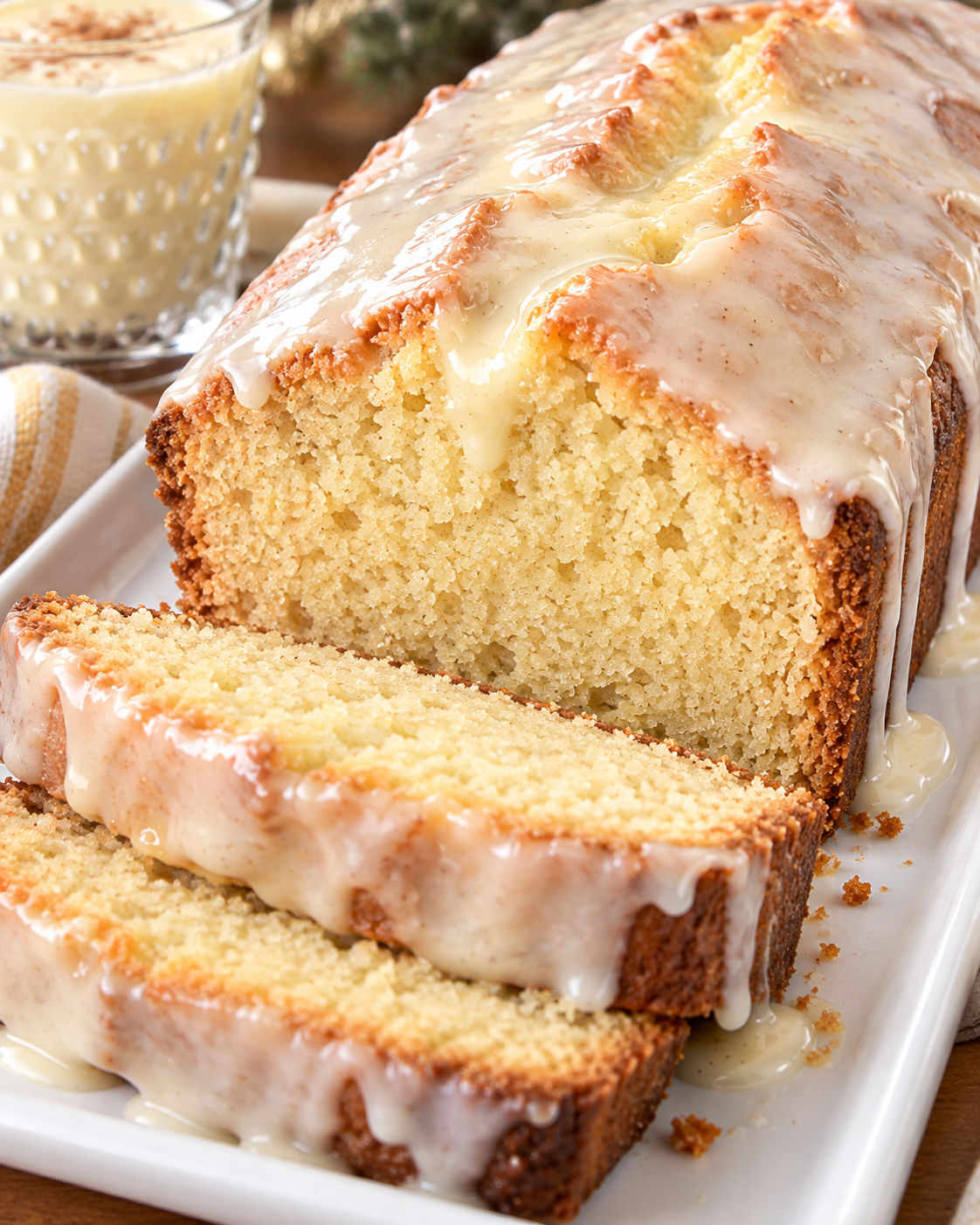
This loaf has two distinct finishing choices within the same preparation: the bread can be shown as a whole loaf with its drizzle visible, or it can be sliced so the moist interior and glaze appear together. The glaze is not mixed into the batter. It is prepared as a separate final layer and drizzled across the top after cooling.
The flavor description stays focused on the ingredients used here. Cinnamon, nutmeg, and ground cloves provide the spices in the bread, and nutmeg returns in the glaze. Vanilla extract supports both the loaf and the topping. White sugar sweetens the bread, while powdered sugar forms the base of the creamy finish.
Ingredients
-
1 1/2 cups flour
-
1 cup white sugar
-
1 teaspoon baking powder
-
1/2 teaspoon salt
-
1/2 teaspoon ground cinnamon
-
1/4 teaspoon ground nutmeg
-
1/8 teaspoon ground cloves
-
3/4 cup eggnog
-
1/2 cup vegetable oil
-
2 large eggs, beaten
-
1 1/2 teaspoons vanilla extract
-
1 cup powdered sugar
-
3 tablespoons eggnog
-
1/2 teaspoon vanilla extract
-
1/8 teaspoon ground nutmeg
The first eleven ingredients make the loaf. Flour, sugar, baking powder, and salt form its basic mixture, while cinnamon, nutmeg, and cloves establish the warm spice combination. Eggnog supplies the named flavor in the batter. Vegetable oil, beaten eggs, and vanilla extract complete the wet portion that is whisked separately.
The final four ingredients make the eggnog glaze. Powdered sugar replaces the white sugar used in the bread and creates the base for the topping. Eggnog provides the liquid, while vanilla extract and nutmeg repeat flavors from the loaf. Keeping these ingredients separate from the bread ingredients makes the finishing stage easy to identify.
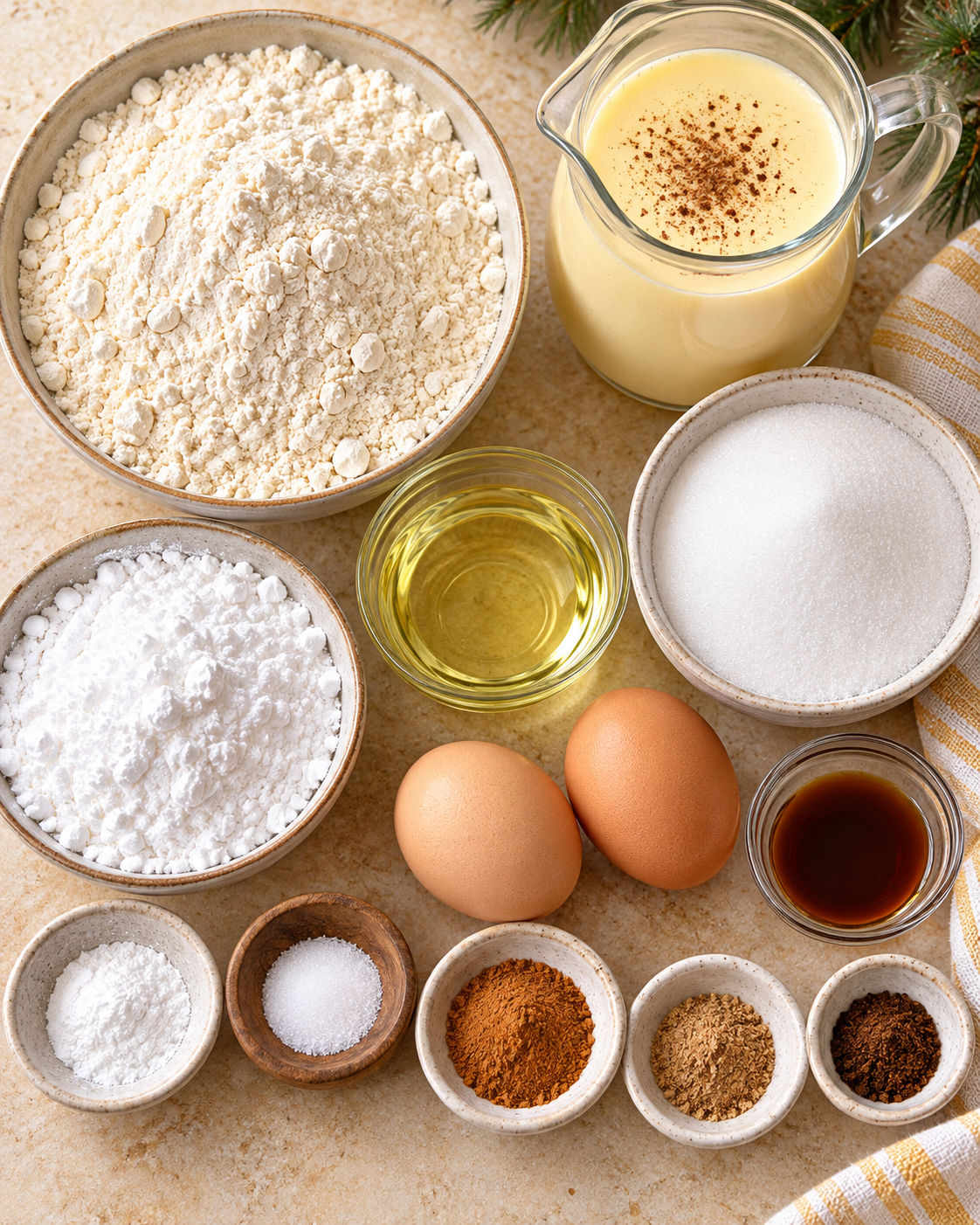
Arrange the ingredients according to their use. The bread ingredients are combined first, and the glaze ingredients remain available for the end of the preparation. The glaze is not added until the loaf has cooled completely, so separating the two groups helps preserve the intended order.
The two eggnog measurements have different roles. The larger amount goes into the bread batter, and the smaller amount goes into the powdered-sugar glaze. Vanilla extract also appears twice, with one amount assigned to the loaf and another assigned to the topping. Nutmeg is divided between the bread and the glaze, while cinnamon and cloves are included in the bread mixture.
How to Make It
-
Coat an 8 1/2 x 4 1/2 loaf pan with cooking spray. Heat the oven to 350 degrees.
-
Place the flour, white sugar, baking powder, salt, ground cinnamon, ground nutmeg, and ground cloves in a bowl. Combine the dry ingredients so the spices are distributed through the flour mixture.
-
In a separate bowl, whisk together the eggnog, vegetable oil, beaten eggs, and vanilla extract. Continue until the wet ingredients are combined.
-
Add the wet mixture to the dry mixture. Stir until just combined, keeping the final mixing limited to bringing the ingredients together.
-
Transfer the batter to the prepared loaf pan. Set the pan in the oven and bake for 65-75 minutes, until a tester inserted into the center comes out clean.
-
Place the baked loaf on a wire rack and let it cool in the pan for 10-15 minutes.
-
Loosen the loaf from the pan. Continue cooling it directly on the wire rack until it has cooled completely.
-
Once the loaf is fully cooled, make the glaze. Combine the powdered sugar, eggnog, vanilla extract, and ground nutmeg. Mix until creamy.
-
Put parchment paper beneath the wire rack. This creates a place for glaze that moves beyond the top of the loaf.
-
Drizzle the creamy glaze back and forth over the cooled bread, leaving visible lines across the top.
-
Slice the glazed loaf and serve it with a glass of eggnog.
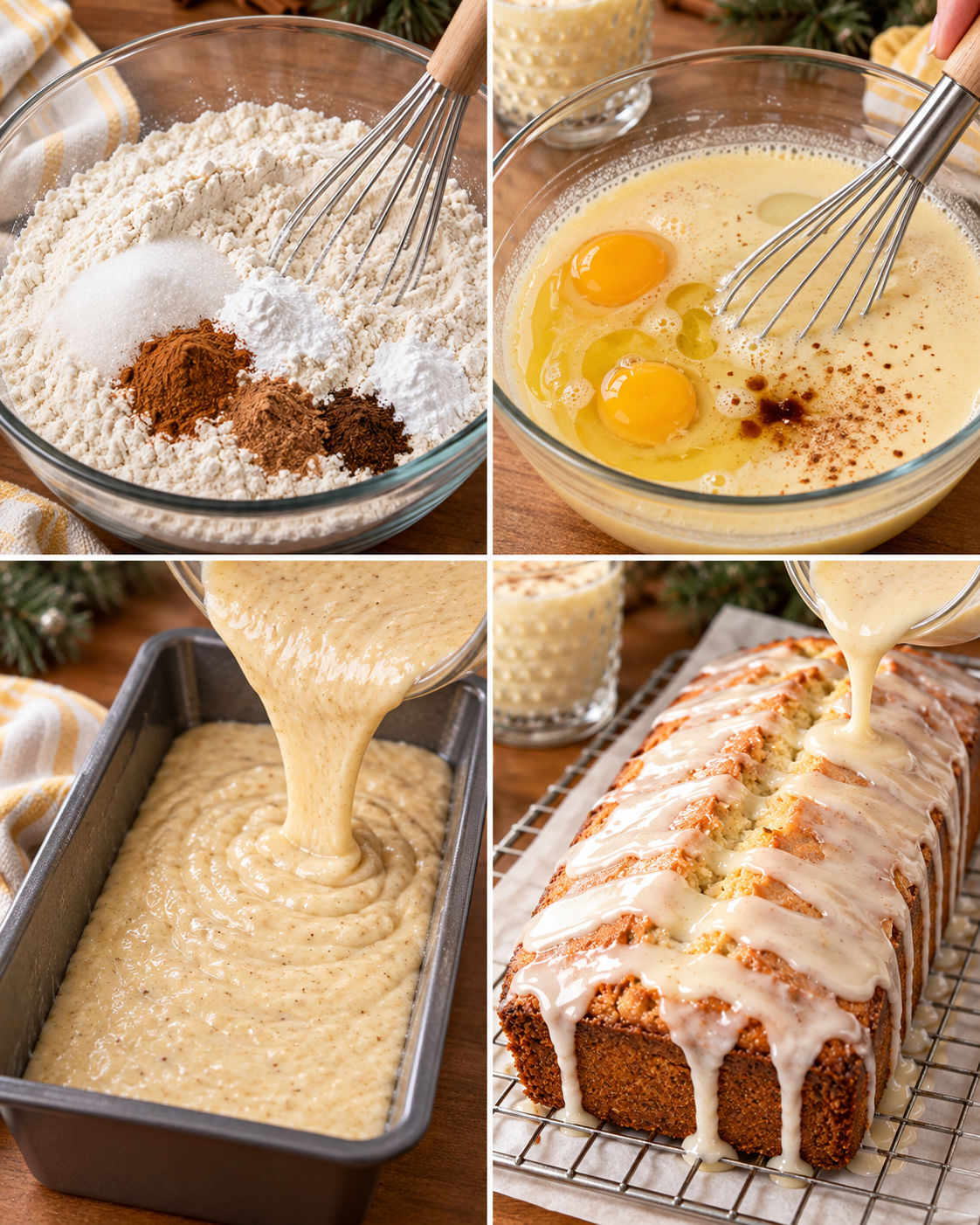
The mixing order gives the preparation its structure. The dry ingredients are combined in one bowl, and the wet ingredients are whisked separately. The wet mixture then joins the dry mixture, and the batter is stirred only until combined. This is the complete mixing sequence before the batter enters the pan.
The prepared pan provides the loaf shape, while the center tester supplies the doneness check. The baking stage is complete when the tester comes out clean. Afterward, the loaf remains in the pan for its initial cooling period, then is loosened so the rest of the cooling can happen directly on the rack.
Cooling is the dividing line between the bread and the glaze. The topping is not prepared while the loaf is warm. It is mixed after the loaf is fully cooled, then applied over the top. Parchment beneath the rack keeps the glazing area organized as the creamy mixture is drizzled back and forth.
The last step is serving rather than another baking stage. Slicing reveals the bread beneath the glaze, and a glass of eggnog completes the stated presentation. The whole loaf may remain visible before it is cut, with the drizzle defining the top surface.
Toppings and Serving
The topping is an eggnog glaze made with powdered sugar, eggnog, vanilla extract, and ground nutmeg. Combine these ingredients until the mixture is creamy, then drizzle it over the fully cooled loaf. The glaze repeats eggnog, vanilla, and nutmeg from the bread, giving the finished loaf a connected flavor profile from the first slice to the topping.
The drizzle is placed across the top in visible lines. A back-and-forth motion keeps the glaze recognizable as a topping rather than blending it into the bread. The fully cooled surface provides the stage for this final layer. Parchment beneath the wire rack can catch any glaze that travels beyond the loaf.
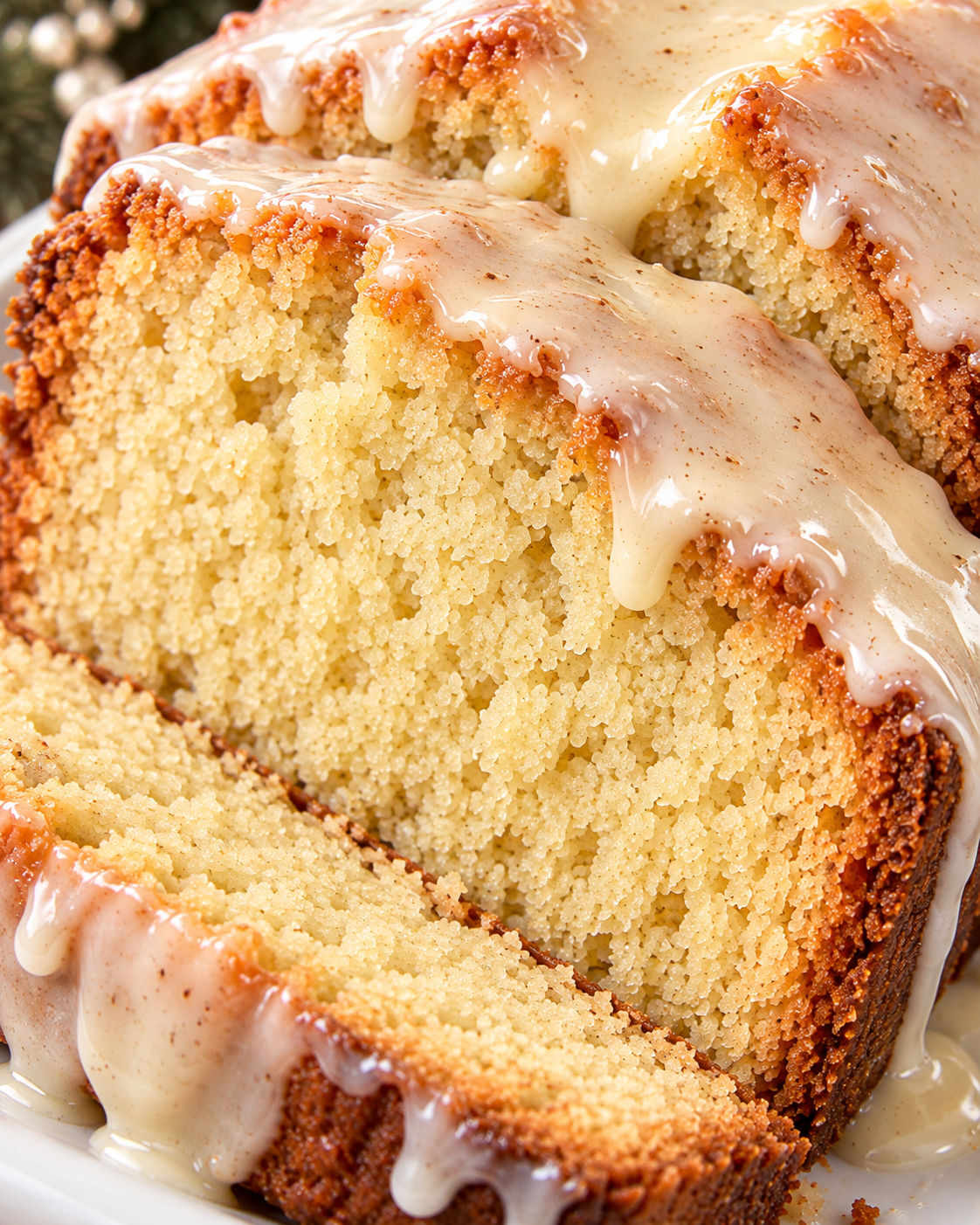
Slice the bread after the glaze has been added. Each slice can show the moist crumb and the creamy drizzle together. The loaf can also be presented whole before slicing, keeping the glazed surface prominent. These two presentations use the same finished bread and differ only in how the loaf is shown at serving time.
Serve the slices with a glass of eggnog. This pairing repeats the central flavor without adding another ingredient to the loaf or glaze. The glass can be placed alongside the bread while the visible topping remains the focus of the serving arrangement.
The finished loaf has several elements that can be described directly: a moist bread texture, eggnog flavor, warm spices, vanilla, and a creamy glaze. The top is defined by the powdered-sugar mixture, while the interior contains the flour-based bread mixture with eggnog, oil, eggs, and the measured spices.
Variations
Whole-Loaf Presentation
Keep the completed bread whole after the glaze has been drizzled. This view emphasizes the loaf shape, the visible lines of topping, and the way the glaze rests across the top. Place the loaf on the wire rack or another serving surface after the glazing stage, keeping the finished surface visible before slicing.
Sliced Presentation
Slice the finished loaf so the moist interior appears beneath the creamy topping. This presentation highlights the relationship between the bread and the glaze. The ingredients and preparation remain the same; the change is the point at which the loaf is shown as individual portions.
Glaze-Focused View
Emphasize the powdered-sugar glaze as the final layer. Use the measured mixture of powdered sugar, eggnog, vanilla extract, and nutmeg, and keep the drizzle visible across the top. This version does not add ingredients or alter the loaf. It simply makes the topping the main visual feature.
Eggnog Serving Pairing
Place a glass of eggnog beside the slices. The bread already contains eggnog, and the glaze contains it as well, so this presentation continues the same flavor through the serving arrangement. No extra topping or flavor addition is needed.
Spice-Focused Description
Describe the completed loaf through its measured spices: cinnamon, nutmeg, and cloves in the bread, with nutmeg also in the glaze. Vanilla appears in both parts, and eggnog appears in the bread and topping. This variation changes the emphasis of the description rather than changing the listed ingredients.
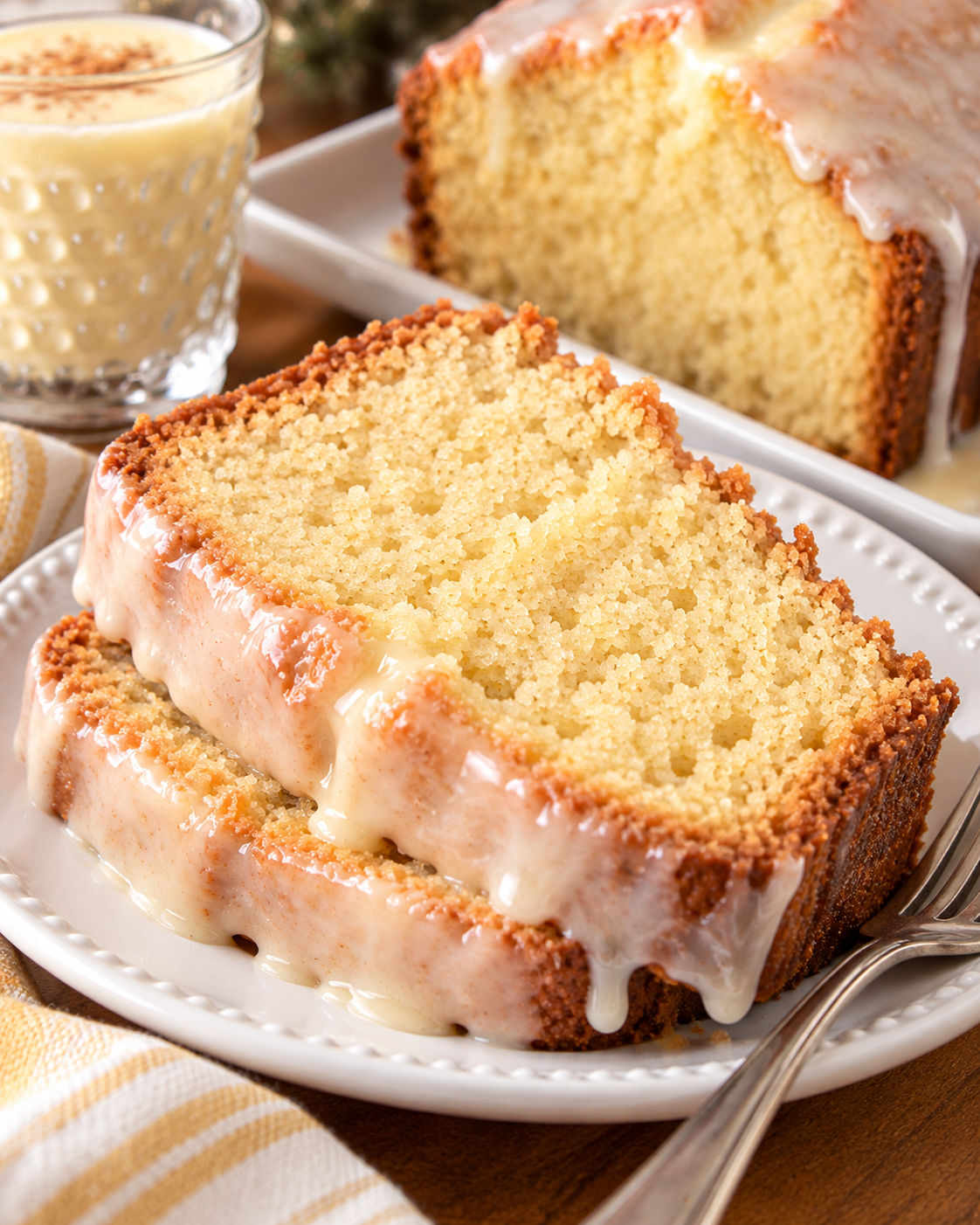
Each variation remains within the same loaf format. The available choices concern presentation, the visibility of the glaze, and the glass of eggnog served alongside the bread. The core batter, baking sequence, cooling sequence, and glaze ingredients stay together as one complete preparation.
Storage and Make-Ahead
The clearest make-ahead point is the cooling stage. The loaf can be baked, placed on a wire rack, loosened from the pan after the initial rest, and cooled directly on the rack. The glaze is then prepared only after the bread has cooled completely.
This order separates baking from finishing. The bread does not receive its topping while it is warm. Instead, the powdered sugar, eggnog, vanilla extract, and nutmeg are mixed into a creamy glaze once the loaf is ready for the final step. Parchment beneath the rack can remain in place while the topping is drizzled.
The preparation provides instructions for cooling, glazing, slicing, and serving. It does not specify a storage container, refrigeration method, or storage duration. Those details are therefore not part of the stated plan. Keep the make-ahead focus on completing the bread before the glaze is added and serving it with eggnog when ready.
For a planned serving, the loaf may be cooled before the finishing stage. After the glaze is mixed and drizzled, slice the bread and pair it with a glass of eggnog. The whole loaf can remain intact until the serving stage, or it can be cut after the glaze is visible on top.
The finishing sequence is useful because it keeps the loaf and topping distinct. Baking produces the bread, cooling prepares it for the glaze, and slicing completes the serving presentation. No additional storage claim is needed to describe this make-ahead point.
FAQ
What is Glazed Eggnog Bread?
It is a moist loaf flavored with eggnog, cinnamon, nutmeg, cloves, and vanilla, then finished with a creamy glaze made from powdered sugar, eggnog, vanilla, and nutmeg.
How many loaves does the recipe make?
The listed yield is 1 loaf.
What pan is used?
Use an 8 1/2 x 4 1/2 loaf pan coated with cooking spray.
What ingredients go into the bread?
The bread uses flour, white sugar, baking powder, salt, cinnamon, nutmeg, cloves, eggnog, vegetable oil, beaten eggs, and vanilla extract.
What ingredients go into the glaze?
The glaze uses powdered sugar, eggnog, vanilla extract, and ground nutmeg. Combine them until creamy before drizzling the mixture over the fully cooled loaf.
When is the glaze added?
The glaze is added after the loaf has cooled completely. It is mixed separately and drizzled over the top as the final finishing step.
How is doneness checked?
Insert a tester into the center of the loaf. The baking stage is complete when the tester comes out clean.
Why are the wet and dry ingredients mixed separately?
The dry ingredients are combined first, while the eggnog, oil, beaten eggs, and vanilla are whisked in another bowl. The wet mixture is then stirred into the dry mixture until just combined.
How does the loaf cool?
It cools first on a wire rack while still in the pan. It is then loosened from the pan and cooled directly on the rack until fully cooled.
What is served with the bread?
Slice the glazed bread and serve it with a glass of eggnog.
What flavors are repeated in the glaze?
Eggnog, vanilla, and nutmeg appear in both the bread and the topping. Cinnamon and cloves are included in the bread mixture, while nutmeg is used in both stages.
Can the loaf be shown whole or sliced?
Yes. The completed loaf can be presented whole with the glaze visible, or sliced so the moist interior and creamy topping appear together.
What storage details are provided?
The preparation explains the cooling and finishing sequence but does not specify a storage container, refrigeration method, or storage duration. The make-ahead step is to cool the loaf completely before preparing and adding the glaze.
More in Uncategorized
Apple Crumble Cheesecake
Pumpkin Cheesecake Bars
No-Bake Pumpkin Pie