Pecan Pie Brownies

Pecan Pie Brownies
Introduction
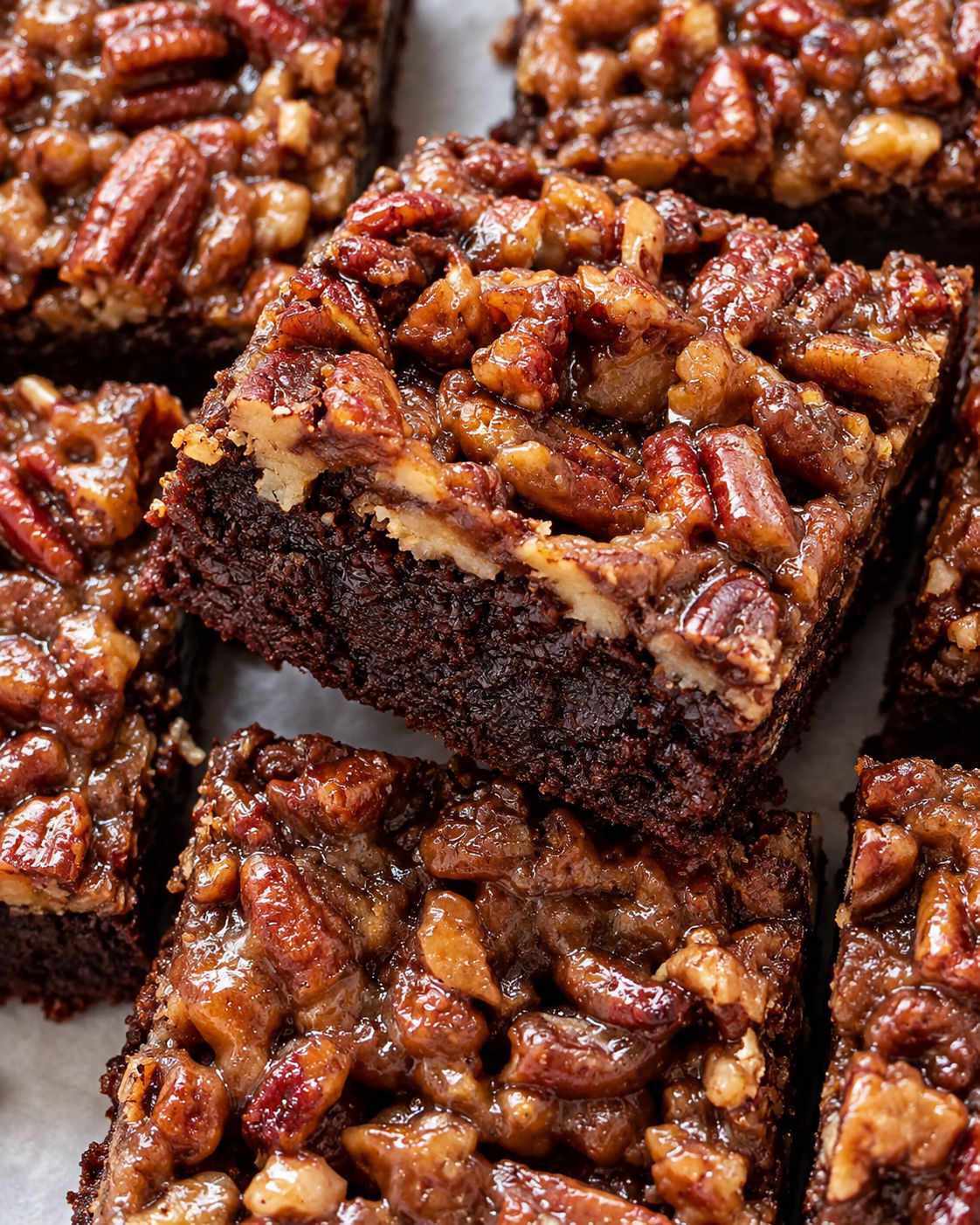
Pecan pie brownies combine a dense chocolate foundation with a sweet pecan layer in one square dessert. The lower portion is fudgy and deeply chocolate-colored, while the upper portion brings gooey sweetness and a crisp, nutty texture. Each cut piece shows the contrast between the soft brownie layer and the textured pecan topping.
This recipe makes 16 brownies in an 8-inch square metal baking pan. The preparation is arranged in two parts. First, butter and unsweetened chocolate are melted together to create the base for the batter. Sugar, eggs, flour, cocoa powder, vanilla extract, salt, and optional chocolate chips complete that mixture. Next, melted butter, honey, brown sugar, heavy cream, salt, and toasted pecans form the topping.
The finished dessert depends on keeping those two mixtures in distinct layers. The brownie batter is leveled across the lined pan before the coated pecans are spread over it. During baking, the upper layer remains visible and develops the gooey, crunchy character that separates these bars from a plain brownie.
Parchment paper helps with removal after baking. The lining should extend beyond the pan on opposite sides, creating handles for lifting the cooled slab. Complete cooling is also part of the preparation. Once the pan has cooled on a wire rack, the brownies can be lifted and divided into squares while the pecan layer remains in place.
Ingredients
-
Unsalted butter for the brownie batter, plus additional butter for greasing the pan: ½ cup or 115 grams
-
Unsweetened chocolate, coarsely chopped or broken into pieces: 4 ounces or 115 grams
-
Granulated sugar: 1 ¼ cups or 250 grams
-
Large eggs, at room temperature: 2
-
All-purpose flour: 1 cup or 130 grams
-
Dutch-processed cocoa powder: 2 tablespoons
-
Vanilla extract: 2 teaspoons
-
Fine sea salt for the brownie batter: ¾ teaspoon
-
Mini or regular chocolate chips, optional: ¼ cup or 45 grams
-
Unsalted butter for the pecan layer, melted: 6 tablespoons or 85 grams
-
Honey: ¼ cup or 60 milliliters
-
Light or dark brown sugar: ¼ cup or 55 grams
-
Heavy cream: 2 tablespoons
-
Fine sea salt for the pecan mixture: ¼ teaspoon
-
Toasted pecan halves, coarsely chopped: 2 cups or 200 grams
-
Flaky sea salt for the surface: amount as needed for a light finishing sprinkle
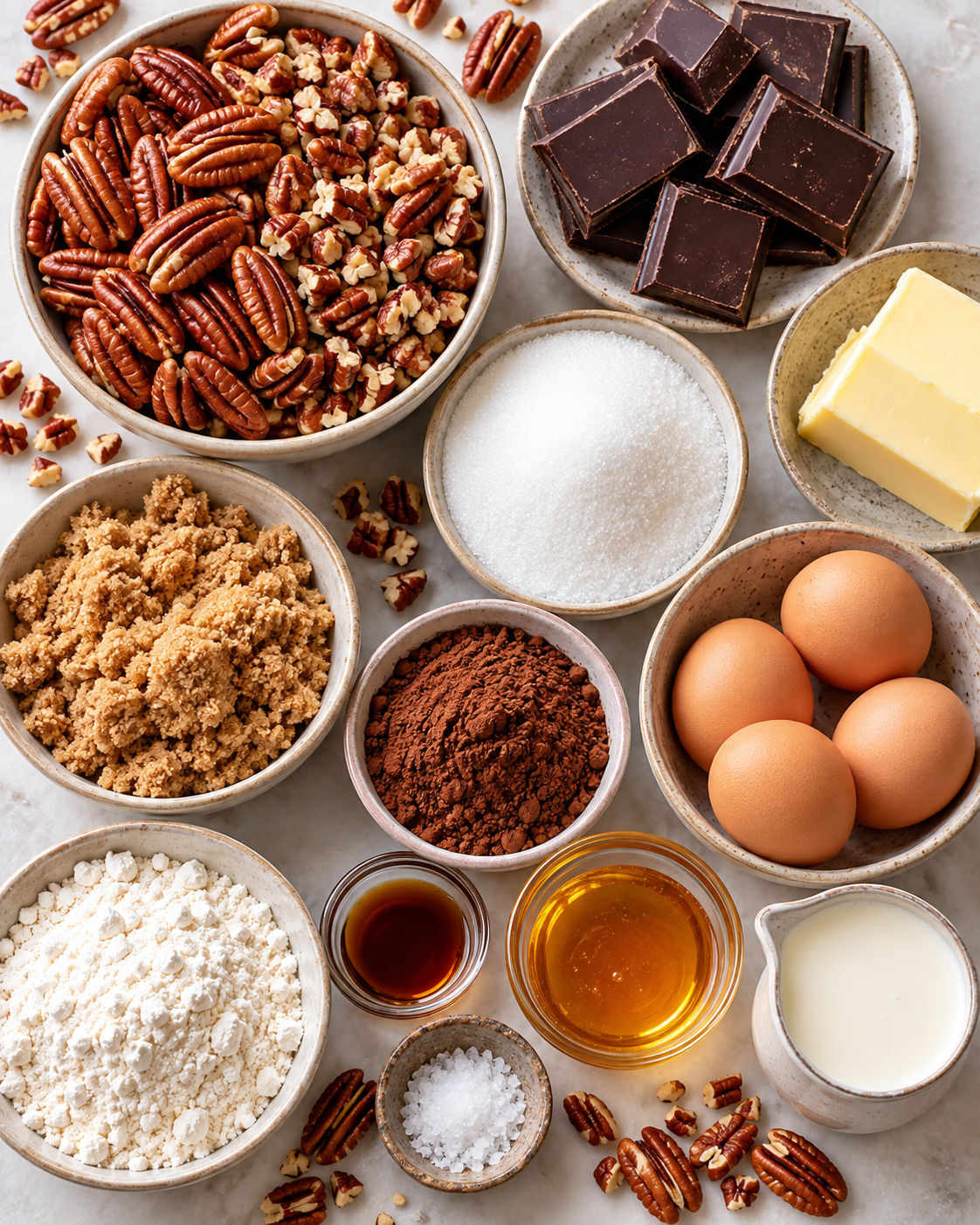
The ingredient list is separated by function even though every component comes together in the same pan. Butter and unsweetened chocolate establish the chocolate base. Granulated sugar supplies sweetness to the brownie mixture, and the eggs help bind that mixture once it has cooled from melting. Flour and Dutch-processed cocoa powder provide the dry structure and additional chocolate flavor. Vanilla extract and fine sea salt round out the batter.
The optional chocolate chips can be included in either mini or regular form. They belong in the batter after the flour, cocoa powder, vanilla, and salt have been added. Leaving them out does not change the basic brownie mixture because they are not required for the base.
The upper layer uses a separate group of ingredients. Melted butter, honey, brown sugar, heavy cream, and fine sea salt are whisked together before the pecans are introduced. Toasted pecan halves are coarsely chopped, then folded through the mixture until coated. Flaky sea salt is reserved for the surface after the pecan mixture has been spread across the batter.
How to Make It
-
Prepare the pan and oven. Set the oven to 350 degrees. Lightly butter an 8-inch square metal baking pan. Fit parchment paper into the pan, leaving roughly 2 inches of extra paper extending over each side. The overhang will later make it possible to lift the baked slab out of the pan.
-
Melt the chocolate base. Place the unsalted butter and chopped unsweetened chocolate in a medium pot. Set the pot over low heat and stir continuously with a rubber spatula. Keep the mixture moving as the butter and chocolate soften together, continuing until the mixture is smooth.
-
Add the granulated sugar. Move the melted mixture to a large bowl, then stir in the sugar until it is incorporated. Let the bowl stand until the chocolate mixture is only just warm when touched. This brief cooling stage occurs before the eggs enter the bowl.
-
Build the brownie batter. Whisk the eggs into the cooled chocolate mixture. Add the all-purpose flour, Dutch-processed cocoa powder, vanilla extract, and fine sea salt. Continue whisking until the dry ingredients are incorporated. If chocolate chips are being used, stir them into the completed batter.
-
Level the base. Scrape the brownie mixture into the lined pan. Use a spatula to move it into the corners and create an even layer. Keep the surface as level as possible so the pecan topping can cover the batter from edge to edge.
-
Combine the pecan mixture. In a medium bowl, whisk together the melted butter, honey, brown sugar, heavy cream, and fine sea salt. Work until the ingredients form a combined mixture rather than leaving separate streaks of butter or honey.
-
Coat the nuts. Add the coarsely chopped toasted pecans to the bowl. Fold them through the butter-and-honey mixture until the pieces are covered. Folding keeps the nuts distributed through the mixture while maintaining their coarse texture.
-
Add the upper layer. Spoon the coated pecans over the brownie batter. Spread the mixture across the entire surface without stirring it into the chocolate layer. Finish with a light scattering of flaky sea salt over the pecans.
-
Bake the assembled pan. Place the pan in the oven and bake for 45 to 55 minutes. The visual and tactile check is more important than any single point in that range: the top should look set and feel firm, with particular attention paid to the center.
-
Cool and cut. Set the pan on a wire rack and leave it there until the brownies have cooled completely. Grip the parchment overhangs to lift the slab from the pan. Cut the dessert into 16 squares.
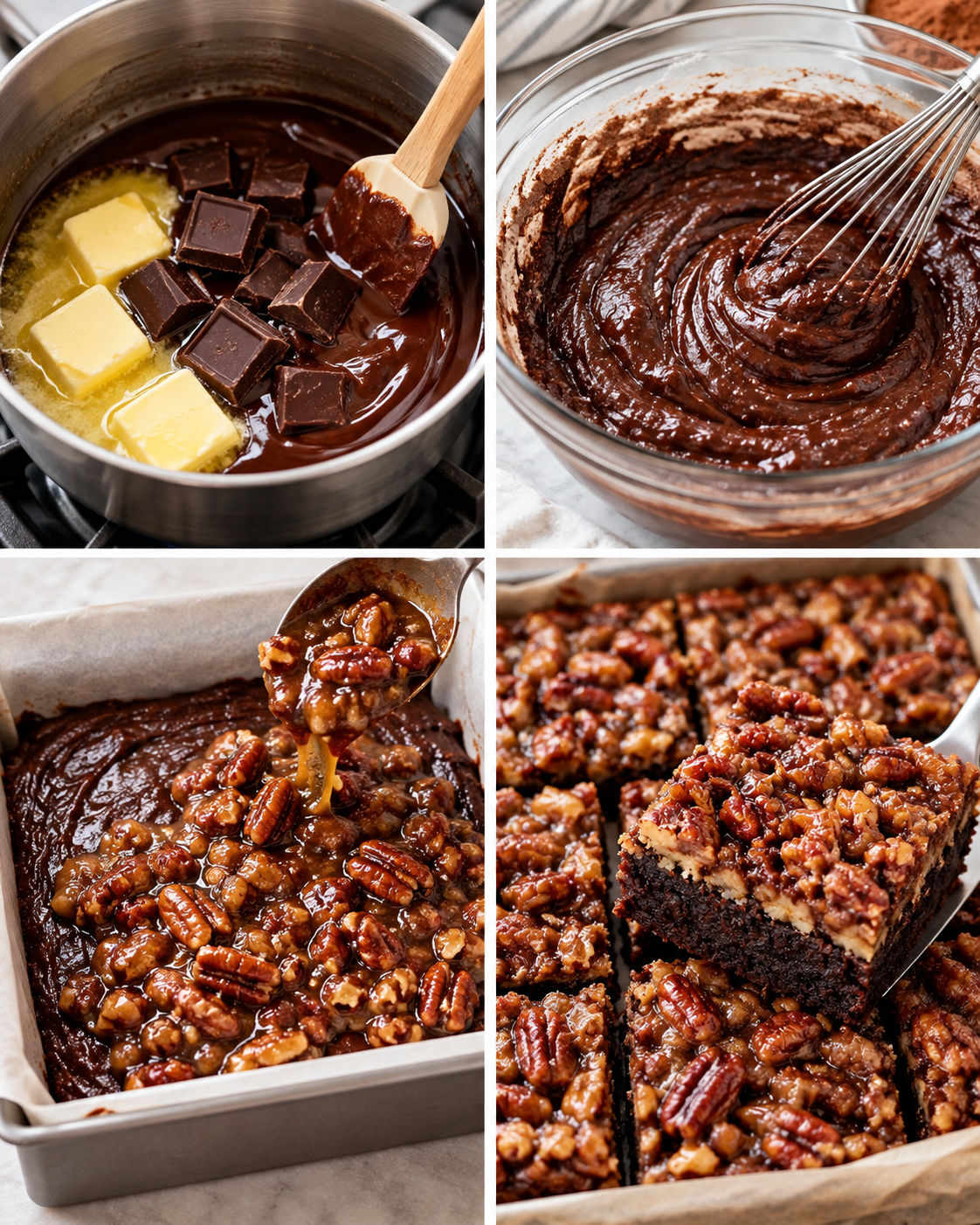
The sequence matters because the brownie layer and pecan layer are prepared separately. The chocolate mixture must become smooth before the sugar is incorporated. It must then lose some of its heat before the eggs are whisked in. This keeps the batter in the intended order: melted chocolate and butter first, sugar next, eggs after cooling, and dry ingredients afterward.
The batter should be spread before the topping is made or added. This gives the chocolate portion a level foundation for the pecan mixture. When the pecans are folded into the honey mixture, the goal is full coating rather than a loose pile of nuts. Once the topping is distributed across the surface, it should remain above the brownie batter rather than being mixed through it.
The final check takes place in the center of the pan. The top should be set and firm to the touch there. After baking, the pan must remain undisturbed on the rack until fully cool. The parchment handles are used only after that cooling stage, when the whole slab is ready to be lifted and cut.
Toppings and Serving
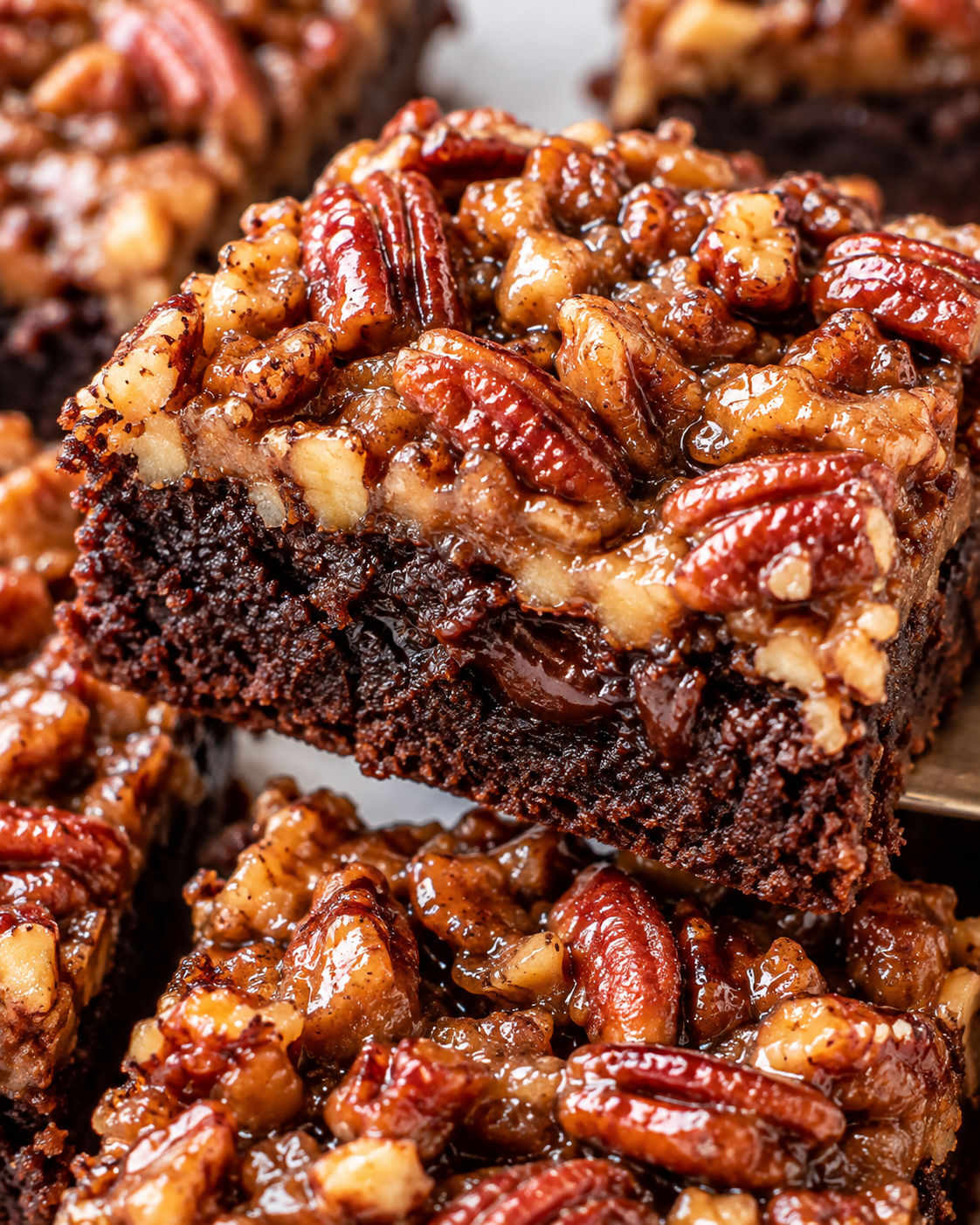
The pecan layer serves as the topping for these brownies. It stays visible over the chocolate base, creating a second color and texture across each square. Honey and brown sugar provide the sweetness, while butter and heavy cream form the rich mixture that coats the nuts. The toasted pecans supply the crunchy element, and flaky sea salt adds a contrasting finish across the surface.
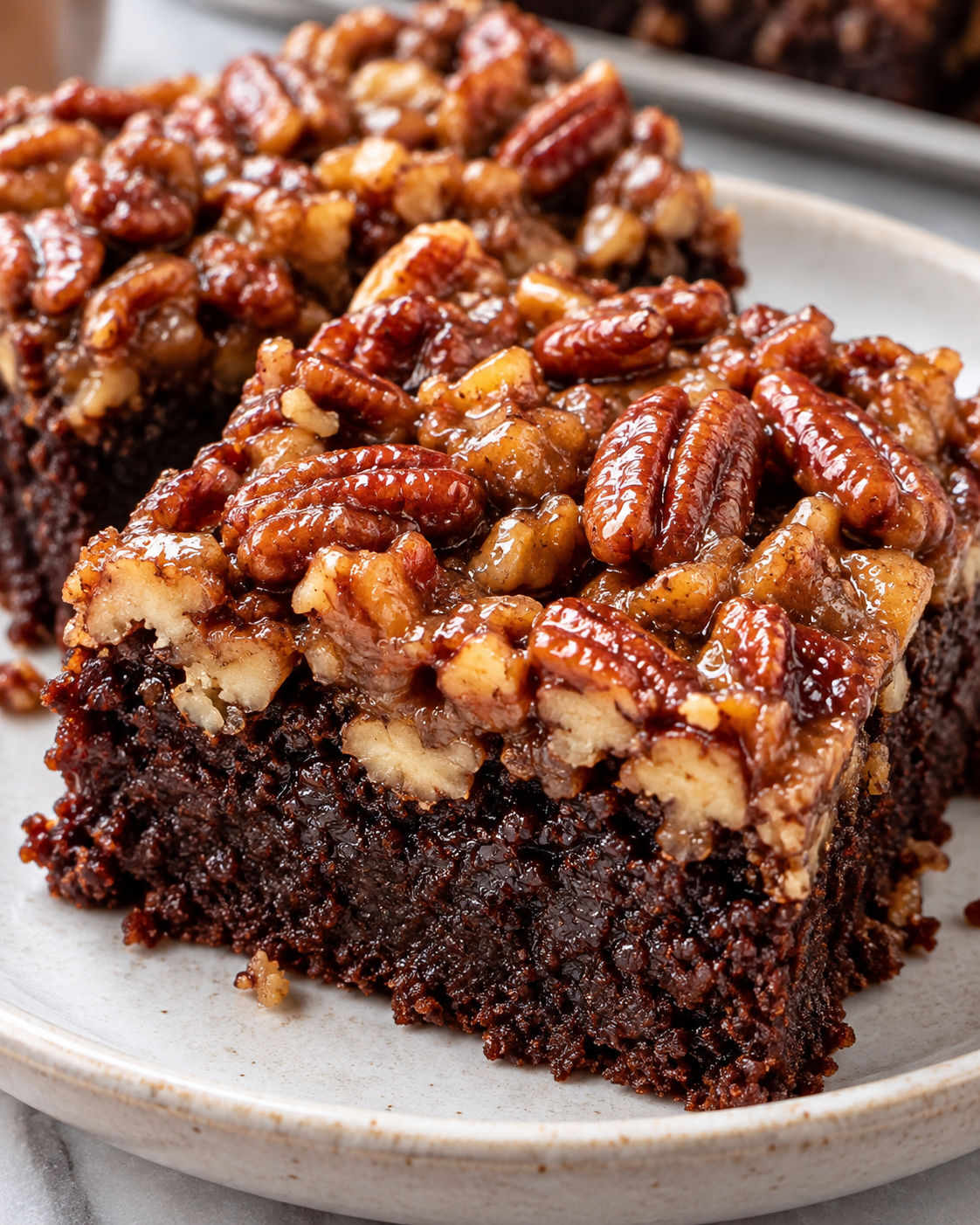
The cut face reveals the arrangement clearly. Beneath the nut layer is the fudgy brownie portion, while the top carries the gooey sweetness and crunch associated with the pecan layer. Coarsely chopped pecans create a textured top rather than a smooth covering, so the nut pieces remain noticeable in each portion.
For serving, keep the baked slab in the pan through the complete cooling stage. Use the parchment extensions to lift the dessert in one piece, then divide it into 16 squares. Cutting after cooling helps the upper layer stay attached to the brownie base instead of shifting across the cut surface.
The pan size also supports an even presentation. An 8-inch square produces a compact slab with a visible relationship between the chocolate base and the nut topping. Each square contains both layers, allowing the fudgy center and crunchy upper portion to be served together.
Variations
Pecans can be replaced with walnuts, almonds, pistachios, cashews, or a combination of those nuts. The named alternatives provide different nut choices while preserving the layered format. Coarsely chopping the replacement nuts keeps the topping textured in the same general way as the pecan version.
Chocolate chips may be included or omitted. When used, either mini or regular chips can be stirred into the brownie batter after the remaining batter ingredients have been combined. Without them, the recipe still contains the unsweetened chocolate and Dutch-processed cocoa powder that define the chocolate base.
The honey-based topping is another defining option. Honey is used in place of corn syrup in the pecan layer, alongside melted butter, brown sugar, heavy cream, and salt. The topping remains separate from the batter and is spread over the chocolate layer before baking.
A 9-inch square pan is also possible. If that larger pan is selected, remove a few minutes from the baking time. The stated 8-inch metal pan remains the primary setup, but the alternate square pan provides another way to assemble the same two-layer dessert.
These changes do not require a different assembly pattern. Prepare the chocolate batter, level it in the lined pan, make the honey mixture, fold in the chosen nuts, and spread the topping across the batter. The essential combination remains a fudgy brownie layer beneath a sweet, textured nut layer.
Storage and Make-Ahead
The directions establish cooling as the required holding stage after baking. Once the pan is removed from the oven, place it on a wire rack and wait until the slab is completely cool. The topping needs this time to set before the brownies are lifted and cut.
Parchment supports the make-ahead portion of the preparation. When the pan is lined, leave roughly 2 inches of paper extending beyond the sides. After the pan has cooled, those extensions provide a way to lift the entire brownie slab without disturbing the layered surface.
The recipe does not specify a storage container, refrigeration instruction, freezing instruction, or room-temperature holding period. It also does not provide a separate advance-preparation schedule. The supported preparation plan is therefore to complete the bake, cool the pan fully on the rack, remove the slab with the parchment, and cut it into 16 squares.
The cooling stage is especially important for handling. Cutting before the pan has cooled completely does not follow the stated process. Waiting until the brownie layer and pecan layer have cooled gives the finished slab the condition described for lifting and dividing it into individual squares.
FAQ
What are pecan pie brownies?
They are a layered dessert with a fudgy chocolate brownie base and a honey-sweetened pecan layer. The upper portion contributes gooey sweetness and crunch, while the lower portion supplies the chocolate brownie texture.
How many pieces does this recipe make?
The finished slab is divided into 16 brownies.
Which pan is used?
Use an 8-inch square metal baking pan. A 9-inch square pan can be used instead, with a few minutes removed from the baking time.
Can the pecans be replaced?
Yes. Walnuts, almonds, pistachios, cashews, or a combination of those nuts can replace the pecans.
Are chocolate chips required?
No. Chocolate chips are optional. If included, mini or regular chips are stirred into the brownie batter.
What is in the pecan topping?
The topping contains melted unsalted butter, honey, brown sugar, heavy cream, fine sea salt, and coarsely chopped toasted pecan halves. Flaky sea salt is added across the surface before baking.
Why are the chocolate and butter melted together?
The brownie preparation begins by combining unsalted butter with chopped unsweetened chocolate over low heat. Constant stirring brings the two ingredients together into a smooth mixture that becomes the starting point for the batter.
When are the eggs added?
The eggs are whisked in after the melted chocolate mixture has cooled until it is just warm to the touch. The flour, cocoa powder, vanilla extract, and fine sea salt follow.
How is the pecan layer placed?
The butter, honey, brown sugar, cream, and fine sea salt are whisked together first. The toasted pecans are then folded into that mixture until coated. The finished pecan mixture is spread over the brownie batter rather than stirred into it.
How can the brownies be lifted from the pan?
Line the pan with parchment and leave about 2 inches of excess paper on each side. After the pan has cooled completely on a wire rack, use the parchment overhangs to lift out the slab.
How can the center be checked during baking?
The top should be set and firm to the touch, with special attention given to the center. The baking window is 45 to 55 minutes.
What nutrition estimate is provided?
The estimate per serving is 372 calories, 25 grams of fat, 36 grams of carbohydrates, 26 grams of sugar, 4 grams of protein, 3 grams of fiber, 178 milligrams of sodium, and 53 milligrams of cholesterol. It also lists 10 grams of monounsaturated fat, 3 grams of polyunsaturated fat, and 10 grams of saturated fat.
Does the recipe specify long-term storage instructions?
No. The directions specify complete cooling on a wire rack before lifting and cutting, but they do not provide a storage method or a make-ahead schedule.
More in Uncategorized
Apple Crumble Cheesecake
Pumpkin Cheesecake Bars
No-Bake Pumpkin Pie