Maple-Honey Pecan Pie with a Gooey Center
Maple-Honey Pecan Pie with a Gooey Center
Introduction
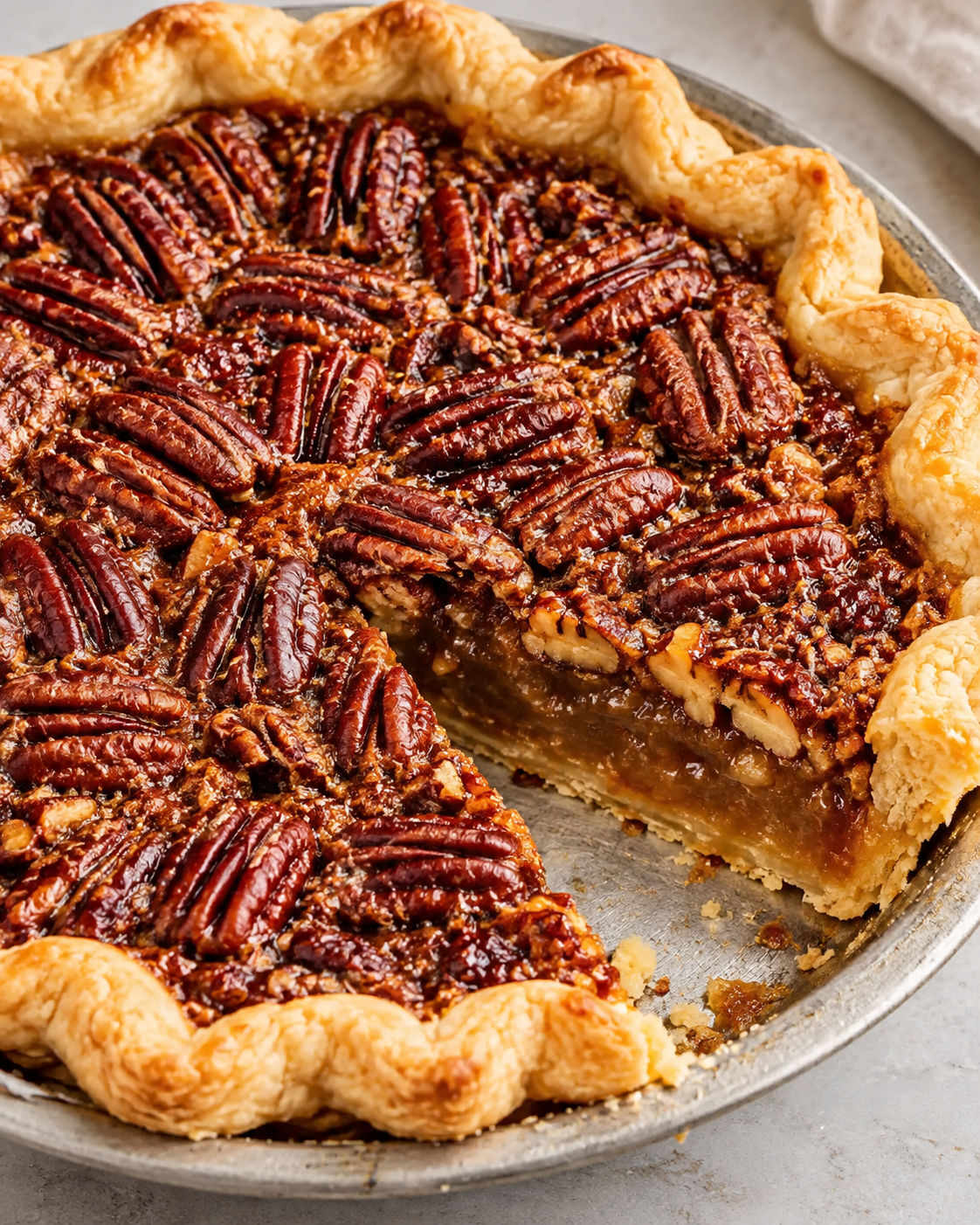
Maple syrup and honey give this pecan pie its defining sweetener combination. Light brown sugar and maple sugar join them in the filling, creating a richly flavored dessert with a wonderfully gooey center. The pie also uses a generous amount of pecans, so the soft center is paired with plenty of pecan crunch rather than a sparse nut layer.
The baked pie develops a golden-brown surface, while the center remains the main textural feature. Total preparation time is 1½ hours, plus cooling, and the yield is 8 servings. Cooling is an important part of the finished schedule because the pie is served after it has rested on a wire rack. Warm and room-temperature serving are both supported, making the same pie suitable for serving after it has cooled or for preparation ahead of the meal.
The recipe is categorized as a dessert and pecan pie. Its rating is 5 from 3,297 ratings. Maple syrup and honey take the place of the usual corn syrup, while maple sugar adds another maple element alongside the brown sugar.
Ingredients
-
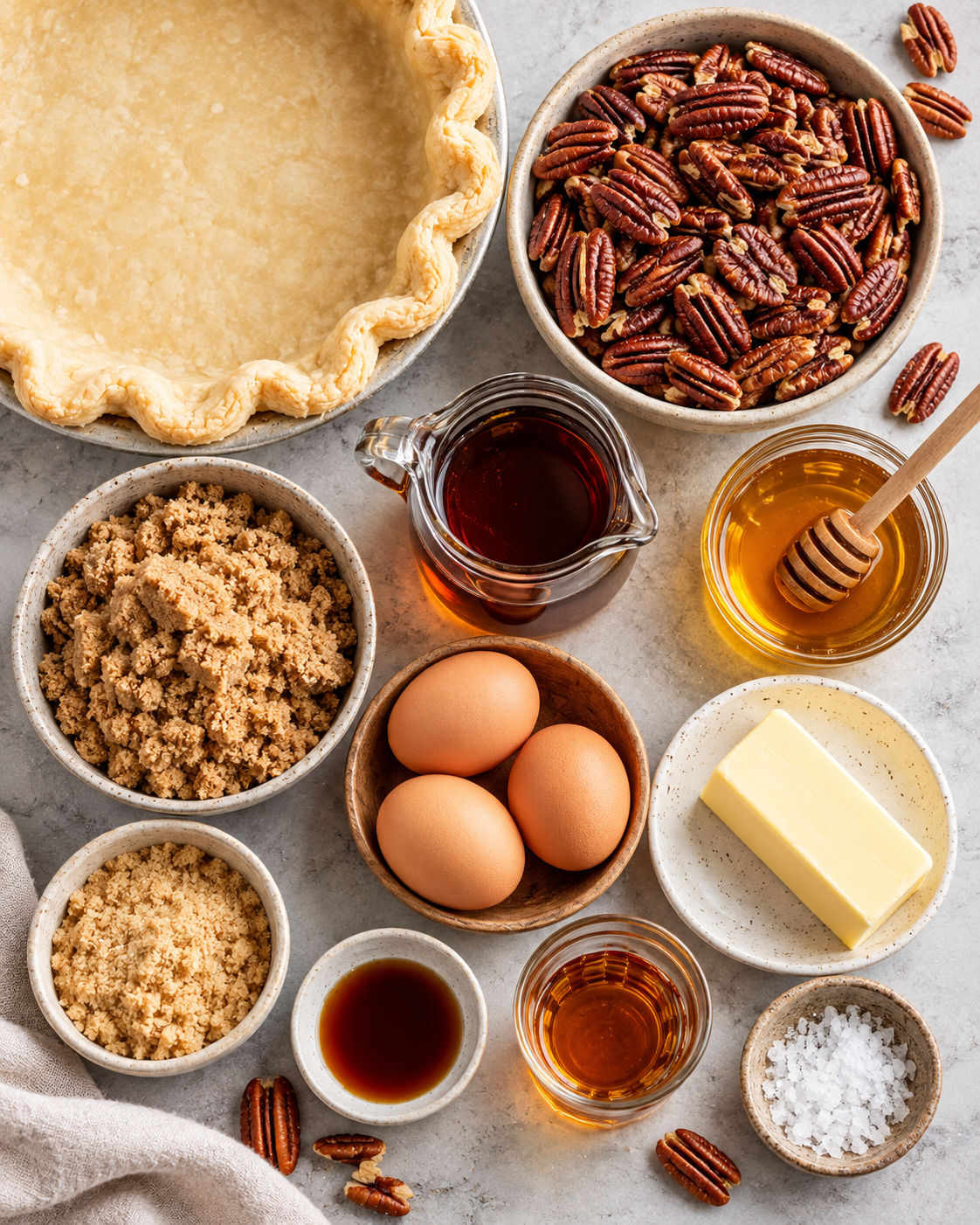
All-purpose flour, for rolling out the dough
-
Dough for one 9-inch single-crust pie
-
½ cup/115 grams unsalted butter
-
¼ cup/85 grams maple syrup
-
¼ cup/85 grams honey
-
½ cup/110 grams light brown sugar
-
½ cup/75 grams maple sugar, or more light brown sugar
-
3 large eggs, at room temperature
-
1 tablespoon bourbon, optional
-
1 teaspoon vanilla extract
-
¾ teaspoon kosher salt
-
1½ cups/180 grams pecan halves
-
Flaky sea salt, optional; Maldon is one example
The flour is used for the work surface while the dough is rolled. The dough amount is sized for one 9-inch single-crust pie, and the prepared dough is shaped in a 9-inch pie plate. The butter, maple syrup, and honey are combined before they meet the eggs and sugars, so each of these ingredients has a defined place in the filling sequence.
The two sugars are light brown sugar and maple sugar. Maple sugar can be replaced with more light brown sugar. The eggs should be at room temperature. Bourbon is optional, and leaving it out does not require another ingredient to replace it. Vanilla extract and kosher salt are included in the filling, while flaky sea salt remains an optional finishing ingredient for the baked pie.
Pecan halves are arranged in the bottom of the crust before the filling is added. The listed quantity provides the generous pecan presence associated with this pie. The pecans may shift upward during baking, so their final position can differ from the arrangement made during assembly.
How to Make It
-
Lightly flour the work surface. Roll the dough into a 12-inch circle and transfer it to a 9-inch metal pie plate. Fold the excess dough and crimp the edge. Freeze the shaped crust for 30 minutes or up to 24 hours.
-
When the crust is ready to bake, place a rimmed baking sheet on the middle oven rack. Heat the oven to 400 degrees. Keep the baking sheet in position so the filled pie can be set on it for baking.
-
Melt the unsalted butter in a small saucepan over medium heat. Cook it with occasional swirling until the foam subsides, the milk solids become golden brown, and the butter smells nutty and toasty; this takes about 5 minutes. Add the maple syrup and cook with occasional stirring until the mixture thickens and reduces slightly, which takes 2 to 3 minutes. Remove the saucepan from the heat, whisk the honey into the warm syrup mixture, and let the mixture cool for at least 10 minutes.
-
While the syrup mixture cools, combine the light brown sugar, maple sugar, eggs, bourbon if using, vanilla extract, and kosher salt in a large mixing bowl. Gradually whisk the cooled syrup mixture into the egg mixture. Use a rubber spatula to scrape the browned bits from the bottom of the saucepan into the bowl and incorporate them into the filling.
-
For a glass pie plate, line the chilled crust with foil or parchment paper and fill it with pie weights or dried beans. Bake the lined crust for 15 minutes at the initial oven setting, then remove the foil or parchment and the weights or beans. Continue baking until the crust is pale golden, about 5 minutes more. Transfer the crust to a rack and let it cool until it is needed. This separate preparation applies to the glass-pie-plate option; the metal pie plate follows the chilled-crust method.
-
Take the chilled metal crust from the freezer, or use the cooled crust prepared in the glass pie plate. Arrange the pecan halves along the bottom of the crust. Pour the filling over the pecans. Set the pie plate on the hot rimmed baking sheet.
-
Bake the assembled pie at the initial oven setting for 10 minutes. Lower the oven to 350 degrees and continue baking for 35 to 45 minutes. The visual doneness cue is a center that has puffed and turned golden brown. The pecans may move toward the top while the filling bakes, so the baked nut placement does not have to match the pre-bake arrangement.
-
Move the baked pie to a wire cooling rack. Sprinkle the top with flaky sea salt if desired. Let the pie cool for at least 2 hours, then serve it warm or at room temperature.
The method has two distinct preparation paths for the crust. A metal pie plate uses the shaped, chilled crust directly. A glass pie plate uses the foil-or-parchment lining and pie weights or dried beans before the crust is cooled and filled. In either case, the pecans go into the bottom of the crust before the filling is poured over them.
The syrup mixture should be cool before it is gradually whisked into the eggs. The browned bits left in the saucepan are deliberately added with a rubber spatula. This keeps the butter, maple syrup, and honey mixture connected to the rest of the filling rather than leaving those browned bits behind.
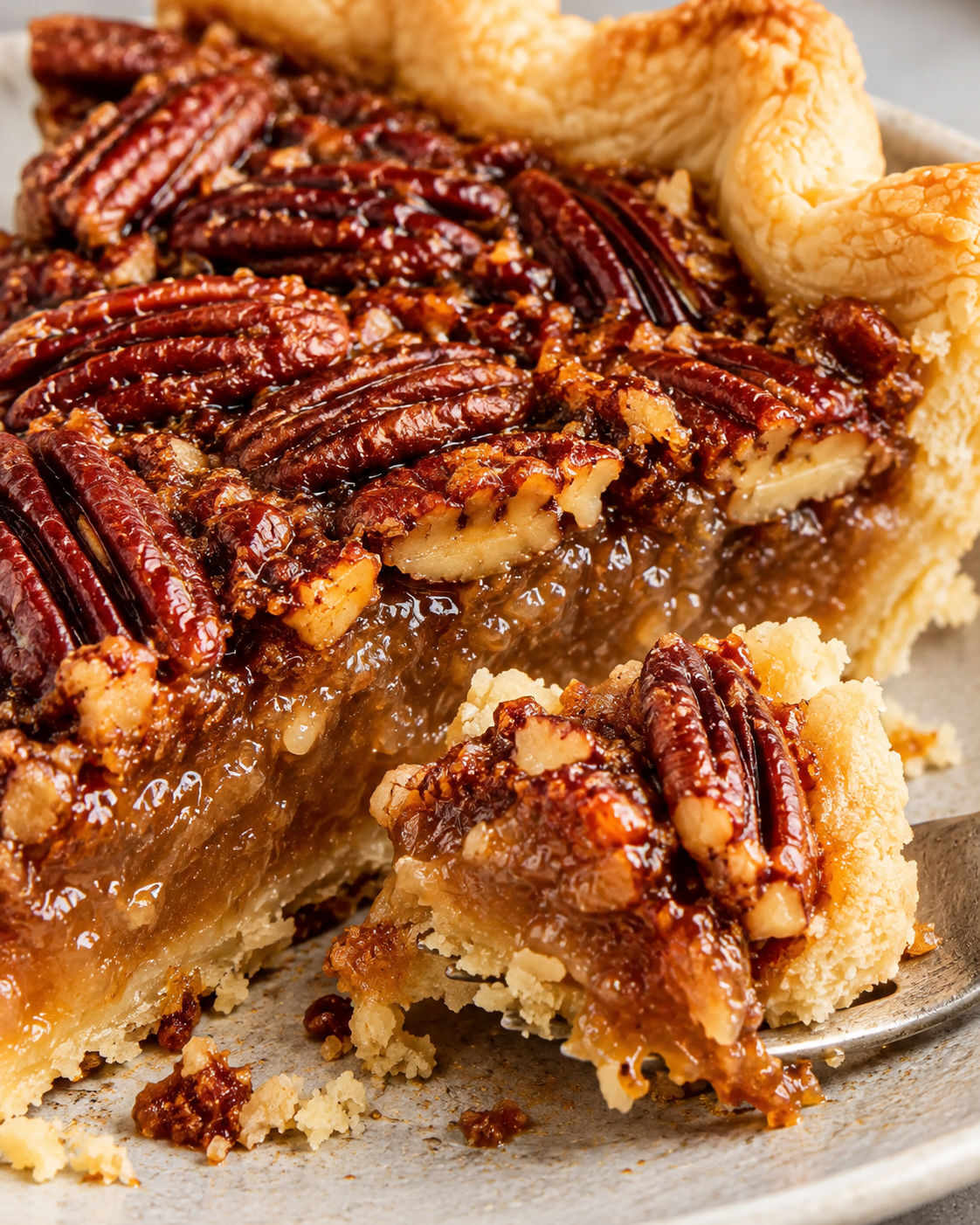
The finished pie is identified by the puffed, golden-brown center cue in the method. Its texture is described as a gooey center with pecan crunch. These qualities belong to the baked pie after the crust has been filled, baked, and cooled on the rack.
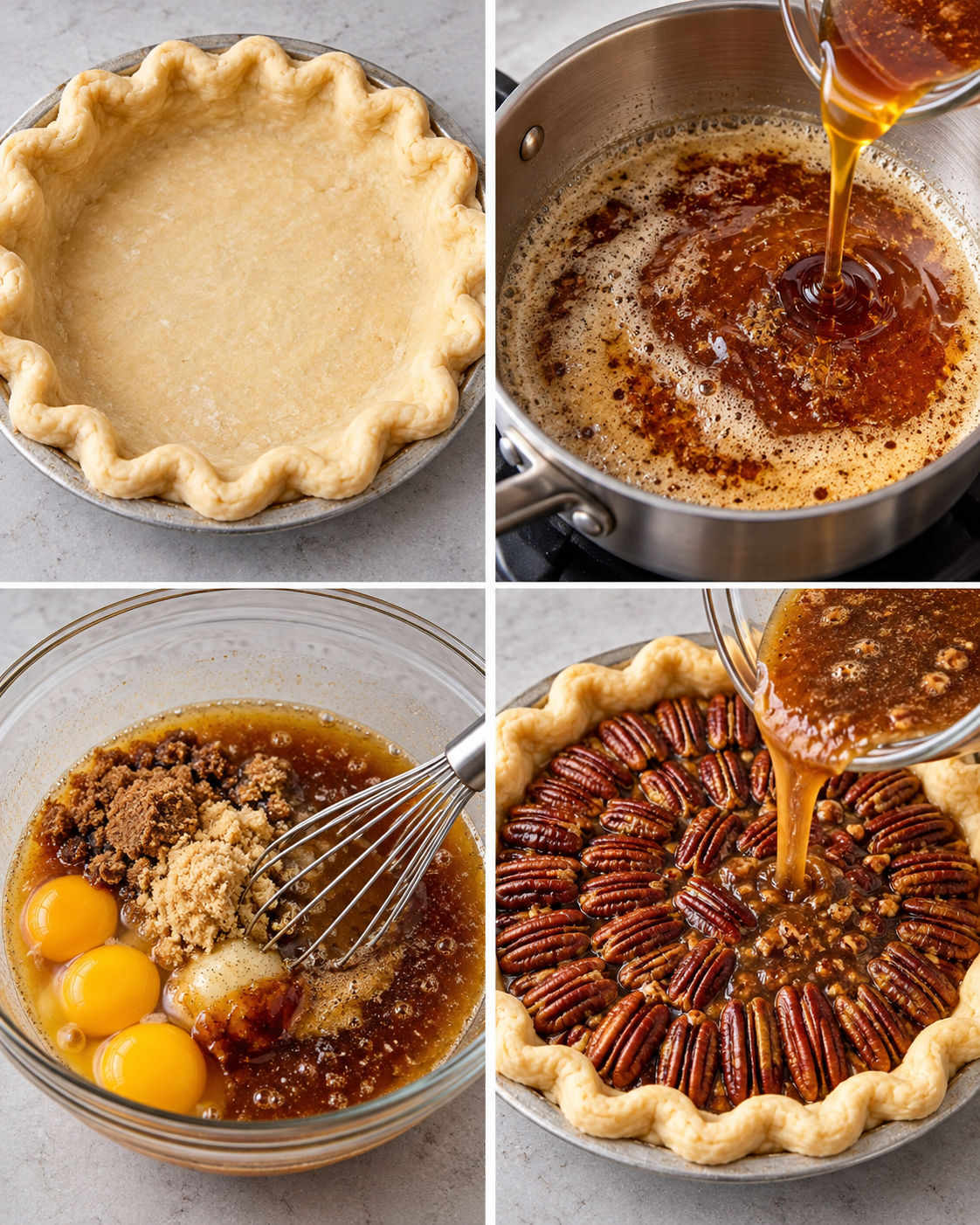
A cut portion shows the contrast that defines the dessert: a gooey center alongside pecan pieces or halves. The pecans start at the bottom of the crust, but they may rise toward the top. The final surface can therefore show the nuts in a different position from the one seen while the filling is being added.
Toppings and Serving
Flaky sea salt is an optional topping. Add it to the baked pie after it leaves the oven rather than mixing it into the filling. Maldon is given as one example of the flaky sea salt, while kosher salt is the salt already included in the filling. Keeping these two salts separate preserves their distinct places in the preparation.
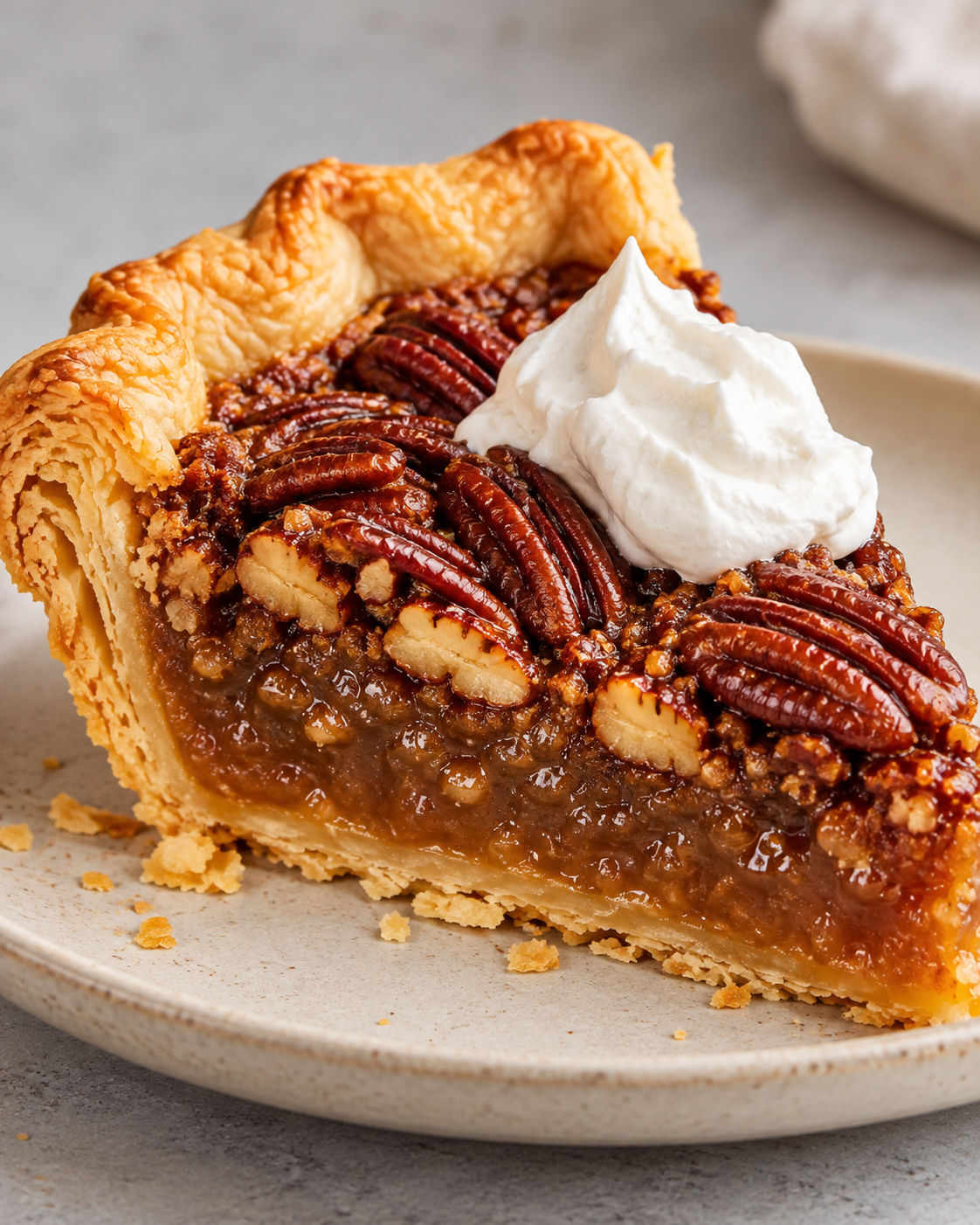
The pie can be served warm or at room temperature. The same finished dessert may be presented after cooling or held for a later serving time within the room-temperature storage guidance. A golden-brown surface, pecan halves, and the gooey center remain the central visual and textural features of the pie.
Freshly whipped cream is mentioned as an optional way to serve the pie. It is separate from the ingredients and method, and it is not required for the pie to be served. The dessert may instead be presented on its own, with flaky sea salt added only when that finishing touch is wanted.
The optional topping should not be confused with the filling’s kosher salt. The flaky salt belongs on the surface after baking, whereas the kosher salt is whisked into the bowl with the sugars, eggs, vanilla, and optional bourbon. This distinction also keeps the optional finish easy to omit.
Variations
Replace the maple sugar with more light brown sugar when desired. The substitution keeps the filling based on the listed sugar quantity while removing maple sugar as a separate ingredient. The rest of the sweetener combination remains maple syrup, honey, and light brown sugar.
Bourbon may be included or omitted. If it is included, add it to the large mixing bowl with the sugars, eggs, vanilla extract, and kosher salt. If it is omitted, continue with the other listed filling ingredients.
A glass pie plate is another equipment option. Its crust uses foil or parchment and pie weights or dried beans before the crust is cooled and filled. The metal-plate route uses the shaped crust after chilling, while the glass-plate route includes the separate crust preparation described in the method.
The pecan amount is 1½ cups/180 grams of pecan halves. Extra pecans may be preferred, but the ingredient list and method establish the amount and placement for this version.
Storage and Make-Ahead
The pie can be baked the day before serving. It keeps well at room temperature for at least 24 hours, so a pie prepared one day ahead has a defined room-temperature storage window. The cooling period remains part of the preparation before serving; the pie should be allowed to cool on its rack as directed in the method.
The pie also freezes reasonably well for up to 3 months. The crust will not be quite as flaky after freezing. That qualification applies specifically to the crust’s texture and does not change the freezing window.
Make-ahead planning can therefore use either supported path: bake the pie the day before and keep it at room temperature, or freeze it within the stated period while allowing for the change in crust flakiness. The serving guidance remains warm or at room temperature, and flaky sea salt can be used as an optional finish.
FAQ
Why does the starting oven temperature appear differently in some versions?
The preparation used here begins with 400 degrees, then lowers the oven to 350 degrees for the longer portion of the bake. A print version gives 425 degrees as the starting setting, while the video uses 400 degrees. The numbered method follows the 400-degree starting setting.
Why are the pecans placed under the filling?
The pecan halves are arranged along the bottom of the chilled crust before the filling is poured over them. During baking, they may rise toward the top. Their movement explains why the finished pie can show a different pecan position from the unbaked pie without changing the assembly order.
Can the pie be made in a glass pie dish?
Yes. The glass option uses foil or parchment and pie weights or dried beans for the crust before the filling is added. A glass pie dish par-baked on the hot sheet pan had a less-cooked bottom, and direct placement on the oven rack was planned for a later attempt. The method above keeps the glass-pie-plate process separate from the metal-plate route.
How many servings does the pie make?
The pie yields 8 servings. Total preparation time is 1½ hours plus cooling, and the finished dessert is served warm or at room temperature after the cooling step.
What is the estimated nutrition per serving?
The estimates are based on 8 servings. Each serving contains 517 calories, 57 grams of carbohydrates, 40 grams of sugar, 30 grams of fat, 9 grams of saturated fat, 13 grams of monounsaturated fat, 6 grams of polyunsaturated fat, 7 grams of protein, 3 grams of fiber, 101 milligrams of cholesterol, and 307 milligrams of sodium. The nutrition information is an estimate based on the available ingredients and preparation and is not a substitute for advice from a professional nutritionist.
The same per-serving estimate is also listed as 517.125 calories, 56.5 grams of carbohydrates, 40 grams of sugar, 30.4 grams of fat, 9.4 grams of saturated fat, 7.4 grams of protein, 2.8 grams of fiber, 100.7 milligrams of cholesterol, and 306.8 milligrams of sodium. The monounsaturated fat and polyunsaturated fat values are 13 grams and 6 grams. These values remain estimates rather than being resolved into a single set of figures.
More in Uncategorized
Apple Crumble Cheesecake
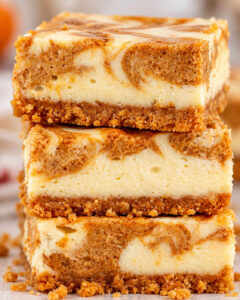
Pumpkin Cheesecake Bars
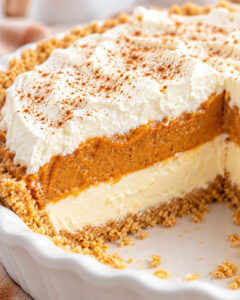
No-Bake Pumpkin Pie